


More news on this day
Travelers planning transatlantic trips are being urged to check flights carefully after a rare nationwide ground stop of all flights in the United States prompted updated travel advice and warnings from UK authorities.
Get the latest news straight to your inbox!
What happened in the United States
The United States Federal Aviation Administration ordered a nationwide ground stop for all flights at US airports on Friday 13 November 2026, citing what published reports describe as extraordinary circumstances and reasons of safety linked to a communication issue affecting multiple air traffic control centers. The order temporarily halted both departures and, in many cases, departures bound for US destinations from overseas.
Coverage from US and international media indicates that this was the most extensive halt to US air traffic since the immediate aftermath of the 11 September 2001 attacks. Tens of thousands of flights scheduled for the remainder of the day were affected, leading to widespread cancellations, diversions and missed connections for domestic and international passengers.
By Saturday 14 November, the FAA had lifted the nationwide ground stop and allowed flights to resume, but airlines and airports warned of continued disruption as they worked through aircraft and crew backlogs. Flight tracking data showed lingering delays and knock-on cancellations across major US hubs, and airlines began the process of rebooking stranded travelers and repositioning aircraft.
US officials have stated in public briefings that early indications point to a technical issue within air traffic control communications systems rather than a malicious cyber incident. At the same time, investigations were opened in the United States to examine how a single failure could lead to such a widespread shutdown of the country’s air transport network.
UK issues updated travel advice for the USA
In response to the disruption, the UK government updated its official foreign travel advice for the United States. The advisory notes that the US Federal Aviation Administration has issued a nationwide grounding of flights for all US airports and alerts UK travelers to possible delays and cancellations affecting journeys to, from and within the United States.
The advice urges anyone due to travel to or from US destinations to monitor messages from their airline and to confirm the status of their flight before setting out for the airport. Travelers are also encouraged to review the terms of their travel insurance policies, particularly regarding missed connections, extended hotel stays and additional costs that might arise from rebooking flights.
The Civil Aviation Authority has separately published an update acknowledging the US disruption and warning that there may be follow-on effects for services between the UK and the United States even after the lifting of the FAA ground stop. Public information from the regulator highlights that while flights have resumed, schedules may remain unstable as airlines rebalance aircraft and crew rotations.
Although UK airspace itself is not affected by the US technical issue, the UK government guidance underlines that any passenger planning to fly to the United States, or to connect onward via a US hub, should treat their itinerary as subject to change at short notice and keep a close watch on airline communications on the day of travel.
Impact on flights between the UK and the US
Major transatlantic carriers operating between British airports and US cities have reported varying levels of impact. Statements published by airlines such as British Airways and Virgin Atlantic indicate that many services from the UK to the United States are operating, but with a risk of delays or schedule adjustments due to congestion and aircraft positioning challenges in US airspace.
Some departures from UK airports bound for US destinations were temporarily suspended overnight after European air traffic coordination authorities restricted US-bound flights at the request of the FAA during the height of the technical disruption. Information from Eurocontrol, the pan-European air navigation organization, shows that traffic from member states to US airports was paused for several hours while the situation in US airspace was assessed.
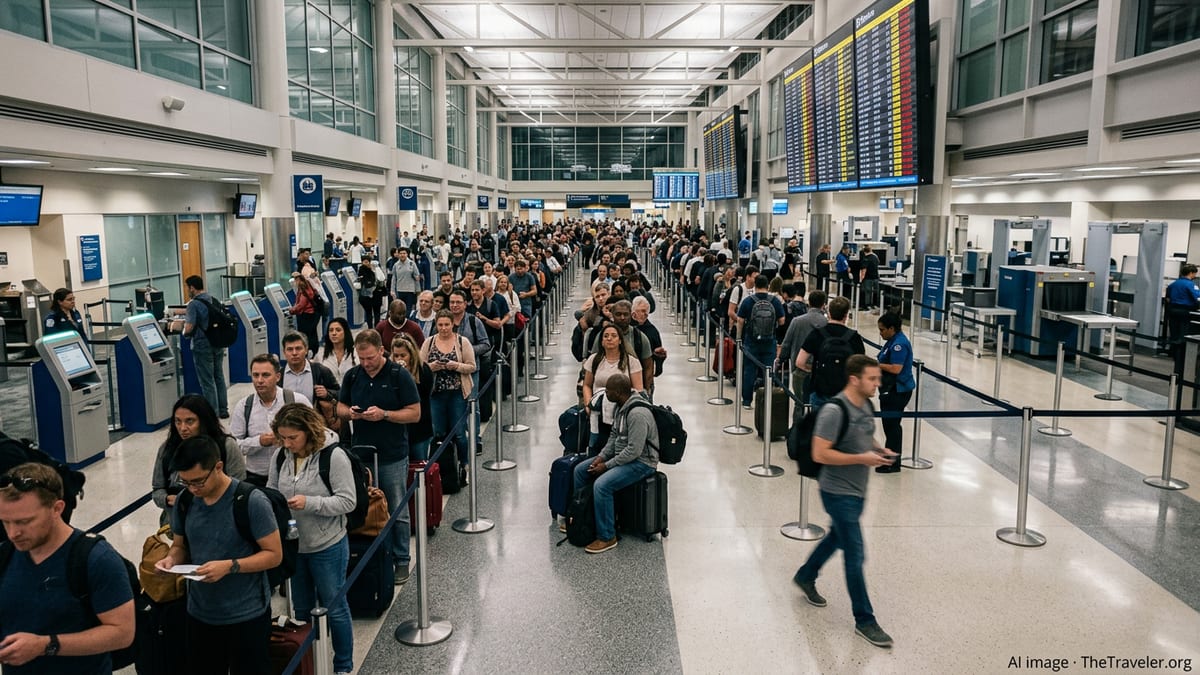
By the morning of 14 November, UK-origin services were gradually returning to operation, although passengers reported crowded departure halls and long queues at check in and security as airlines processed rebooked customers. At Heathrow and Manchester, media coverage described a mixed picture of flights that had departed close to schedule alongside others delayed by several hours or waiting for cleared arrival slots in the United States.
Arrivals into the UK from US hubs have also experienced knock-on disruption. Aircraft that were held on the ground in the United States or forced to divert have in some cases missed their planned return rotations, leaving gaps in schedules out of London and other British airports. Airlines have advised that it may take at least the rest of the weekend to restore normal patterns on the busiest transatlantic routes.
What UK travelers should do now
For UK residents currently in the United States, airline and government guidance stresses the importance of remaining in close contact with carriers via mobile apps, email alerts and airport information screens. Many airlines are allowing customers to change affected flights without additional change fees, although fare differences may still apply on some routes.
Travelers due to depart from the UK to US destinations in the next few days are being advised in public guidance to arrive at the airport as originally scheduled unless their airline provides different instructions. Turning up too late for a flight that is operating could affect eligibility for rerouting or compensation under UK and EU consumer rules.
The Civil Aviation Authority reminds passengers flying from UK airports that they may have rights to care and assistance in cases of significant delay or cancellation, including meals, refreshments and hotel accommodation when necessary. Passengers on services operated by UK or EU carriers may also, in some circumstances, be entitled to rerouting at the earliest opportunity if their original flight is cancelled.
Given the exceptional nature of the US ground stop, some consumer organizations are advising travelers to keep receipts for reasonable out of pocket expenses such as food, local transport and overnight stays when disruption occurs, and to submit claims both to airlines and, where appropriate, to travel insurers. However, travelers are also being cautioned that processing times for claims may be longer than usual due to the volume of affected passengers.
Looking ahead for transatlantic travel
Aviation analysts note that the events of 13 and 14 November are likely to prompt a wide ranging review of US air traffic control resilience, with knock-on interest from regulators and navigation service providers in Europe and other regions. Travel industry commentary in the UK points out that the incident comes in a year already marked by separate air traffic control failures in European systems, underlining how dependent modern air travel is on complex digital infrastructure.
For travelers, the longer term impact may be less visible but still significant. Airlines and booking platforms may adjust schedules or increase buffer times around peak US transatlantic connections to provide more resilience, potentially affecting departure and arrival timings on some popular routes between the UK and the United States.
In the short term, travel providers are advising customers with flexible plans to allow extra time on itineraries involving US hubs, especially for trips that rely on tight connections to onward domestic flights. Those planning holidays, business trips or family visits in the coming weeks are being encouraged to monitor news updates and official UK travel advice pages for any further changes linked to the US investigation or to additional technical measures that might temporarily affect capacity.
While the immediate crisis appears to be easing as flights resume, the scale of the disruption serves as a reminder that even well established transatlantic corridors can face sudden interruptions. For UK travelers, careful pre departure checks, flexible planning and a clear understanding of passenger rights remain key tools for navigating a period of heightened uncertainty in US air travel.