


More news on this day
Passengers at Oklahoma City’s Will Rogers World Airport spent Friday night and early Saturday in limbo after a rare nationwide Federal Aviation Administration ground stop halted departures across the United States, leaving crowds stranded in terminals and on parked aircraft.
Get the latest news straight to your inbox!
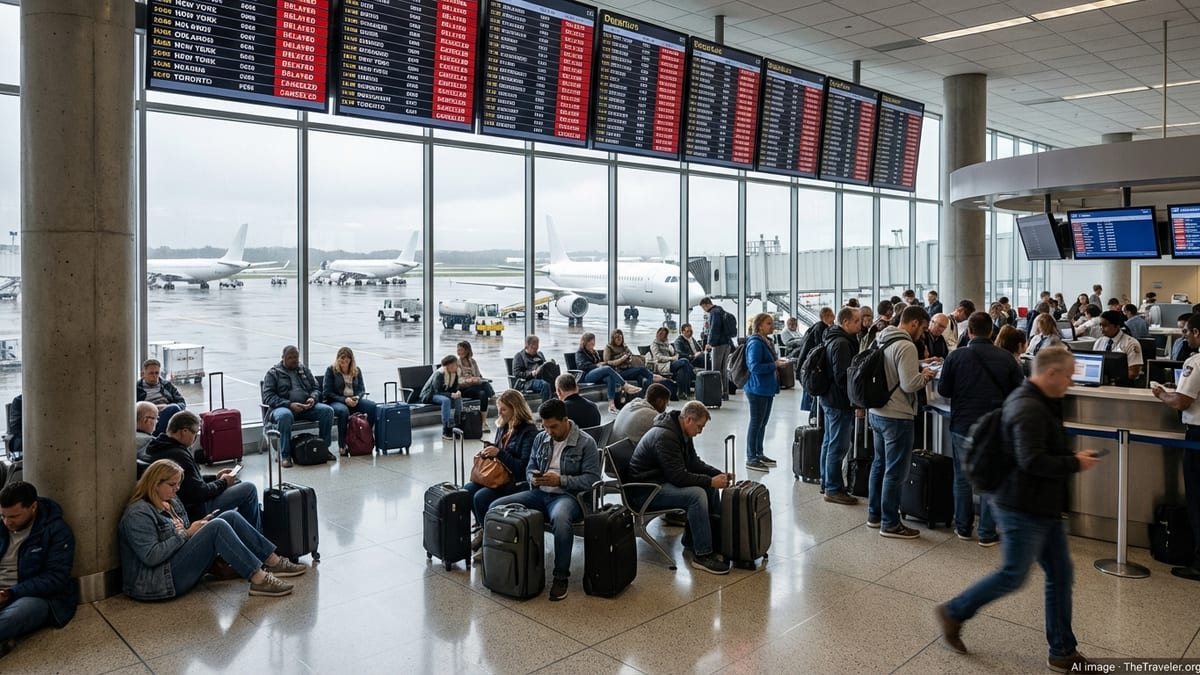
Ground Stop Ripples Through Oklahoma City Hub
The disruption began late Friday, November 13, when the FAA ordered a nationwide halt to most departing flights following what publicly available advisories described as serious telecommunications and communications system issues affecting multiple air traffic control facilities. The order applied to airports across the country, including Will Rogers World Airport, where departure boards quickly filled with delays and cancellations.
Regional coverage from Oklahoma City outlets and national news organizations indicates that flights into and out of Will Rogers were paused for several hours as the ground stop took effect. Some services that were already airborne were allowed to continue to their destinations under standard safety protocols, but new departures from Oklahoma City were held at gates or on the tarmac while air traffic managers worked to stabilize the system.
By late evening, the FAA began lifting the nationwide restriction in stages, allowing departures to resume from major hubs. Information carried by national broadcasters and wire services shows that the formal nationwide ground stop was canceled around 8:19 p.m. Eastern time, but the backlog of delayed aircraft meant Oklahoma City passengers continued to face extensive waits well into the night.
Local television reports from Will Rogers described crowded concourses and long customer-service lines as travelers tried to rebook missed connections or secure hotel rooms. Some passengers told reporters they were weighing whether to sleep in the terminal to avoid unexpected lodging and transportation costs.
Long Lines, Missed Connections and Limited Options
At Will Rogers, the end of the FAA order did not translate into an immediate return to normal operations. Airline status boards late Friday and into early Saturday showed rolling delays as carriers attempted to reposition aircraft and crews that had been left out of place by the sudden halt in departures. Coverage from Oklahoma City and national outlets indicates that some flights arriving close to midnight were among the first to move again, but many outbound travelers remained stuck.
Reports from the airport describe travelers camped out near gates and baggage claim, with some choosing to stay overnight rather than pay last-minute hotel rates or ride-share fares during the disruption. For passengers with early Saturday connections through major hubs such as Dallas Fort Worth, Denver and Chicago, uncertainty over whether those downstream flights would still operate added another layer of stress.
Airlines serving Oklahoma City, including large network carriers and low-cost operators, encouraged travelers through public channels to check mobile apps and email for rebooking options. However, publicly available reporting from local stations notes that not all affected passengers received automatic rebooking, and some were advised to contact airline call centers that were already facing heavy call volumes from stranded travelers nationwide.
Ground transportation at Will Rogers also felt the strain. With evening flights pushed back or canceled, rental-car counters and ride-hail pickup areas saw waves of travelers exploring last-resort options to reach nearby destinations by road, especially within Oklahoma and to neighboring states such as Texas and Kansas.
Part of a Rare Nationwide Aviation Disruption
The turbulence at Will Rogers unfolded against the backdrop of what national outlets including the Associated Press and major newspapers describe as the longest nationwide FAA ground stop in roughly a quarter-century. The last comparable halt to all domestic departures occurred in January 2023, when a malfunction in the system that distributes safety notices to pilots temporarily grounded flights across the country.
Analyses published by aviation and general news publications note that Friday’s ground stop was prompted by what the FAA characterized in public statements as extraordinary circumstances involving communications systems, with particular impact on facilities in Texas that handle high volumes of en route traffic. Air-traffic managers reduced the number of aircraft in the sky from more than 3,500 to under 400 before easing restrictions, according to compiled advisories shared in public forums and news coverage.
Commentary in national media points out that this event is only the second full nationwide ground stop since the period immediately following the September 11, 2001 terrorist attacks, underscoring its rarity. Articles in outlets such as The Atlantic and major broadcasters have highlighted long-standing concerns about aging aviation technology and the complexity of rolling out new, more automated traffic-management tools without triggering unexpected failures.
For travelers at Will Rogers and other regional airports, those systemic debates translated into missed family events, business trips and holiday getaways. Images and video carried by outlets including local Oklahoma City stations, the Los Angeles Times and national networks showed passengers stretched out on terminal floors and clustered around information screens from Miami to Chicago, illustrating how quickly a technical issue far from Oklahoma can ripple through an interconnected national aviation network.
What Travelers Through Will Rogers Should Expect Next
By early Saturday, November 14, national outlets and regional digital publications reported that the FAA had fully lifted the nationwide ground stop, and airlines began working through a heavy backlog of flights. Coverage referencing Oklahoma City indicates that Will Rogers was expected to receive several late-arriving services through midnight on Friday, with additional departures scheduled into Saturday morning as carriers rebuilt their schedules.
Given the scale of Friday’s disruption, airlines and airport operators signaled through public channels that residual delays and occasional cancellations were likely to persist into the weekend. Travelers departing from or connecting through Will Rogers were advised in published reports to arrive earlier than usual, monitor airline apps for gate and time changes, and be prepared for longer lines at security and customer-service counters as operations stabilized.
Consumer advocates quoted in broader national coverage of the ground stop have reiterated that passengers affected by significant delays or cancellations should review airline policies on meal vouchers, hotel accommodations and refunds. Under federal rules already in place, airlines are generally required to provide refunds if a flight is canceled and the traveler chooses not to be rebooked, although compensation for delays varies by carrier and circumstance. Recent Department of Transportation rulemakings on clearer disclosures of delay and cancellation causes are not yet fully in force, leaving individual airline policies as the primary reference for affected customers.
For upcoming travelers through Oklahoma City, the episode serves as a reminder of the value of flexible itineraries, travel insurance policies that specifically address missed connections and overnight delays, and contingency planning for ground transportation within the region. While Friday’s nationwide ground stop has now officially ended, the experience at Will Rogers World Airport illustrates how even a temporary halt can cascade into hours of disruption for passengers far from the source of the technical problems.