


More news on this day
UK travel authorities are urging passengers bound for the United States to exercise caution and check their flight status closely after a rare nationwide ground stop halted departures across all US airports for several hours, triggering delays and cancellations that are expected to ripple through transatlantic schedules into the weekend.
Get the latest news straight to your inbox!
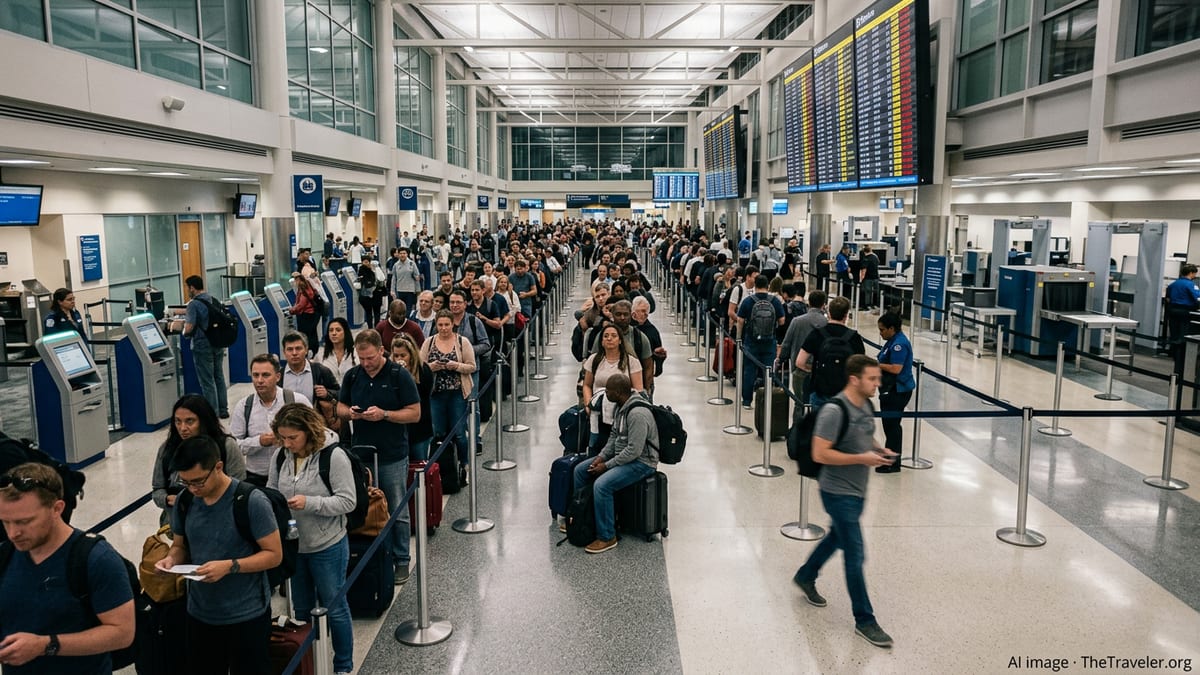
US ground stop triggers transatlantic knock-on delays
The US Federal Aviation Administration ordered a national ground stop for all airports on the evening of 13 November 2026 local time, citing what public statements described as “extraordinary circumstances” and safety concerns related to air traffic control communications. Departures were halted for around four hours across the country before the restriction was lifted, but thousands of flights had already been delayed or cancelled, leaving aircraft and crews out of position.
Coverage from major US outlets indicates that the disruption has been described as the most extensive halt to US air travel since the attacks of September 11, 2001, affecting both domestic routes and international services into and out of the country. Although long haul flights already en route were generally allowed to continue, many departures to North America from Europe were held at their origin or delayed on the ground.
According to publicly available flight tracking data, more than 30,000 departures and arrivals had been scheduled across the US for the remainder of the day when the stop was imposed. Even with the order now lifted, airlines are warning that it will take time to re-balance aircraft rotations and crew schedules, creating a rolling pattern of delays that is likely to continue through at least Saturday 14 November.
US government briefings and subsequent reporting indicate that there is currently no evidence to suggest the incident was caused by a cyberattack or terrorism. Officials have pointed to a communications or systems failure within the air traffic control network, with the ground stop described as a safety measure taken out of an abundance of caution while those issues were assessed.
UK government and regulator urge passengers to check flights
In the hours following the US ground stop, the UK Department for Transport issued an update advising that airspace over the United Kingdom remained unaffected, as the two countries rely on separate air traffic control systems. However, the notice also warned that services between the UK and the US would inevitably experience disruption because many flights rely on connections or aircraft that originate in American airports.
Guidance published by the UK Civil Aviation Authority on 14 November confirms that some transatlantic routes may be delayed or rescheduled as airlines work to recover normal operations. The regulator notes that while US flights have resumed, passengers can expect some follow on disruption as carriers rebook affected travellers and reposition aircraft, and urges anyone due to fly between the UK and the US to check directly with their airline before travelling to the airport.
UK airports with significant US links, including London Heathrow, London Gatwick and Manchester, have reported early morning departures operating, but with some delays and schedule changes. Statements from Manchester Airport indicate there are currently no expectations of widespread or “significant” disruption, yet passengers are still being advised to monitor their booking and allow extra time at the airport in case of congestion at check in and security.
Airlines operating UK US routes, including British Airways, Virgin Atlantic and major US carriers, have updated their travel alerts to reflect the situation in North America. Publicly accessible notices emphasise that customers should use airline apps or online tools to verify departure times on the day of travel and to ensure that contact details are up to date so that any rebooking offers or gate changes can be communicated quickly.
What UK passengers can expect at airports
The lifting of the ground stop in the United States late on 13 November allowed departures to resume, but the backlog created in a busy autumn travel period means that passengers at UK airports may still encounter longer queues, gate changes and aircraft swaps in the coming days. Industry reports suggest that airlines are prioritising long haul departures where possible, but shorter connecting segments may be more vulnerable to further delays as schedules are realigned.
Travellers flying from the UK to hubs such as New York, Chicago, Atlanta and Los Angeles are being advised through airline and airport updates to arrive at the airport as originally planned unless they have received specific instructions to the contrary. In some cases, services are expected to depart later than scheduled while crews remain within their legal working hours and while arriving aircraft complete delayed inbound journeys from the US.
Passengers connecting onward within the United States face the greatest risk of disruption, as their onward flights may be delayed or cancelled due to continuing congestion and knock on effects in US domestic networks. Travel advisories recommend allowing the longest possible connection times, being prepared for rebooking at transit hubs, and keeping essential items such as medication and valuables in cabin baggage in case checked luggage is delayed.
Despite the scale of the event, publicly available information from both UK and US authorities indicates that safety has remained the overriding priority throughout. Emergency medical flights and certain critical operations in the US were not halted during the national stop, and there are currently no indications that aircraft in flight were placed at unusual risk by the communications issues that triggered the shutdown.
Understanding your rights on UK US flights
For UK based travellers or those flying on UK and European carriers, passenger rights are governed by UK regulations derived from EU261, which set out entitlements when flights are delayed or cancelled. Guidance from the Civil Aviation Authority explains that if a flight operated by a UK or EU airline is significantly delayed or cancelled and the passenger chooses not to travel, they are generally entitled to a refund of the unused portion of their ticket.
When delays extend beyond certain thresholds, airlines operating from UK airports also have a duty of care, which can include providing food and drink vouchers, access to communication, and accommodation if an overnight stay becomes necessary, regardless of the underlying cause of the disruption. However, additional financial compensation may not apply when the delay is the result of what regulations describe as extraordinary circumstances, a category that can include air traffic control system failures and ground stops ordered for safety reasons.
Passengers booked on flights from the UK to the United States are being encouraged to keep receipts for any reasonable expenses incurred while waiting for rebooked flights, such as meals or local transport, in case airlines request documentation as part of a claim. Travellers should check the exact wording of their carrier’s customer commitments and any travel insurance policies, as some insurers offer supplementary cover for missed connections, extended delays or extra accommodation costs.
For journeys that start in the United States on US carriers, compensation and care policies differ, as there is no direct equivalent to UK and EU compensation rules. Travellers returning to the UK from the US may therefore find that their entitlements depend on the operating airline and the jurisdiction under which their ticket is issued, making it important to review fare conditions before departure.
Practical planning tips for upcoming trips
With the US ground stop lifted but disruption still feeding through the system, travel planners suggest taking a cautious approach to trips over the coming days. Passengers yet to begin their journey are advised by airlines and airports to reconfirm their itinerary, check in online at the earliest opportunity and sign up for flight alerts, so that any schedule changes are communicated in real time.
Those with flexible plans may wish to consider shifting non essential travel by a day or two to avoid the immediate aftermath of the incident, when aircraft and crew are still being repositioned and when rebooked passengers add further pressure to already busy services. For travellers whose plans cannot be moved, building in additional time at the start of the trip, such as travelling to the departure airport earlier in the day or overnighting near the airport, can reduce the risk of missed flights caused by unexpected queues or transport issues.
Travel insurance can also play a role in providing financial reassurance. Policies that include cover for travel disruption, missed connections and schedule changes may help offset some of the costs associated with extended waits, although coverage varies and many insurers treat air traffic control failures as exceptional events. UK consumers are encouraged to read policy documents carefully and to keep confirmation of any delays or cancellations issued by airlines.
While the scale of the US ground stop is unusual, recent years have seen several major aviation system outages and weather related shutdowns around the world, underlining the value of contingency planning. For UK travellers heading to or through the United States in the coming days, closely monitoring flight information and understanding passenger rights remain the most effective ways to navigate the lingering impact on transatlantic journeys.