


More news on this day
The Federal Aviation Administration has begun testing a new artificial intelligence system designed to flag likely flight delays before planes push back from the gate, a shift aimed at catching congestion and weather conflicts early enough to adjust schedules and routes.
Get the latest news straight to your inbox!
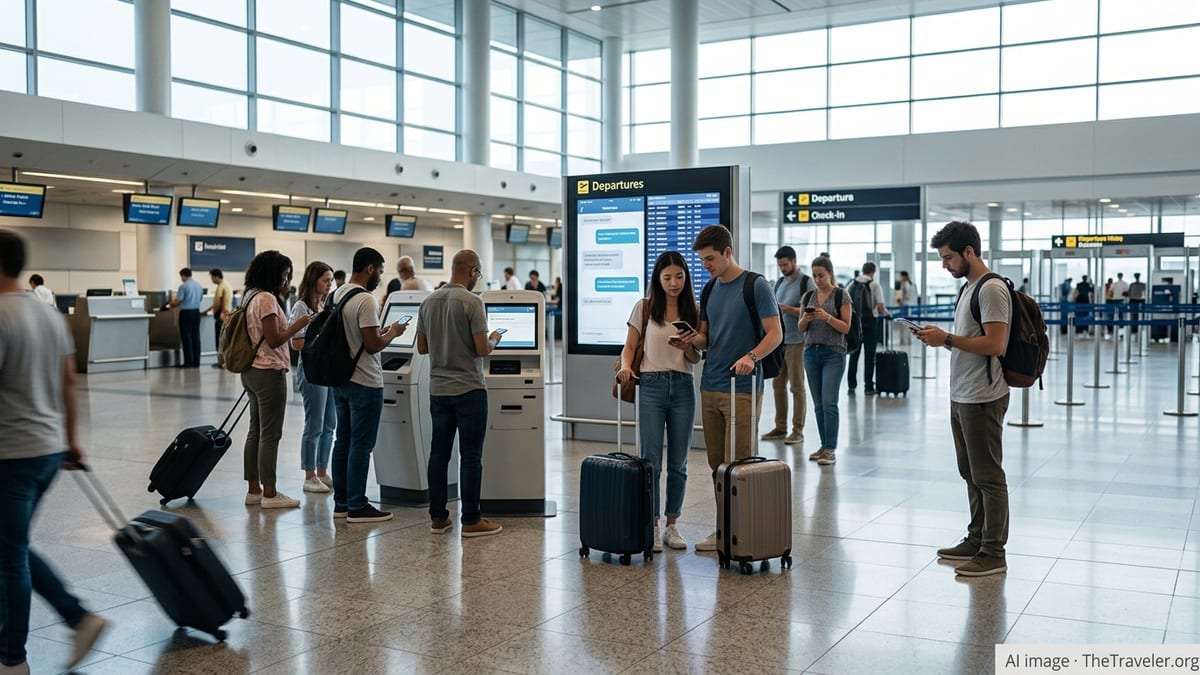
What the FAA is rolling out and where it starts
Published coverage and FAA materials show the new tool is called Strategic Management of Airspace, Routes and Trajectories, or SMART. The initial rollout is structured as a limited pilot in the Washington, D.C., region beginning Monday, September 21, 2026, with the FAA framing it as the first step toward broader deployment.
The FAA has positioned SMART as a planning and decision-support layer rather than a replacement for human air traffic control. In public descriptions, the system is presented as generating earlier warnings about developing problems and offering options that traffic managers and controllers can evaluate, rather than issuing automatic instructions to aircraft.
The timing is notable. The pilot began as the agency dealt with another round of disruption in the busy Northeast corridor, a reminder that day-to-day reliability issues can quickly cascade into nationwide delays when traffic is dense and alternatives are limited.
How “predicting delays before takeoff” is supposed to work
According to publicly available FAA descriptions, SMART centralizes roughly 200 data streams into one platform, including weather patterns, flight and traffic-flow information, airport capacity, airspace conditions, and staffing-related metrics. The intent is to combine information that already exists across multiple systems and stakeholders into a single, continuously updated view.
Instead of waiting for delays to materialize and then reacting with ground stops or ground delay programs, the system is designed to identify likely bottlenecks and schedule conflicts earlier in the cycle. That could matter for travelers because the most frustrating disruptions often start on the ground, when an aircraft is ready but a runway, gate, routing, or staffing constraint tightens unexpectedly.
Published coverage indicates the tool’s output can include suggested reroutes and other traffic-management options meant to reduce compound delays. In practice, that kind of early warning could help planners avoid sending too many departures into an airspace corridor likely to be constrained by thunderstorms, volume, or downstream airport saturation.
SMART sits inside a broader FAA modernization push
FAA announcements tie SMART to a larger modernization effort that also includes Flow Management Data and Services, or FMDS. Publicly available FAA documentation describes FMDS as the intended replacement for the legacy Traffic Flow Management System, a long-running platform used to help manage demand and capacity across the National Airspace System.
The FAA awarded a long-term contract to Air Space Intelligence for the SMART and FMDS programs earlier in 2026. The agency has described FMDS as the future backbone for how national-level traffic flow decisions are supported, with SMART operating as a complementary capability focused on prediction and conflict identification.
For travelers, the distinction matters because much of what drives a delay happens before boarding ends: how the day’s schedule is balanced against expected runway rates, how constrained routes are allocated, and how quickly disruption information is shared among the FAA, airlines, and airports. The FAA’s NextGen program has spent years working toward more time-based and trajectory-based management, and SMART is being framed as an acceleration of that data-driven approach.
Why the FAA is leaning on AI now
Publicly available oversight findings and reporting have highlighted a persistent strain on air traffic operations, including staffing challenges and increased complexity in managing high-demand periods. A Government Accountability Office report published in December 2025 found the FAA employed 13,164 controllers at the end of fiscal year 2025, about 6% fewer than in 2015, even as traffic levels have grown over the same period.
Against that backdrop, predictive tools are being presented as a way to help staff manage workload by improving foresight and coordination. The operational goal is not simply faster computers; it is earlier detection of developing problems so planners can intervene while options remain, rather than after delays lock in and the system begins to grid up.
There is also a traveler-facing rationale: if delays can be identified before an aircraft closes its doors, airlines may have more flexibility to swap equipment, adjust turns, re-sequence departures, or notify passengers earlier. That does not eliminate disruption, but it can reduce the whiplash of repeated changes after boarding or during long tarmac waits.
What travelers should watch next
The FAA has described the Washington-area pilot as a starting point, with broader expansion expected if performance and integration goals are met. For passengers, the most meaningful signs of progress would be fewer last-minute ground holds, more stable departure estimates, and less cascading delay during weather events, especially in high-impact corridors like the Northeast.
At the same time, published coverage suggests some industry stakeholders want greater visibility into how the system was designed and tested and how its recommendations will be integrated into real-time operations. That scrutiny is likely to intensify as SMART moves beyond a regional pilot into larger parts of the network.
For now, the practical takeaway is that the FAA’s delay-fighting strategy is shifting toward earlier prediction and preemptive rerouting, using AI to synthesize vast operational inputs before the first wave of departures leaves the gate. If the approach works as intended, travelers may see fewer surprises at the boarding door and more proactive adjustments earlier in the day’s flying schedule.