


More news on this day
A Federal Aviation Administration equipment outage centered on the Philadelphia air traffic control region led to widespread ground stops and hours of delays at major Northeast airports on Monday, disrupting thousands of passengers at the start of a busy fall travel period.
Get the latest news straight to your inbox!
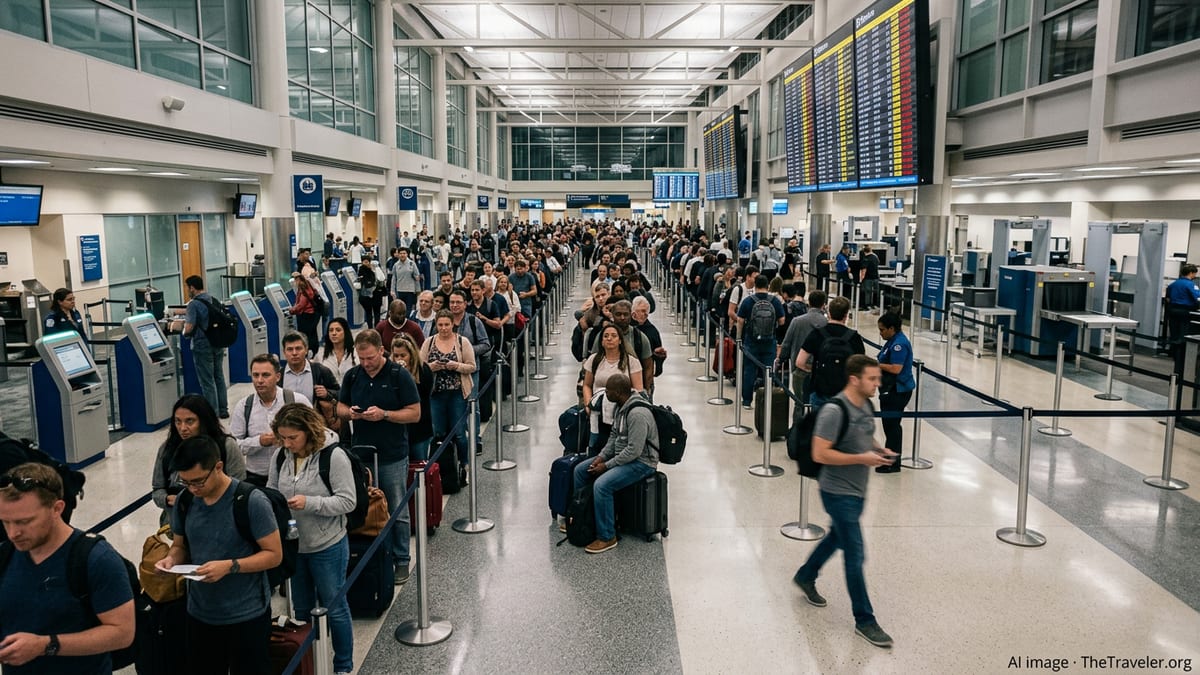
Ground stops ripple across key Northeast hubs
Publicly available airspace status information and multiple news reports show that on September 21, 2026, the FAA imposed ground stops at Newark Liberty International Airport, Philadelphia International Airport, Teterboro Airport, John F. Kennedy International Airport and LaGuardia Airport after a critical equipment outage affected communications and radar services in the region.
According to published coverage from national and local outlets, departures were temporarily halted at several of these airports, while arrivals were severely limited or held in airborne holding patterns. The disruption began late Monday morning and extended into the evening, with the most intense impact reported at Newark and Philadelphia, two of the region’s busiest commercial hubs.
Flight-tracking data cited in news reports indicated that hundreds of flights were delayed or canceled across the national network as the outage cascaded beyond the New York and Philadelphia metropolitan areas. Airlines were forced to hold aircraft at origin airports across the country, creating long lines at departure gates as crews awaited updated departure clearances.
Coverage from New York and Boston outlets described departure boards dominated by delayed and canceled flights, with wait times stretching from several hours to much of the day for some itineraries connecting through the affected hubs.
Cut fiber line and failed circuit at Philadelphia facility
Reports from major national news organizations and regional broadcasters link the disruption to a technical failure at the FAA’s Philadelphia Terminal Radar Approach Control facility, which manages approach and departure flows for a broad swath of Northeast airspace, including traffic into Newark and other New York City area airports.
Publicly available statements cited in national coverage describe a two-part issue: a blown communications circuit at the Philadelphia facility combined with a cut backup fiber line at a construction site in New Jersey. Telecom and transportation summaries indicate that construction contractors damaged a Verizon fiber cable that served as a redundant connection, leaving controllers temporarily without the full communications and data links needed to safely manage dense Northeast traffic.
Aviation-focused analyses note that once both the primary and backup connections were compromised, the FAA’s system protection protocols required immediate restrictions on arriving and departing flights in the affected airspace. Ground stops and flow programs were then used to meter traffic until communications stability was restored.
Subsequent reporting indicates that technicians worked through Monday afternoon to repair the damaged lines and restore full service. By early evening, the FAA’s public airspace status page and multiple news outlets reported that ground stops had been lifted, though significant residual delays persisted as airlines repositioned aircraft and crews.
Airports and airlines work through lingering disruptions
Airport operations updates from New York, Philadelphia and Boston, cited in local news coverage, show that the immediate halt to departures quickly created congestion at gates and on taxiways. At some airports, aircraft that had pushed back for departure were held in place while controllers awaited confirmation that routes through the affected airspace could be safely cleared.
Once the ground stops were lifted and the system transitioned to ground delay programs and flow control measures, airlines began gradually moving flights, prioritizing long-haul departures and banked hub connections. However, with midday operations already disrupted, many late-afternoon and evening flights faced substantial knock-on delays.
Reports indicate that some carriers opted to cancel select short-haul and regional flights in order to preserve longer-haul operations and overnight aircraft positioning. Travelers on those flights were rebooked onto later services or routed through unaffected hubs such as Chicago, Atlanta or Dallas, lengthening overall journey times.
By late Monday night, media outlets in Philadelphia and New York reported that operations were trending toward normal, but that airlines were still working through aircraft and crew imbalances caused by the disruption. Passengers scheduled to fly from the region on Tuesday were advised through public statements and social media posts from airlines and airports to check their flight status frequently, as scattered delays remained possible.
What travelers experienced on the ground
Accounts collected in local and national coverage describe crowded terminals and lengthy customer service queues as travelers scrambled to adjust plans. At Philadelphia and Newark, passengers arriving for early afternoon flights often learned at check in that departures were already significantly delayed or awaiting updated departure times from the FAA’s traffic management system.
Some travelers connecting through the Northeast from other parts of the United States encountered extended layovers as their onward flights were pushed back repeatedly. Media reports highlight examples of passengers facing same-day rebookings that turned into overnight stays when it became clear that their flights would miss operational cutoffs or crew duty limits.
At Boston Logan International Airport, regional outlets reported that delays were linked both to the FAA communications issues further south and to a separate fiber cut that affected broader Northeast transportation, adding further uncertainty for travelers trying to coordinate flight, rail and road connections in the corridor.
Despite the operational challenges, airport briefings referenced in published coverage indicate that security checkpoints, baggage handling and ground transportation services continued to function, with the primary constraint focused on the flow of aircraft into and out of the restricted airspace.
Broader questions about resilience in U.S. air traffic systems
The outage has prompted renewed scrutiny of the resilience of critical infrastructure that underpins U.S. air travel, particularly in the heavily congested Northeast corridor. Recent FAA planning documents and prior regulatory notices have already identified the New York and Philadelphia airspace as especially vulnerable to delays due to a combination of high traffic volumes, complex airspace design and staffing constraints at key facilities.
Analyses in aviation and general news outlets note that the September 21 disruption followed other notable incidents in the region over the past several years, including previous technical issues at the same Philadelphia facility that affected Newark operations. Industry observers have pointed to these events as evidence that redundancy and modernization efforts remain a work in progress.
Publicly available information on current modernization programs highlights ongoing investments in communications, navigation and surveillance infrastructure, as well as the deployment of new traffic management tools intended to provide more flexibility when elements of the system fail. However, the latest outage illustrates how a single point of failure, such as a cut fiber line combined with a blown circuit, can still have outsized effects when located within a critical node of the network.
For travelers, the episode underscores the importance of monitoring real-time flight status and maintaining flexible itineraries when flying through major Northeast hubs, particularly during periods when air traffic control systems are known to be undergoing upgrades or when weather and construction activities add further strain to the system.