


Two of Canada’s most famous luxury hotels sit less than an hour apart in Banff National Park, yet they deliver very different versions of a mountain escape. Fairmont Chateau Lake Louise feels like a serene lakeside retreat at the edge of the wilderness, while Fairmont Banff Springs is a grand castle-style resort above a lively mountain town. Choosing between them is less about which is objectively better and more about the kind of Rockies experience you want. Here is a detailed, on-the-ground comparison to help you decide which luxury stay wins for your trip.
Get the latest updates straight to your inbox!
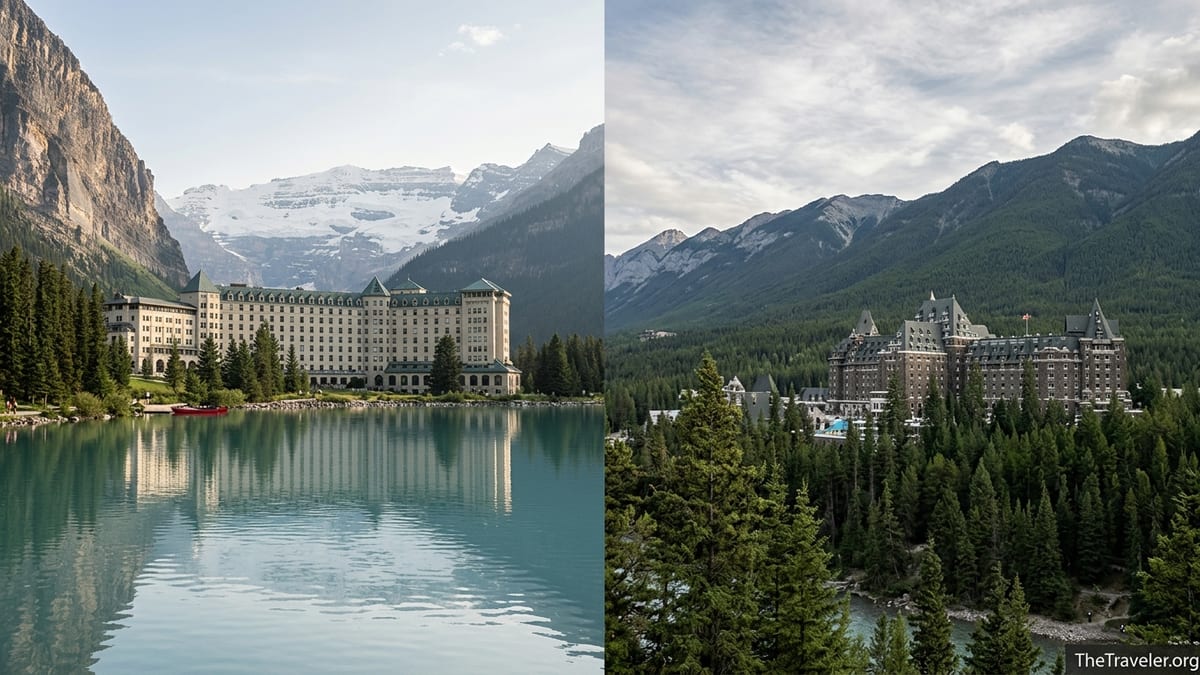
Sense of Place: Lakeside Sanctuary vs Storybook Castle
Fairmont Chateau Lake Louise sits directly on the turquoise shores of Lake Louise, with the Victoria Glacier filling your window like a movie screen. Step out of the lobby and you are on the lakeshore promenade; in summer, guests walk straight from the hotel terrace to the canoe dock, while in winter the frozen lake becomes a skating rink and snowshoe trail. The setting is quiet, almost village-like, because there is very little else around apart from a handful of smaller lodges and a gas station in the nearby hamlet of Lake Louise.
Fairmont Banff Springs overlooks the Bow River and surrounding peaks from a hill above the town of Banff. The hotel’s baronial architecture has earned it the nickname “the Castle in the Rockies,” and the building itself is a major part of the experience. You do not get the same intimate, right-on-the-lake feel, but you do get sweeping valley views and a sense of grand history as you wander its stone corridors, turrets, and inner courtyards.
If your dream is to draw the curtains in the morning and see nothing but an alpine lake and glacier, Chateau Lake Louise has the edge. If you picture yourself arriving at a sprawling historic resort where simply exploring the hallways, ballrooms, and terraces feels like stepping into a period drama, Banff Springs wins on atmosphere.
In practical terms, Lake Louise feels like a nature retreat you rarely want to leave, while Banff Springs feels like both a destination and a base for exploring a larger area, including the town of Banff and nearby viewpoints like Surprise Corner and the Banff Gondola.
Rooms, Views, and Space: What You Actually Get
Both properties are historic, which means room sizes and layouts can vary more than at a modern new-build resort. Standard Fairmont-category rooms at both hotels can feel compact by North American luxury standards, especially if you are used to newer five-star resorts. Guests who want elbow room may want to budget for at least a Deluxe or View category.
At Chateau Lake Louise, the coveted Lakeview rooms are the headline act. A typical Fairmont Lakeview king might show rates in summer starting around the mid-800 Canadian dollars per night and climbing well above 1,000 Canadian dollars during peak July and August weekends, depending on demand and promotions. In shoulder seasons like late October or early May, you can sometimes find mountain-view rooms closer to the mid-400 to 500 Canadian dollars range, especially midweek. Exact pricing fluctuates by date, but the pattern is consistent: you pay a clear premium for that direct lake and glacier panorama.
Fairmont Banff Springs offers a wider mix of room types, including Gatehouse rooms in a satellite building, traditional Fairmont and Deluxe rooms in the main castle structure, and a range of suites. View rooms here look out over Mount Rundle, the Bow Valley, or the golf course rather than a single focal lake. Summer peak rates for a standard room often land in a similar ballpark to the Chateau, with view rooms and suites climbing higher. Some travelers find that at Banff Springs, upgrading into a slightly larger room or junior suite can be better value, simply because there are more of them and more frequent promotional packages.
In both hotels, bathrooms in many historic rooms are relatively small and functional rather than lavish. Guests who prioritize a spa-like bathroom, extra space, or separate living areas should focus on modernized suites, Fairmont Gold floors, or recently renovated categories and be prepared for significantly higher nightly rates. The upside is that even entry-level rooms give you full access to the same public spaces, activities, and signature views elsewhere on the property.
Location and Access: Remote Quiet vs Lively Convenience
Chateau Lake Louise occupies one of the most in-demand locations in the Canadian Rockies, which creates both advantages and logistical quirks. In peak summer, public parking at Lake Louise fills extremely early, and non-guests typically need to rely on Parks Canada shuttles. Staying at the Chateau eliminates that stress; you can simply walk out of the hotel to the lake at sunrise or linger long after the tour buses leave in the evening. For many travelers, this easy, uncrowded access is a decisive factor, particularly for photographers and hikers who want early-morning trail starts.
The trade-off is isolation. Outside the hotel, the Lake Louise area offers only a small cluster of additional services: a couple of gas stations, a convenience-oriented grocery, a handful of restaurants, and the ski resort a short drive away. If you like browsing independent shops, hopping between bars, or having many dining choices within walking distance, you may feel limited here. Most evenings, guests either dine on-site or drive 45 minutes back toward Banff.
Fairmont Banff Springs sits a few minutes’ drive or a downhill walk from the town of Banff. From the hotel, you can be in a local coffee shop on Banff Avenue, browsing outdoor gear stores or trying a casual ramen bar, in about 10 to 20 minutes depending on whether you walk, shuttle, or take a taxi. This proximity to town makes Banff Springs a strong choice for travelers who enjoy both resort amenities and an active evening scene, including craft breweries, cocktail bars, and small galleries.
For guests planning to explore a wide area of the park, Banff Springs also works well as a hub. Day trips to Lake Louise, Moraine Lake (via shuttle), the Icefields Parkway, or the Banff Gondola are all manageable. However, the iconic sunrise and sunset quiet on Lake Louise itself is harder to enjoy spontaneously if you are based in Banff, since you need to factor in drive times, traffic, and parking or shuttle reservations.
Dining, Bars, and Nightlife: How You’ll Eat and Drink
Food is one area where the experiences diverge clearly. Fairmont Chateau Lake Louise operates several on-site venues, typically including the elegant Fairview Bar and Restaurant, the Lakeview Lounge with its wall-to-wall windows, Alpine Social for more casual Canadian comfort food, Louiza with Mediterranean-inspired menus, and a deli-style cafe for grab-and-go items. Menus lean into regional products, such as Alberta beef and local game, and afternoon tea with lake views has become one of the property’s signature splurges. As of mid-2026, a classic afternoon tea experience with sparkling wine is priced in the low 100 Canadian dollars per person, with premium champagne options costing more.
Because options in the hamlet of Lake Louise are limited, many guests eat most of their meals at the hotel or at the ski resort’s restaurants in winter. That can quickly add up; a casual dinner for two with a shared appetizer, mains, and cocktails in a sit-down venue like Alpine Social can easily land around 150 to 200 Canadian dollars before tip. Breakfast for two in a full-service restaurant often approaches 80 to 100 Canadian dollars if you order hot dishes and coffee rather than sticking to pastries from the cafe.
Fairmont Banff Springs has a larger portfolio of bars and restaurants on property, often including a steakhouse-style venue, a lounge with mountain views, grab-and-go coffee spots, and seasonal terraces. However, what really changes the equation is the town of Banff itself. Within a short shuttle or taxi ride you will find everything from casual pizzerias and burger joints to modern bistros, sushi bars, and higher-end tasting menu spots. This diversity allows you to tailor spending: you can splurge one night at the hotel’s fine dining restaurant and the next grab a simpler 25 Canadian dollar burger and beer in town.
In terms of nightlife, Banff Springs is the clear winner. After dinner, guests can head into town for live music, bars that stay open late, or simply a stroll along Banff Avenue. At Lake Louise, most evenings wind down early, with many guests enjoying a drink in the Lakeview Lounge or lobby bar before bed. If your idea of a vacation includes a buzzing après-ski scene or bar-hopping, Banff Springs will feel more in tune with your style than the hushed hallways of the Chateau.
Activities, Spa, and Resort Amenities
Both hotels position themselves as year-round activity hubs, but the experiences differ. At Chateau Lake Louise, the lake and surrounding trails are the star. In summer, you can rent a canoe from the dock steps from the lobby, with rental rates that often hover around the high double digits per hour for hotel guests. Classic day hikes such as the Lake Agnes Tea House trail and the Plain of Six Glaciers route begin just beyond the hotel grounds, making it easy to start before most day-trippers arrive.
In winter, the hotel maintains an ice rink on the lake, offers snowshoe and cross-country ski rentals, and arranges sleigh rides that depart close to the property. Many guests pair their stay with a day or two at the Lake Louise Ski Resort, about a 10 to 15 minute shuttle ride away. Recent investments have also focused on wellness, with the introduction of a thermal bathing experience branded around glacial waters, which offers a circuit of warm and cold pools and relaxation areas designed to connect guests with the surrounding landscape.
Fairmont Banff Springs feels more like a traditional full-scale resort. Its spa includes indoor and outdoor pools, mineral-inspired soaking areas, and treatment rooms, often accessible either via a dedicated spa access fee or as part of booked treatments. The outdoor heated pool, framed by mountain peaks, is particularly popular in winter when steam rises into the cold air. On-site, there is also a championship golf course operating in summer, tennis courts in some seasons, and a broad menu of guided experiences, from fitness classes to wildlife walks, often bundled into a daily resort fee.
For families and groups, Banff Springs’ variety can be a major advantage. Some members of the party can spend the day at the spa and pool, others can play golf or walk down to the river trails, and others can head into town, all without feeling constrained. At Lake Louise, the experience is more focused on outdoor exploration around the lake and nearby trails, which is perfect for hikers, skiers, and couples but may feel quieter to families with teens wanting more structured entertainment.
Costs, Resort Fees, and Overall Value
Luxury in Banff National Park does not come cheap, and both properties command premium rates that climb in high season. Nightly room rates at both Chateau Lake Louise and Banff Springs fluctuate significantly by date, room type, and current promotions, but it is common for summer and holiday periods to see even standard rooms rise well above 600 Canadian dollars per night before taxes and fees. Packages such as “bed and breakfast” offers may add daily breakfast in exchange for a higher nightly rate.
Both hotels charge a daily resort fee that bundles amenities like fitness classes, certain shuttle services, and enhanced Wi-Fi. In addition, parking is typically an extra charge at Banff Springs, with separate rates for self-parking and valet. At Lake Louise, on-site parking for hotel guests also usually incurs a daily fee, though the exact amount and inclusions change periodically. Travelers driving rental cars should factor these costs into their budget, as they can add the equivalent of a modest dinner over the course of a multi-night stay.
Where value perceptions diverge is in what you get once you are there. At Chateau Lake Louise, your nightly rate essentially buys you front-row, 24-hour access to one of the most photographed lakes in the world. You are paying for exclusivity of setting: sunrise reflections with hardly anyone around, starry nights over the frozen lake, and the ability to linger on the shore when day visitors have long gone.
At Banff Springs, the value often lies in breadth. The resort’s sheer size, number of venues, and proximity to town mean you can craft a different day, and a different price point, each day of your stay. You can choose a fancier dinner at the hotel one night, a more affordable meal in town the next, hike one day, soak in the outdoor pool and spa the next. For travelers who equate value with variety and flexibility, Banff Springs can be the stronger proposition.
Who Each Hotel Suits Best
While both hotels appeal to a wide range of travelers, certain profiles tend to be happier at one or the other. Couples celebrating honeymoons, anniversaries, or milestone trips often gravitate toward Chateau Lake Louise for its romantic lakeside setting, cliff-hugging trails, and the sense of being removed from everyday life. Photographers, early-morning hikers, and travelers who prioritize tranquil mornings and evenings in nature also tend to prefer staying at the lake, even if it means fewer nightlife options.
Families who want more structured activities, pools, and options when the weather turns may find Banff Springs more forgiving. With multiple pools, a large spa complex, and indoor corridors to explore, it offers more rainy-day insurance. The easier access to Banff’s shops and casual restaurants can also be a relief for parents looking to satisfy varied tastes and budgets without having to get everyone back into a car.
Groups of friends, particularly those interested in après-ski, craft beer, or nightlife, typically lean toward Banff Springs. From the resort, it is convenient to ski at nearby hills, return to the outdoor pool or spa, then head into town for dinner and drinks. Likewise, conference and event groups often choose Banff Springs for its extensive meeting space and the ability to give attendees free time in a real town between sessions.
Repeat visitors to the Rockies sometimes split the difference by combining both properties in a single trip: two nights at Chateau Lake Louise for the lakeside magic and hiking access, followed by three or four nights at Banff Springs to explore more widely and enjoy the resort’s amenities. For travelers with a week or more, this hybrid strategy offers the best of both worlds.
The Takeaway
Fairmont Chateau Lake Louise and Fairmont Banff Springs are not interchangeable luxury hotels; they are two distinct interpretations of a Rockies dream. Chateau Lake Louise is about immersion in a single, unforgettable view and the peace of a near-wilderness setting, where your biggest decision might be whether to paddle across the lake or hike above it. Fairmont Banff Springs is about abundance: more restaurants, more hallways to wander, more ways to fill a rainy afternoon, and easy access to a lively mountain town.
If you are a first-time visitor to the Canadian Rockies and can only choose one, ask yourself what image of the trip you most want to remember. If it is that iconic, glassy turquoise lake with the hotel at its edge, choose the Chateau and embrace the stillness. If it is evenings strolling through Banff after a day of exploring, returning to a historic castle glowing above the town, choose Banff Springs. Neither choice is wrong. They simply answer different versions of the same question: how do you want to feel in the mountains?
For many travelers, budget and availability in peak season will ultimately push the decision one way or the other. But if you can, think beyond nightly rate alone and weigh the style of experience: sanctuary by the lake or castle above the town. That, more than room size or restaurant count, will determine which luxury stay wins for you.
FAQ
Q1. Which hotel has better views: Fairmont Chateau Lake Louise or Fairmont Banff Springs?
The most instantly dramatic views belong to Fairmont Chateau Lake Louise, where many rooms and public spaces look directly onto Lake Louise and the Victoria Glacier. Fairmont Banff Springs offers sweeping mountain and valley vistas, but not the same close-up lake panorama.
Q2. Is Fairmont Chateau Lake Louise more expensive than Fairmont Banff Springs?
Nightly rates are broadly comparable and fluctuate by season and demand. Lakeview rooms at the Chateau often command a premium because of their iconic outlook, while Banff Springs may offer more varied room categories and promotional packages.
Q3. Which property is better for families with children?
Fairmont Banff Springs usually suits families better thanks to its larger pool complex, spa facilities, golf course, and easy access to the town of Banff for casual dining and activities. Chateau Lake Louise is wonderful for outdoorsy families but feels quieter and more nature-focused.
Q4. If I don’t have a car, which hotel is more convenient?
Without a car, Banff Springs tends to be more convenient because of nearby shuttles, taxis, and the town of Banff’s walkable main street. Chateau Lake Louise can work without a car, but you will be more reliant on hotel shuttles and have fewer off-site options.
Q5. Which hotel is better for hiking access?
For direct trail access, Chateau Lake Louise has the edge. Classic hikes such as the Lake Agnes Tea House and Plain of Six Glaciers begin at the lake, only a short walk from the hotel. From Banff Springs, most premier hikes require a drive or shuttle ride.
Q6. How do dining costs compare between the two hotels?
On-site restaurant pricing at both properties is similar and on the higher side, reflecting their luxury positioning and remote national park location. However, guests at Banff Springs can more easily find a range of price points by dining in the town of Banff, while Chateau Lake Louise guests are more likely to eat mostly at the hotel.
Q7. Which property is better for a honeymoon or special romantic trip?
Both can be romantic, but many couples favor Chateau Lake Louise for its intimate lakeside setting, quiet evenings, and easy access to scenic walks at sunrise and sunset. Banff Springs is romantic too, especially its historic corridors and terraces, but has a busier resort feel.
Q8. Are spa facilities included in the room rate at either hotel?
Basic pool access is typically included for hotel guests at both properties, but full spa circuits and treatments usually carry separate fees. Packages may occasionally bundle spa access or credits, so it is worth comparing current offers when booking.
Q9. Can I visit the other hotel easily if I stay at one?
Yes. Many travelers staying at Banff Springs make a day trip to Lake Louise, and guests at Chateau Lake Louise often drive or shuttle to Banff for a half-day. The journey between the two areas usually takes under an hour by car in good conditions.
Q10. If I have a week in the Rockies, should I split my stay between both hotels?
Splitting a week between the two is a popular strategy. For example, you might spend two or three nights at Chateau Lake Louise for lakeside hiking and quiet, then move to Banff Springs for four or five nights to enjoy the larger resort amenities and the town of Banff.