


More news on this day
Rail crews and contractors are working to clear a freight train derailment near Regina, after several cars left the tracks along a key rail corridor serving the Saskatchewan capital.
Get the latest news straight to your inbox!
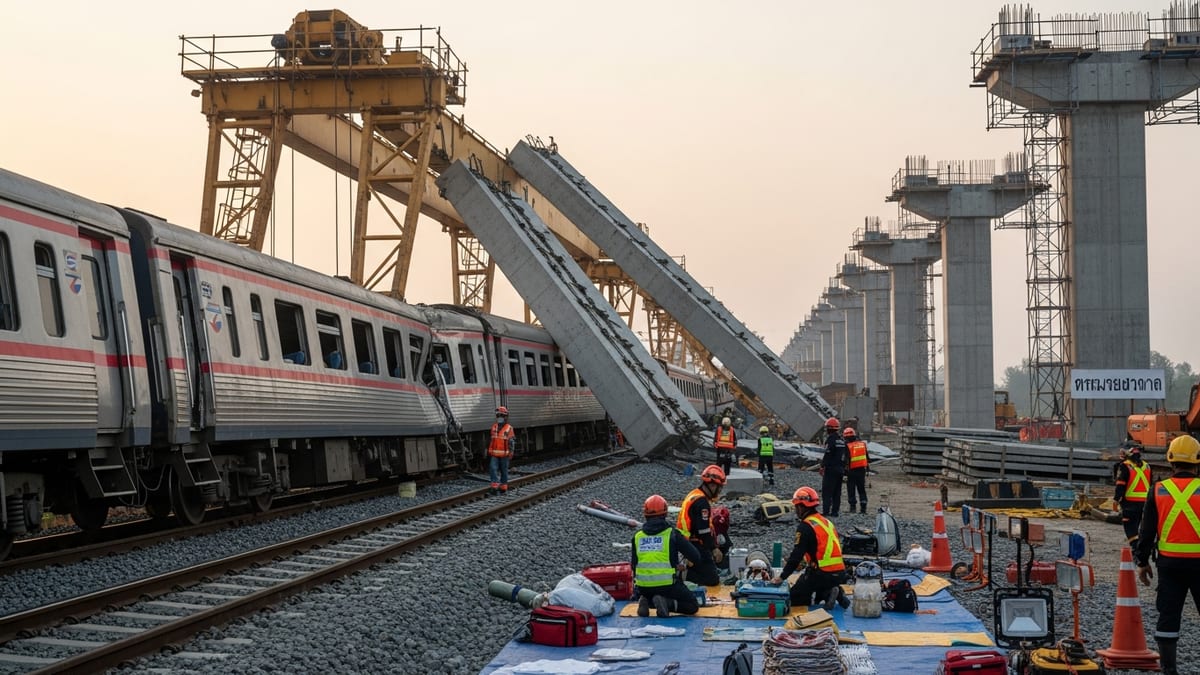
Freight Movement Disrupted Near the City
Initial reports indicate that the derailment occurred on a main freight line that skirts Regina, a corridor used heavily for agricultural products and mixed freight moving across the Prairies. Early images shared through local outlets show multiple railcars off the track, some leaning at sharp angles against the ballast and embankment. Rail traffic in the immediate area has been paused while cleanup and assessment continue.
Publicly available information suggests the affected train was hauling a mix of cars, typical of the manifest freight that passes the city daily. There have been no early indications of a significant fire at the site, and there are no widespread reports of major injuries. Rail operators have diverted some traffic to alternate routes, but capacity around Regina remains constrained while work is underway.
Travelers heading into and out of the city are being advised to watch for detours where rail lines intersect key road corridors. In previous incidents on the Prairies, even derailments contained to rail property have triggered traffic slowdowns at nearby overpasses and level crossings as heavy equipment is brought in to remove damaged cars and rebuild track.
Intensive Track Repairs and Site Stabilization
Cleanup efforts at derailment scenes typically begin with securing the area, assessing damage to the track structure and checking for any product leaks. In similar Canadian incidents, rail companies have rebuilt hundreds of metres of track and replaced large volumes of ballast before reopening a line to regular traffic. The site near Regina is expected to follow a comparable process, with rail teams working through extended shifts to restore the corridor.
Heavy cranes, sidebooms and specialized rail equipment are generally brought in to rerail or dismantle damaged cars. Crews then lift away broken ties and rails, excavate fouled ballast and install new materials. Once the physical repair is complete, the line must pass a series of inspections and testing runs before normal speeds resume, which can add hours or days to the overall recovery timeline.
The work is highly sequenced: rolling stock must be stabilized before cargo is removed, track components must be rebuilt from subgrade to rail, and signalling and communication systems are re-checked before traffic is allowed back through. Published investigations into past derailments across Canada show that this phased approach has become standard practice for mainline recovery.
Environmental Monitoring Around the Derailment Site
Attention is also focused on the environmental footprint of the incident. Freight trains serving Regina routinely carry agricultural commodities, fuel products, lumber and various industrial materials. Cleanup plans commonly account for the possibility that a small number of cars may lose part of their contents, even when there is no large-scale spill.
Environmental contractors typically begin with visual inspections and air-quality checks, followed by soil and water sampling if there is any indication of leakage. If the derailed cars include tankers or covered hoppers carrying regulated products, teams may install temporary containment, vacuum residual material and remove contaminated ballast or soil for treatment or disposal.
Recent derailments in other Canadian cities have led to extensive remediation work around ponds, drainage channels and wetlands close to the tracks. Those cases have prompted rail operators and local agencies to pay particular attention to how spilled material could move through urban stormwater systems. The corridor near Regina is subject to similar scrutiny while cleanup proceeds.
Traffic and Travel Impacts for Regina Residents
Although the derailment is centered on railway property, the disruption reaches into day to day travel for Regina residents. Level crossings and nearby highway ramps can experience intermittent closures while crews access the site and position heavy machinery. Drivers have previously faced traffic controls along sections of Ring Road and adjacent arterials during major operations around the rail lines.
Motorists are generally advised to build in extra time when traveling across the city while recovery is underway. Public information channels often flag slowdowns near busy crossings, and travelers heading toward the Trans-Canada Highway, Highway 11 or major commercial areas may encounter localized congestion. For longer-distance trips, some intercity bus and freight services occasionally adjust schedules to account for rerouted rail and road movements.
For air travelers, the impact tends to be indirect. Freight congestion near the city can influence delivery times for cargo consignments heading to or from Regina’s airport, particularly if shipments are transferred between rail and truck. Travel planners recommend checking with carriers when time-sensitive goods depend on coordinated rail connections through the region.
Ongoing Investigation and Safety Context
While cleanup crews focus on reopening the line, investigators are expected to examine track conditions, equipment performance and operating practices leading up to the derailment. Past reports by national transportation safety agencies have highlighted factors such as rail fatigue, track geometry problems and equipment failures as recurring contributors to freight derailments on the Prairies.
Rail corridors around Regina form part of a wider national freight network that has seen sustained investment in inspection technology, including ultrasonic rail testing and wayside detectors that monitor wheel and bearing performance. Despite these measures, derailments continue to occur periodically, prompting renewed attention to maintenance routines and speed management on heavily used segments.
For travelers and local communities, the incident near Regina serves as another reminder of the close relationship between rail infrastructure and daily mobility. As cleanup progresses, attention will remain on how quickly normal rail service can be restored, how effectively environmental safeguards perform, and whether findings from the investigation lead to further safety upgrades around one of Saskatchewan’s most important transport hubs.