


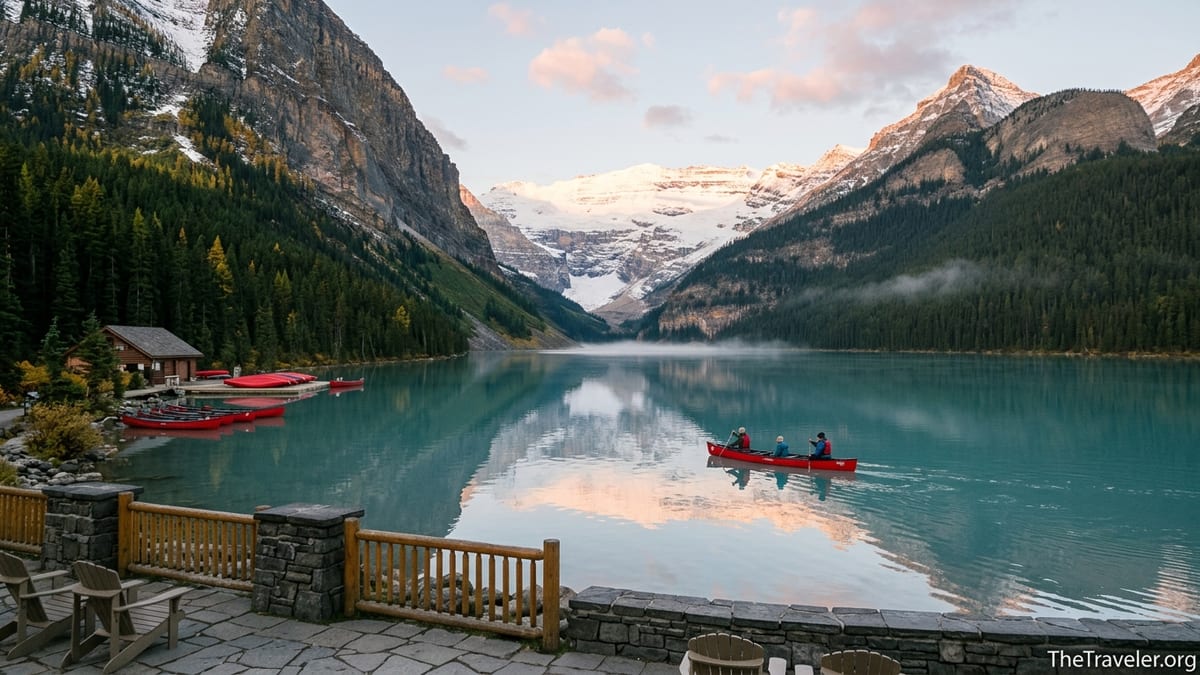
Most travelers arrive at Fairmont Chateau Lake Louise expecting one thing above all: that first unforgettable view of turquoise water framed by Victoria Glacier. The lake delivers, every time. Yet ask recent guests what truly surprised them and a different story emerges. The biggest revelation is that the hotel itself, and the way it plugs you into the surrounding wilderness, quietly overshadows the postcard moment outside the lobby doors.
Get the latest updates straight to your inbox!
More Than a View: A Resort Built Around the Outdoors
From the outside, Fairmont Chateau Lake Louise looks like something from a storybook. Step inside, and the surprise is how intentionally the property is designed not as a place to simply look at nature, but as a basecamp to live in it. Instead of a conventional resort where the pool and lobby bar are the main draw, almost everything here, from the concierge desk to the in-house guides, is focused on getting you out on the trails, the ice, or the water.
This is most obvious in the hotel’s activity programming. The resort experience fee, which currently sits around 45 Canadian dollars plus tax per room per day, folds in a rotating schedule of guided hikes, interpretive talks, stargazing sessions, snowshoe outings and seasonal workshops that would be add-ons at many mountain hotels. In practice, that means you can join a morning walk along the lakeshore, head out on a guided e-bike ride in the afternoon, and end your day with an astronomy session on the terrace, all without booking a third-party guide.
It is a subtle but important shift. Many visitors drive up for a quick photo at the lakeshore and are gone within an hour. Guests staying at the Chateau, however, quickly discover that the most memorable moments tend to happen beyond the main viewpoint: catching the smell of spruce after a mountain rain on the Lake Agnes trail, hearing the crunch of early-season snow on a guided hike, or watching fog lift off the water from a hotel-supplied canoe at first light.
What surprises many travelers is how easy the property makes it to step into these experiences. There is no need to juggle local outfitters or decipher trail reports alone: the in-house Mountain Adventure program and daily concierge guide spell out the conditions, difficulty levels and meeting points for everything from family-friendly walks to more strenuous climbs.
The True Luxury: Time and Access in a Crowded Icon
If you visit Lake Louise on a summer afternoon, it becomes clear why staying at the Chateau is about much more than just having a room with a view. Parking fills early, day-use visitors queue for Parks Canada shuttles from the Lake Louise Ski Resort park-and-ride, and the shoreline path can feel as busy as a city promenade. For hotel guests, the surprise is that the same place can feel quiet and almost contemplative at sunrise, late evening, or during shoulder seasons.
Because you are already right on the lake, you can wander out before breakfast, long before the first buses arrive from the park-and-ride. In July, that might mean stepping onto the still-dim terrace just after 6 a.m., with the sun just catching the tips of Mount Fairview and Mount Temple. In September, it could be a stroll along the lakeshore in a light jacket under pink alpenglow while the day-trippers are still on the Trans-Canada Highway. That simple ability to be there when the scene is quiet is a form of access you cannot buy as a day visitor.
The same is true in winter. By January, the lake is usually a broad sheet of ice, crisscrossed with skating lanes and snowshoe trails that the hotel helps maintain. Public visitors can certainly join the fun, but the magic moments often come late in the evening, when most drivers have already made the careful descent back to the village. Guests can step outside, skate a final lap under a sky clear enough to show the Milky Way, then be back in their rooms within minutes.
Time, here, is the real luxury. Instead of trying to fit Lake Louise and neighboring Moraine Lake into one exhausting day with tightly timed shuttle reservations, you can spend several days on the shoreline. A traveler might arrive on a Wednesday, join a guided afternoon hike to Lake Agnes the next morning, visit Moraine Lake by shuttle on Friday, and still have time for a slow, crowd-free Saturday morning watching mist drift across the water below the hotel’s terrace.
Guided Adventures You Did Not Know You Needed
Another common surprise is how much the in-resort guides can elevate experiences that seem simple on paper. Walking the lakeshore path on your own is easy enough. But join a guided outing up to the Big Beehive overlook or Lake Agnes, and the context changes: instead of just climbing switchbacks, you are hearing how the glacier has retreated over the past century, learning to distinguish spruce from fir, or spotting avalanche tracks and rockfall paths you might have overlooked.
The hotel’s weekly concierge guide usually lists multiple guided hikes of varying difficulty, from gentle interpretive walks lasting an hour or two to half-day treks for those comfortable on steeper terrain. In summer, for example, a guest might sign up for a four-hour group hike up to Lake Agnes Teahouse, leaving midmorning and returning to the Chateau in time for a late lunch. In winter, a similar time window might be filled by a guided snowshoe to viewpoints above the lake, with snowshoes and poles supplied on site.
For many visitors, the standout memory is the Voyageur Canoe experience. Instead of renting a two- or three-person canoe, you join a small group in a long cedar canoe with a guide at the helm. Sessions are usually timed for early morning or late evening, when the water is calmer and the light is softer. The guide does more than steer. They interpret the landscape, tell stories about the Chateau’s early mountaineering history, and quietly adjust the route so that the group can line up the canoe with the best reflections of Victoria Glacier.
These kinds of experiences contrast sharply with what most people expect at a resort of this size. Rather than purely transactional activities like simple rentals or ticketed gondola rides, many of the offerings here are curated, small-scale and surprisingly personal, especially when you catch them outside the highest-traffic times in July and August.
Canoes, Skates and Skis: The Lake Is Only the Beginning
The lake itself is, of course, central to the experience, but even here the details often take visitors by surprise. Take canoe rentals at the hotel’s Boathouse on the shoreline. The red canoes are iconic, and they are priced accordingly. Guests of the Chateau pay a reduced rate compared with day visitors, but the per-hour cost is still a premium experience. The surprise for many is that the value comes not just from being on the water, but from the timing and ease: you can step into a canoe minutes after walking out the lobby door, paddle for an hour toward the back of the lake, and be home in your room for a hot shower without ever starting a car.
In practical terms, that might look like reserving a morning paddle during peak season, when queues form quickly, or walking down to the Boathouse later in the evening when same-day availability often improves. The hotel’s resort fee can include discounts on canoe rentals, which helps soften the sticker shock for guests who make good use of other included programming like guided walks or yoga classes.
In winter, the same shoreline transforms into an outdoor playground. The hotel typically maintains a large skating rink on the lake, complete with a small ice castle carved from blocks of blue-white ice in mid-season. Guests and visitors can rent skates from the on-site sports shop, which also outfits guests with cross-country skis, snowshoes and even fat bikes designed for snow. Instead of just staring at a frozen lake, you might spend a morning gliding across it, then shuffle directly into the hotel for hot chocolate by the lobby fireplace.
Those who plan ahead often pair the lake activities with a visit to the Lake Louise Ski Resort across the valley, reachable by a short drive or shuttle. In summer, the resort’s sightseeing gondola offers a different vantage point over the Bow Valley and, with some luck, grizzly bear sightings from the safety of an enclosed gondola cabin. In winter, downhill skiers split their days between the groomed runs at the ski area and evenings exploring the snowy trails that radiate from the Chateau’s doorstep.
Inside the Chateau: Dining, Wellness and Quiet Corners
Given its remote alpine setting, one of the most unexpected elements of Fairmont Chateau Lake Louise is the depth of its dining and wellness offerings. This is not a simple lakeside lodge with a single restaurant. Even outside peak months, the hotel runs multiple venues: a main lounge facing the windows, a fine-dining room highlighting Canadian ingredients, a Swiss-inspired fondue restaurant, a casual social space with hearty pub-style dishes and a grab-and-go pantry for early starts or trail lunches.
What surprises many guests is how the best meals are often those that fit around time outdoors. A visitor might begin with a quick breakfast at the pantry before catching a dawn shuttle to Moraine Lake, then return for a late lunch of soup and local trout back at the Chateau. In the evening, a multi-course dinner served with floor-to-ceiling lake views feels entirely different after you have hiked to Lake Agnes or paddled across the water earlier in the day.
The wellness side is equally robust. The hotel has been investing in upgrades to its spa and fitness facilities, and the broader wellness programming often extends beyond massages and facials. Multi-day wellness retreats, yoga classes overlooking the lake and mindfulness workshops are regularly woven into the calendar. For travelers who usually associate big resorts with noise and nightlife, the surprise here is the overall atmosphere: early mornings are about sunrise yoga or coffee in the lounge, and evenings lean toward quiet conversation rather than loud music.
Scattered throughout the property are small nooks that quickly become personal favorites: a window seat on an upper floor where you can watch paddlers trace lines across the turquoise water, a quieter stairwell gallery lined with historic photos of early mountaineers, or a couch near one of the less busy fireplaces where you can read while snow falls outside. For many guests, these little corners, not the main lobby, become the heart of their stay.
Navigating Crowds, Shuttles and Seasons
Because Lake Louise is one of the most recognizable landscapes in Canada, the practicalities of getting there can surprise visitors as much as the scenery itself. In peak season, private parking at the lakeshore often fills early in the morning, and Parks Canada relies on a reservation-based shuttle system from the Lake Louise Ski Resort park-and-ride lot. Seats for popular time windows tend to sell out, especially for visitors trying to fit both Lake Louise and Moraine Lake into a single day.
Guests staying at the Chateau skip the daily scramble for a lakeshore parking spot because the hotel sits directly on the water. However, they still need to plan for visiting Moraine Lake, which now has no public parking for personal vehicles. Most travelers book a Parks Canada shuttle or a private operator from the ski resort parking area. A common strategy is to secure an early-morning shuttle to Moraine Lake on one day, explore those famous blue waters and short hikes like the Rockpile, then spend the remainder of their stay focused on Lake Louise itself.
Seasonality is another area where expectations often collide with reality. Many visitors picture the bright turquoise lake of midsummer, but shoulder-season trips in May, early June, October or November can look very different. In late spring, the lake may still be partially frozen, with only a band of open water along the shoreline. In late fall, some trails close due to early snow or bear activity, and parts of the hotel can shift into preparation mode for winter. Savvy travelers use these periods to enjoy quieter stays, trading guaranteed canoe weather for more solitude on the lakeshore path and lower room rates than in July and August.
Winter, which runs from roughly December through March, continues to surprise even Canadian guests who are used to snow. Because the Chateau sits at high elevation in Banff National Park, snowpack is deep, the air is dry, and clear nights can be intensely cold. The hotel counters this with practical touches: rental shops stocked with insulated boots and traction devices, indoor routes that connect major wings without going outside, and staff who casually share advice on layering and frostbite prevention along with restaurant reservations.
The Takeaway
Ask a traveler who has not yet been to Fairmont Chateau Lake Louise what they are expecting, and they will likely talk about the lake: the postcard, the social media photos, the turquoise you have to see to believe. Talk to someone who has actually stayed a few nights, and the story becomes richer. The biggest surprise is not the lake at all. It is how the hotel quietly orchestrates a complete alpine experience around it.
Staying here means waking up steps from the shoreline instead of hours away in a shuttle queue. It means guided hikes that turn a simple trail into a story about glaciers and wildlife, early-morning canoe outings when the water is glassy and still, and winter nights skating under the stars with the Chateau glowing warmly behind you. Inside, it means meals and wellness programs that feel tuned to the landscape outside the windows, rather than disconnected from it.
In the end, the most enduring memory is rarely a single photograph from the main viewpoint. It is a mosaic of moments: steam rising from a mug of coffee as you watch first light hit Victoria Glacier, the sound of paddles slipping into cold water, the satisfying fatigue of a long hike rewarded with a quiet evening by the fire. The lake may draw you here, but it is everything wrapped around it at Fairmont Chateau Lake Louise that makes the journey feel truly extraordinary.
FAQ
Q1. Is it worth staying at Fairmont Chateau Lake Louise instead of visiting on a day trip?
Yes, if your budget allows. Staying on-site gives you early mornings and late evenings at the lake without dealing with parking or shuttle schedules, and it opens access to more activities, guided programs and dining options than you can realistically enjoy in a single day visit.
Q2. How far in advance should I book a room at the Chateau?
For peak summer months and major holidays, aim to book several months in advance, especially if you want a lake-view room. Shoulder seasons like May, early June, late September and October can offer better availability, but it is still wise to reserve early if your dates are fixed.
Q3. Do hotel guests still need shuttle reservations to visit Moraine Lake?
Yes. The hotel sits on Lake Louise, but there is no public parking at Moraine Lake for personal vehicles. Whether you are staying at the Chateau or elsewhere, you will need a Parks Canada shuttle reservation or seats with a licensed private operator to visit Moraine Lake during the main season.
Q4. Are canoe rentals on Lake Louise included in the room rate?
No, canoe rentals are not included. They are run through the hotel’s Boathouse and are priced by the half-hour or hour, with a lower rate for hotel guests than for day visitors. The resort fee may include discounts, but the canoe itself is still an extra cost.
Q5. What is the best time of day to experience Lake Louise from the hotel?
Early morning and late evening are usually the most rewarding. At these times, crowds are thinner, the water is often calmer for reflections, and the light on Victoria Glacier can be spectacular. Being a guest makes it easy to step outside during these quieter windows.
Q6. Do I need to be very fit to join the hotel’s guided hikes?
No. The Chateau typically offers a range of options, from gentle lakeshore walks suitable for most guests to more strenuous climbs like the Big Beehive. The weekly concierge guide notes distances and elevation gain, and staff can help you choose an outing that matches your comfort level.
Q7. What should I pack for a stay at Fairmont Chateau Lake Louise?
Plan for changing mountain conditions. Even in summer, bring layers, a waterproof jacket, sturdy walking shoes or light hiking boots, and a warm mid-layer for cool mornings and evenings. In winter, pack insulated clothing, hats, gloves and proper footwear, though you can rent some specialized gear on site.
Q8. Is the hotel suitable for families with children?
Yes. Families often find the resort particularly convenient because so many activities start right at the doorstep, from easy lakeshore walks to skating and snowshoeing in winter. Larger rooms and suites are available, and the activity schedule frequently includes family-friendly options like scavenger hunts or shorter guided outings.
Q9. Are there dining options for different budgets at the Chateau?
Within the hotel, pricing generally reflects its remote, high-end setting, but there is a spectrum. Fine-dining venues sit at the top end, while the lounge, grab-and-go pantry and more casual restaurants offer relatively simpler, more affordable meals. Some guests also combine hotel dining with options in the nearby village to balance costs.
Q10. Can I enjoy the hotel’s public areas and lake access if I am not a guest?
Day visitors are welcome to walk the lakeshore path, visit certain public spaces and, subject to availability, rent canoes or skates. However, some amenities, scheduled activities and discounts are reserved for registered guests. Staying overnight unlocks the full range of experiences described in this article.