


More news on this day
A cruise vacation out of PortMiami ended in handcuffs for one passenger, who was arrested at the busy cruise hub days after an alleged assault at a Miami-area bar, according to published local coverage and arrest records summaries.
Get the latest news straight to your inbox!
Alleged Bar Incident Precedes Cruise Departure
Publicly available arrest information and local reporting indicate that the case began on land, with an alleged altercation at a Miami-area bar several days before the cruise. The passenger, whose name has been circulated in local media but is being withheld here pending the outcome of court proceedings, is accused of striking another patron during a late-night dispute.
Reports describe a confrontation that escalated from verbal argument to physical contact. The alleged victim is said to have suffered non-life-threatening injuries but later sought medical evaluation and filed a complaint, triggering a police investigation that continued even as the suspect left the city on a scheduled cruise.
In many Florida jurisdictions, bar assaults are typically investigated through surveillance footage, witness statements and medical records. In this case, publicly accessible summaries suggest that investigators gathered enough information to obtain an arrest warrant while the passenger was already at sea, turning what began as a local nightlife incident into a case intersecting with the cruise industry.
Arrest at PortMiami as Ship Returned
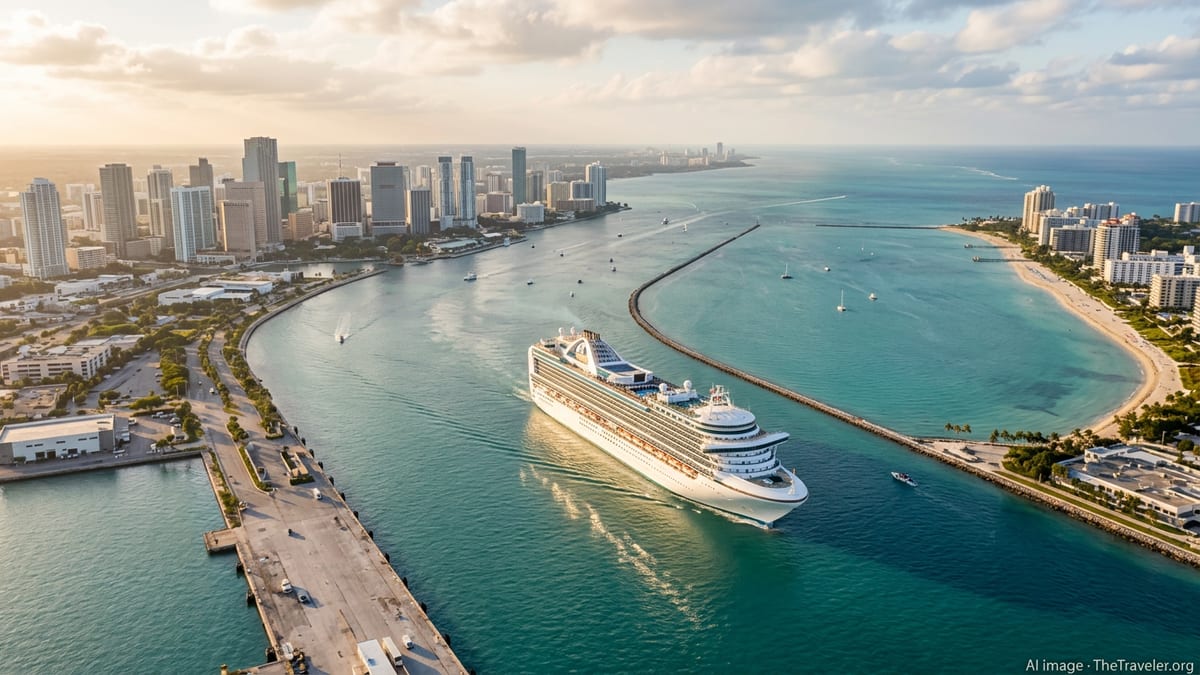
When the vessel returned to PortMiami, officers were waiting at the terminal. Based on local coverage and routine port security practices, the passenger was detained as part of the disembarkation process, with the warrant serving as the legal basis for the arrest. Cruise ports such as Miami routinely coordinate with law enforcement to identify travelers with active warrants before they leave restricted terminal areas.
PortMiami is among the world’s busiest cruise gateways, handling tens of thousands of passengers on peak weekends. Within that environment, shipboard security teams, federal agencies and local police rely on shared data systems that can flag individuals who are wanted in connection with open investigations, including assault and other violent offenses.
In this incident, the alleged bar assault did not occur on the ship or within port property, but the arrest at the cruise terminal underscores how outstanding warrants can be enforced when travelers return from sea. Once detained, the passenger was transported from the port to a local detention facility for booking and an initial court appearance, standard procedure in such cases.
Potential Charges and Legal Ramifications
The case is expected to proceed through the state court system under Florida assault or battery statutes, depending on the final charging documents. Penalties in similar bar-related assault cases can range from fines and probation to jail time, particularly if prosecutors allege significant injury or the use of a weapon during the altercation.
Travel law specialists note that a cruise itinerary does not shield a traveler from being held accountable for alleged crimes on shore. When an incident occurs before embarkation, investigators can pursue warrants while the traveler is away, then use port entry points as controlled locations to execute those warrants upon return.
Beyond criminal exposure, a passenger facing violence-related charges can encounter secondary consequences that affect future trips. Cruise lines reserve broad discretion under their ticket contracts to deny boarding, restrict access or even offload guests whose conduct, or legal status, is considered a safety or reputational risk. A serious pending assault case can also complicate international travel if bond conditions restrict movement or require court appearances.
PortMiami’s Role in Linking Tourism and Law Enforcement
PortMiami’s status as a major tourism gateway means it frequently appears in public arrest records tied to cruise travel. Past cases have involved passengers detained on arrival over allegations ranging from violence ashore to separate investigations into child exploitation material and other serious offenses uncovered through financial or digital activity screenings.
Local government documents show that Miami-Dade authorities have updated port regulations in recent years to address disorderly conduct, threats and physical altercations in and around cruise terminals. These rules sit alongside broader criminal statutes and are intended to deter behavior that can endanger large crowds moving through confined terminal spaces.
For travelers, the visible result is a security environment that blends vacation logistics with policing. Cruise guests typically pass through multiple layers of ID checks, baggage screening and customs processing. While most passengers experience this only as a brief delay before reaching taxis and rideshares, these checkpoints are also the stage on which outstanding warrants and active investigations often intersect with tourism.
Growing Scrutiny of Passenger Conduct Onshore and At Sea
The PortMiami arrest comes amid heightened public attention to passenger behavior both on ships and in nearby nightlife districts. In recent months, regional outlets and travel forums have documented a series of fights in cruise terminals, disruptions in customs lines and alcohol-fueled altercations linked to sailings along the Florida coast.
Cruise operators have responded by emphasizing codes of conduct and, in some reported instances, imposing lifetime bans on guests involved in violent incidents. Industry statements over recent years have repeatedly framed these measures as necessary steps to safeguard crew, passengers and port workers in an era of rising social media visibility and instant sharing of onboard conflicts.
Although the alleged bar assault in this case unfolded away from the ship itself, the passenger’s eventual arrest at PortMiami highlights how the boundary between city nightlife and cruise tourism is increasingly porous. For visitors starting or ending voyages in Miami, local law and order considerations can be as consequential as flight times and boarding windows, particularly when a night out leads to allegations that follow them all the way back to the pier.