


More news on this day
A freight train derailment in a Regina rail yard is under investigation after several cars left the tracks, disrupting yard operations and renewing scrutiny of rail safety near major travel routes through the Saskatchewan capital.
Get the latest news straight to your inbox!
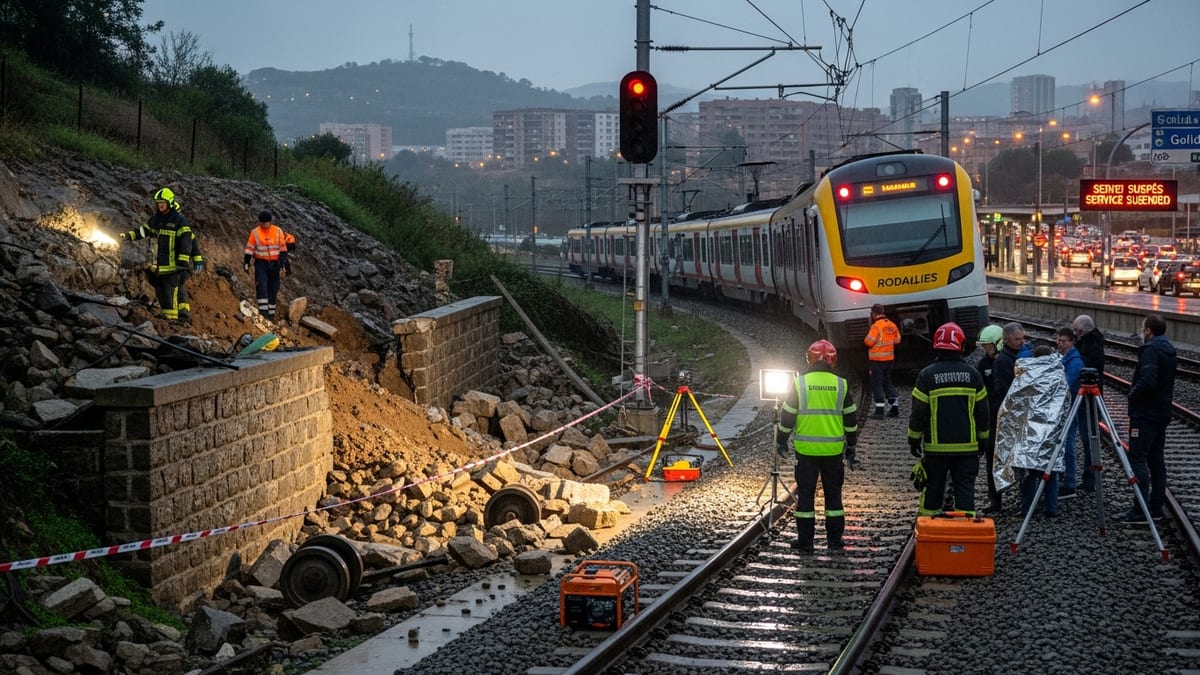
Early reports highlight scale of yard disruption
Initial information from local coverage indicates that multiple freight cars derailed inside a Regina rail yard used for assembling and storing trains serving regional and cross-country routes. The incident occurred within the yard limits rather than on a main line, which helped contain broader disruption to intercity rail movements but created significant operational challenges on site.
Published accounts describe yard workers and railway response teams converging on the affected tracks to assess damage to rolling stock and infrastructure. Visual evidence circulating on social and traditional media shows cars off the rails in a section of the yard dense with switches and crossovers, a configuration that typically requires complex recovery work.
Rail yards function as the logistical heart of freight networks, and a derailment inside such a facility can ripple through train assembly schedules for days. While early indications suggest that passenger movements and highway access around Regina were largely unaffected, rail freight traffic in and out of the city is expected to experience delays as damaged tracks and equipment are cleared.
There were no immediate reports of serious injuries, according to publicly available information. Emergency response around the site focused on ensuring there were no fires, leaks, or hazards to nearby workers and neighborhoods.
Cause under investigation amid growing focus on yard safety
The precise cause of the derailment has not yet been disclosed, and rail safety investigators are expected to examine a range of potential technical and operational factors. In recent years, accident reports involving train movements in yards elsewhere in Canada and the United States have frequently cited track geometry issues, broken rails, switch problems, and securement practices as contributing elements.
Yard environments pose particular risks because trains move at low speeds over a dense web of switches, sidings, and crossovers while being assembled and disassembled. Research on rail safety has noted that these complex movements can produce a derailment risk comparable to, or in some circumstances greater than, that seen on open main lines, especially when heavy freight cars are being shunted or marshalled.
In Regina’s case, investigators are expected to review track conditions, recent maintenance records, train handling data, and the performance of braking and coupling systems in the affected consist. They are also likely to examine whether recent weather patterns, including freeze–thaw cycles common on the Prairies, may have affected rail integrity or ballast support within the yard.
According to publicly available summaries of previous rail incidents in western Canada, non-main-track derailments rarely lead to high-profile damage but are important indicators of infrastructure stress and operating practice that regulators and operators increasingly track.
Environmental and community concerns closely monitored
Attention has focused on whether any of the derailed cars in Regina were carrying hazardous materials. Early reporting suggests that the incident did not result in a major spill or fire, a key concern given the proximity of rail infrastructure to residential areas, industrial facilities, and key road corridors in and around the city.
Modern freight trains moving through Regina commonly carry a mix of bulk commodities such as grain, potash, and oilseeds, along with fuel, chemicals, and manufactured goods. Even when cargo is non-hazardous, derailments can scatter debris, damage drainage systems, and create noise and dust that affect nearby communities.
Publicly available information from similar yard derailments elsewhere in Canada shows that railway operators typically work with environmental contractors to inspect soil and water near the site, remove contaminated ballast where required, and monitor air quality during recovery operations. Local residents and businesses around the Regina yard are expected to watch these steps closely as more becomes known about the cargo and any minor leaks or releases that may have occurred.
Municipal planners and transport advocates in prairie cities have also pointed to such incidents as reminders of the need for clear emergency access routes and communication protocols when major freight corridors intersect with urban growth.
Travel and logistics impacts for rail-dependent industries
For travelers, the immediate impact of the Regina yard derailment appears limited, as the event took place off the main line and did not directly block intercity passenger rail routes. However, past disruptions in other regions have shown that freight incidents can cascade into schedule changes for passenger services if key tracks or junctions remain constrained for an extended period.
Businesses that depend on time-sensitive freight flows through Regina may feel more direct effects. Grain shippers, intermodal customers, and energy producers rely on the city’s rail yards as staging points for trains heading toward major hubs in eastern and western Canada. Any reduction in yard capacity during recovery work can slow wagon turnaround times and complicate logistics planning.
Published railway performance data from recent years indicate that even short-lived disruptions in major yards can contribute to network congestion far beyond the immediate site. Operators often respond by rerouting some traffic to alternative yards, lengthening trains, or adjusting departure times, measures that can in turn affect transloading schedules at terminals and facilities linked to the yard.
Travelers using highways and arterial roads near the Regina rail complex may also encounter intermittent delays from road closures or slowdowns as heavy cranes and maintenance equipment move in and out of the area during the cleanup and infrastructure repairs.
Next steps for investigators and rail operators
Once the immediate derailment scene is stabilized, investigators are expected to collect physical evidence from the rails, wheels, couplers, and track bed, along with event recorder data from locomotives and yard control systems. This process typically leads to a detailed reconstruction of the sequence of events that brought the train or cut of cars off the rails.
Publicly available safety reports from prior Canadian yard incidents show that resulting findings often trigger infrastructure upgrades, changes to inspection cycles, or revisions to operating rules. In some cases, railways have been prompted to adjust speed limits in certain yard zones, renew aging track components, or enhance training for crews working in complex switching environments.
For Regina, the outcome of the current investigation may influence how rail traffic is managed through one of the Prairie region’s key freight gateways. Travel and logistics stakeholders, from trucking firms that interchange with rail to producers shipping goods overseas, will be watching for indications of how quickly normal operations can resume and what long-term safety improvements may follow.
Until investigators release more detailed findings, the Regina yard derailment stands as another reminder of the close connection between rail safety and the reliability of both freight and passenger movement across western Canada.