


More news on this day
A sudden surge of fabricated “global red alerts” circulating on social media is fuelling anxiety among would-be visitors to Europe, prompting fresh questions about how disinformation can rattle travel decisions even when on-the-ground conditions and official advisories remain largely unchanged.
Get the latest news straight to your inbox!
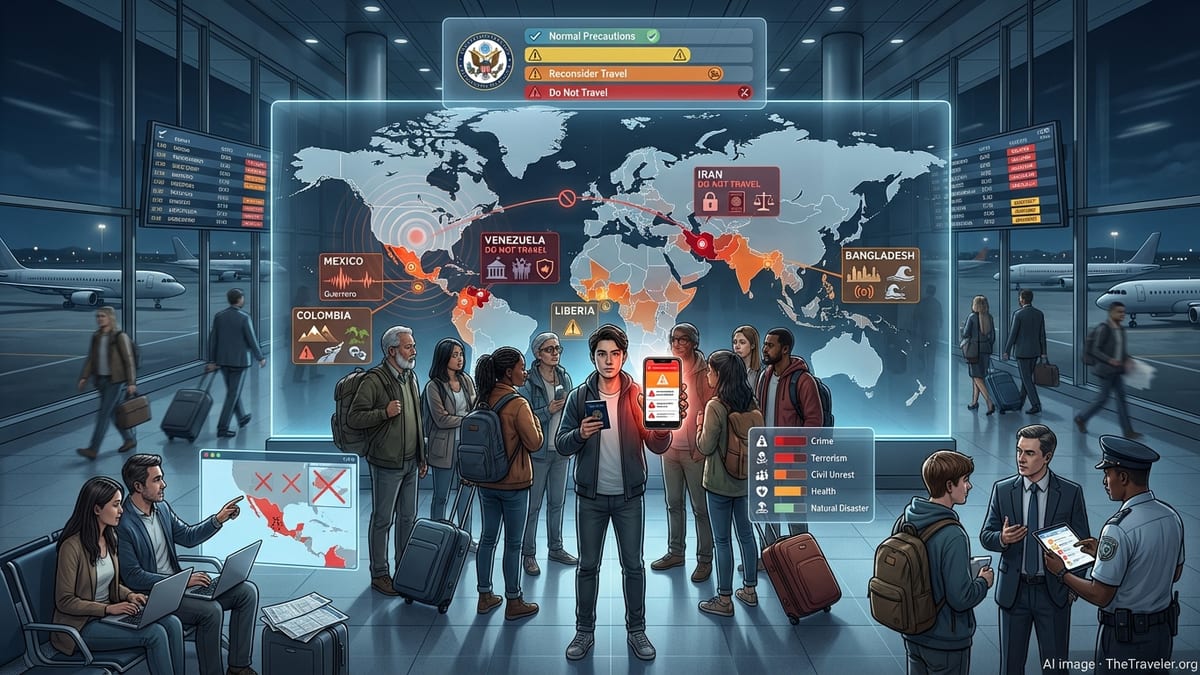
Viral Hoaxes Collide With a Strong Travel Season
The latest false warnings, styled to resemble government-level security bulletins, claim that a blanket red alert now covers multiple European capitals and major transport hubs. The alerts are not present on official advisory channels, yet screenshots and repackaged posts are being widely shared across messaging apps and travel forums.
The timing is sensitive for a region that depends heavily on tourism. Recent data from European tourism bodies and Eurostat indicates that overnight stays and intra-European trips continued to grow in the first quarter of 2026, extending a steady post-pandemic recovery. Industry analyses describe Europe as a comparatively safe and stable travel region, supported by strong regional demand and resilient consumer appetite for holidays.
Analysts note that this contrast between solid fundamentals and volatile online narratives is becoming a defining feature of the 2026 travel landscape. While traditional risk factors such as conflicts near key air corridors, high fuel prices and airport congestion remain in focus, loosely sourced “red alert” graphics add a new, harder-to-measure layer of perceived risk.
Borrowed Language From Real Warning Systems
Many of the fictional notices echo phrasing used by genuine meteorological and civil protection systems in Europe, where colour-coded alerts are common for windstorms, floods and extreme heat. In past seasons, red warnings were issued for severe weather events that temporarily disrupted flights, rail services and coastal travel. Those legitimate alerts, archived online and in media coverage, now serve as raw material for manipulated images that strip out dates and locations.
Travel risk specialists say this blending of real terminology with fabricated context can make it difficult for casual readers to distinguish between current, localised disruptions and invented continent-wide emergencies. The hoax alerts typically provide no clear time frame, no naming of responsible agencies and no traceable reference to national or European monitoring services.
Researchers who track travel-related misinformation highlight that these posts often spike during booking peaks or in the run-up to major holidays. They argue that the objective is less about accurately depicting risk and more about driving engagement and emotional reactions, which can indirectly affect perceptions of European destinations.
Industry Concern Over Perception Gap
Publicly available industry surveys in recent months show that Europeans’ intention to travel within the region between spring and autumn 2026 is at its highest level since 2020. Tourism organisations point to strong bookings for many Mediterranean and city-break destinations, alongside growing demand for “coolcation” itineraries in Nordic countries.
At the same time, trade groups and travel analysts have been warning about a widening gap between perception and reality. Real and well-documented pressure points do exist: new biometric entry and exit checks at external EU borders are contributing to queues and delays for some non-EU visitors, particularly at peak times. Flight-tracking data and consumer reports describe periodic surges in delays and cancellations at major hubs as the summer season ramps up.
These operational challenges are specific, time-bound and largely logistical. The fictional global alerts, by contrast, suggest an undefined, all-encompassing threat level that does not align with tourism statistics, aviation safety records or current official advisories. Industry observers caution that if such narratives take hold, they may prompt some travellers to downgrade or postpone trips even where concrete risks are limited.
Travellers Seek Clarity Amid Mixed Signals
Travel forums and social platforms now feature a mix of first-hand accounts from visitors enjoying largely normal trips, alongside reposts of the false red-alert graphics. Some users describe confusion over how to interpret the conflicting signals, particularly when planning visits with children or older relatives.
Consumer advocates advise travellers to distinguish between three separate issues: documented security or weather incidents, which are typically covered by established news outlets; operational strains such as border queues or air traffic disruptions, which may affect comfort and schedules; and unfounded broad claims that lack verifiable references. The fictional alerts generally fall squarely into the third category.
Insurers and travel-planning services note that most standard policies respond to clearly defined events, such as airline delays, severe weather or formal advisories that restrict travel to specific regions. Fabricated, non-attributed warnings circulating only on social media rarely meet those thresholds, which can create further frustration when travellers attempt to claim compensation based on hoax material.
How to Read Future Alerts About European Travel
The emergence of these fictional global red alerts is prompting calls for clearer communication from trusted reference points whenever travel conditions genuinely change. European aviation and tourism dashboards, national meteorological agencies and statistical offices increasingly publish near-real-time updates on traffic volumes, disruptions and demand trends, which can help provide context beyond social media feeds.
Specialists in risk communication suggest that travellers adopt simple verification habits: checking dates and locations on any alert image, looking for the naming of a responsible public body, and comparing claims with coverage in recognised news outlets. Where discrepancies appear, the safest assumption is that viral graphics are incomplete or misleading rather than that formal channels have missed a sweeping emergency.
For now, available data portrays a European travel market grappling with infrastructure strain, evolving border technology and external geopolitical shocks, but not with the blanket emergency implied by the fake red-alert posts. How long that distinction remains clear in the public mind may depend on how quickly travellers, platforms and the industry learn to recognise and neutralise the next wave of fictional alarms.