


More news on this day
Saudi Arabia’s busiest airports are confronting a fresh wave of flight delays and cancellations as regional airspace restrictions and operational bottlenecks converge, disrupting travel for thousands of passengers across the kingdom.
Get the latest news straight to your inbox!
Ripple Effects Across Major Saudi Hubs
Recent regional airspace closures and security driven route suspensions have placed sustained pressure on Saudi Arabia’s leading gateways, particularly Jeddah’s King Abdulaziz International Airport and Riyadh’s King Khalid International Airport. Publicly available flight tracking data and travel advisories indicate that passengers have faced rolling cancellations and lengthy delays on both international and domestic routes, with schedules frequently revised at short notice.
Advisories circulated through regional media describe Saudi Arabia as a critical east–west corridor that has remained open while neighboring airspaces faced tighter restrictions. This status has concentrated traffic into Saudi hubs, compounding congestion and leaving airlines with limited flexibility to reroute services when surrounding routes are suspended or curtailed.
Independent risk briefings covering the Middle East have reported disruption at key Saudi airports as regional flights are suspended or rerouted, citing Jeddah, Riyadh, Medina and Dammam among the locations affected. While core airport infrastructure has continued to operate, the cumulative impact of rerouted traffic, changing flight paths and precautionary schedule cuts has translated into a stop start experience for travelers.
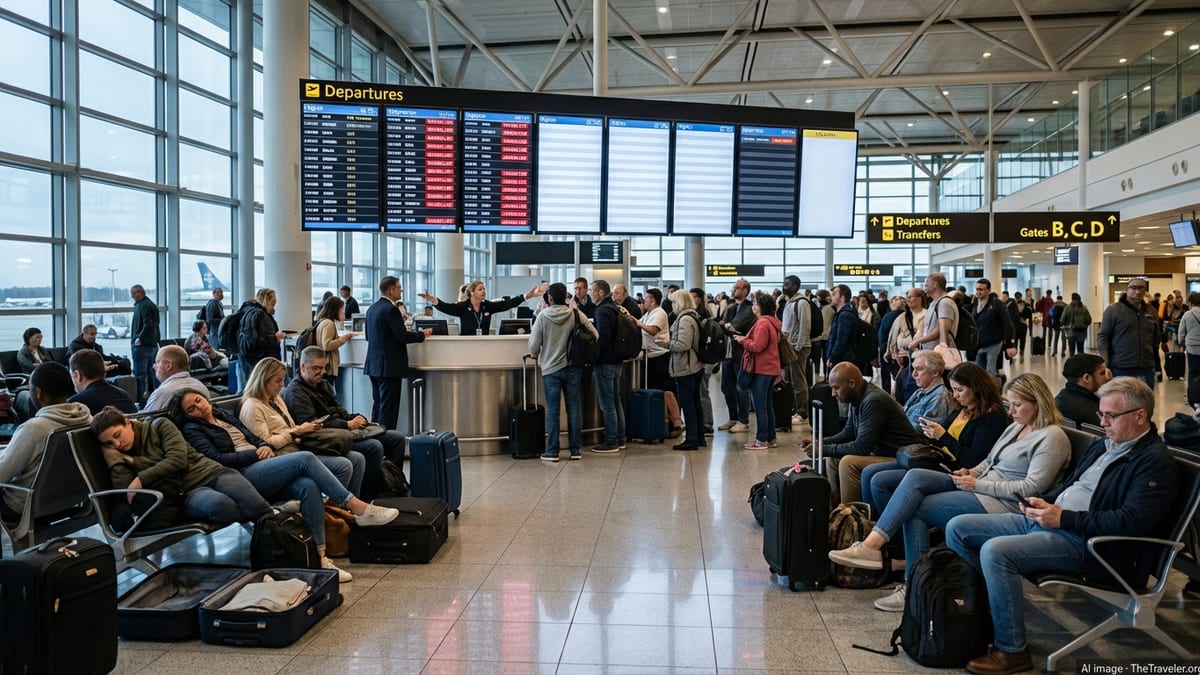
Travel forums and passenger accounts from early 2026 reflect a pattern of last minute changes, with some flyers describing multiple rebookings or repeated cancellations on short domestic journeys. Others report crowded departure halls and extended layovers as carriers adjust timetables to reflect evolving airspace conditions.
Airlines Trim Networks and Urge Passengers to Recheck Flights
Major Saudi and regional carriers have introduced targeted suspensions and route reductions in response to the shifting operating environment. Public statements and press releases from airlines show that services on certain regional routes have been paused for set periods, while frequencies on other connections have been scaled back.
Coverage of airline notices indicates that Saudia and low cost operators such as flyadeal and flynas have temporarily halted or reduced flights on a number of routes where overflight permissions or nearby airspace status have changed. These adjustments have often been framed as precautionary safety measures that will be reassessed as regional conditions evolve.
In parallel, international airlines have revised their Saudi networks, with some foreign carriers dropping or postponing services to specific cities. Industry commentary notes that capacity removed from Saudi routes is in some cases being redeployed to other markets that are less exposed to regional airspace uncertainty, further limiting options for passengers seeking alternative connections.
Airports and airlines have repeatedly advised travelers through public channels not to proceed to the airport without checking their latest flight status. Passengers are being encouraged to monitor airline apps and booking tools closely on the day of travel, as same day schedule changes remain more frequent than in typical operating periods.
Focus on Jeddah After High Profile Irregularities
Operational strain has been particularly visible at King Abdulaziz International Airport in Jeddah, a critical gateway for religious travel to Mecca and a major transfer point for long haul services. Recent local coverage has highlighted days in which irregular flight operations resulted in significant delays and crowding among travelers and Umrah pilgrims.
In response, the country’s transport leadership has publicly directed the formation of an urgent committee to examine the causes of irregular operations at Jeddah. The committee, which includes representatives from the aviation regulator and other relevant bodies, has been tasked with reviewing airport performance, airline scheduling practices and coordination between ground and airside services.
Reports from travelers passing through Jeddah during busy periods describe long queues at check in and security, with some passengers missing connections after inbound flights arrived late. Others note that while the airport has continued to function, peak time congestion has intensified as disrupted flights stack up alongside scheduled departures.
Industry analysts point out that Jeddah already manages high structural demand because of its role in serving pilgrims, and that any disruption related to airspace changes or regional insecurity is likely to magnify existing capacity challenges. This combination has reinforced calls for tighter slot management and more resilient contingency planning at the airport.
Regional Security Context and Passenger Concerns
The flight disruptions affecting Saudi airports are unfolding against a backdrop of heightened security tensions in parts of the wider Middle East. Travel advisories from various governments have underscored risks to civil aviation in specific corridors, while aviation regulators continue to update notices concerning potential threats to aircraft and airports.
In recent months, Saudi authorities have announced successful interceptions of unmanned aerial systems approaching from neighboring territories. Official statements have emphasized that such incidents did not compromise civilian air operations, but the broader regional picture has contributed to precautionary airspace measures in several states and fueled concerns among passengers planning itineraries through the region.
Travel risk assessments note that Saudi airspace remains one of the principal arteries connecting Asia, Europe and Africa at a time when alternative routes face restrictions or higher operational risk. This concentration of traffic, combined with intermittent security alerts, increases the likelihood of rapidly imposed airspace adjustments that can cascade into airport level disruption.
Consumer discussions on social platforms suggest that some travelers are reconsidering itineraries involving regional connections, particularly where tickets rely on tight transfer windows. Others report opting for longer routings via alternative hubs in a bid to avoid potential last minute cancellations or extensive delays.
What Travelers Transiting Saudi Airports Should Expect
Travel industry guidance published in recent weeks advises passengers using Saudi hubs to build additional flexibility into their plans. This includes allowing longer connection times, preparing for the possibility of overnight stays if onward flights are cancelled, and keeping essential items in carry on baggage in case checked luggage is delayed.
Analysts stress that airlines typically prioritize safety and regulatory compliance when deciding whether to operate or cancel flights in periods of uncertainty. As a result, timing and routing decisions may change with limited notice as carriers respond to new information about airspace status or security conditions along planned routes.
Passengers are encouraged by travel advisories and airline communications to register accurate contact information with their carrier so that schedule changes can be communicated quickly. Many airlines are also offering limited change fee waivers or flexible rebooking options for itineraries touching affected airports, though the specific terms vary by carrier and ticket type.
With regional dynamics still in flux, observers expect intermittent disruption at Saudi airports to remain possible over the coming weeks. Travelers transiting the kingdom are being urged, through public information channels, to verify flight details repeatedly in the 24 hours before departure and to remain prepared for further adjustments as the airspace situation continues to evolve.