


More news on this day
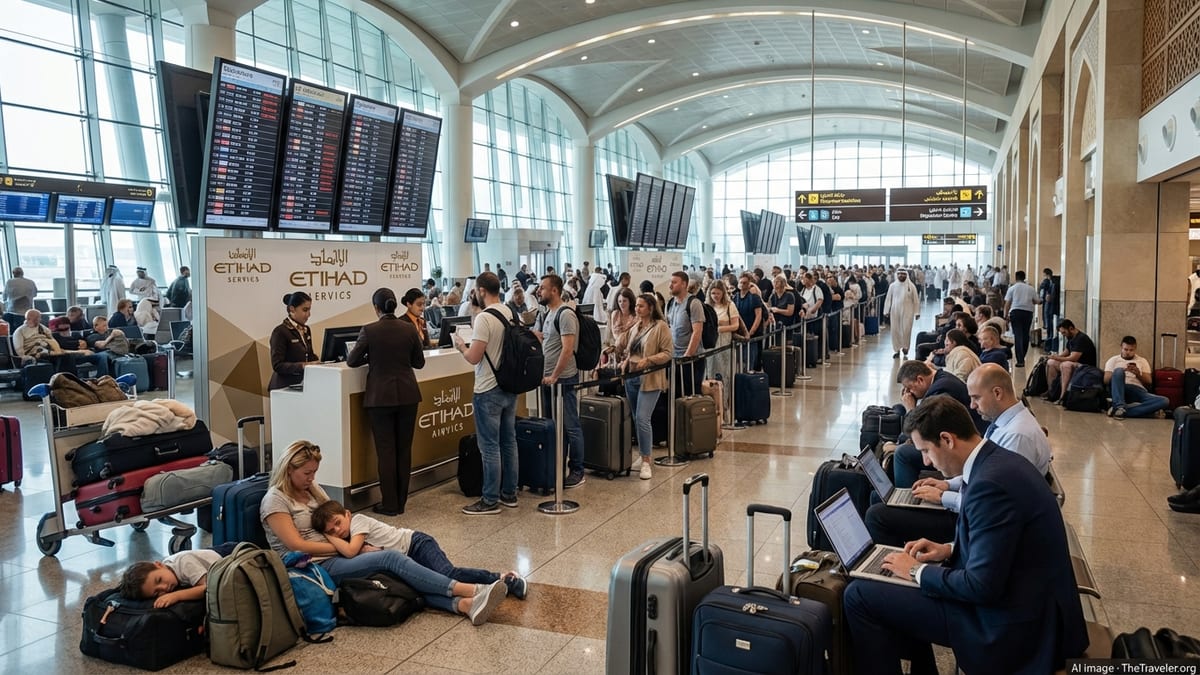
Passengers flying out of the United Arab Emirates today are being urged to check their flight status repeatedly, as Etihad Airways, Emirates and Air Arabia continue to adjust schedules, cancel services and reroute aircraft in response to ongoing regional airspace restrictions and operational challenges.
Get the latest news straight to your inbox!
Emirates operating reduced schedule from Dubai
Publicly available information from airline advisories and airport updates indicates that Emirates is still operating on a reduced schedule from Dubai International Airport, with flights concentrated on key trunk routes and some regional services temporarily suspended or consolidated. After months of on and off disruption linked to the regional security situation and intermittent airspace closures, the carrier has restored a significant portion of its network but continues to trim frequencies and alter timings on short notice.
Recent travel bulletins and broadcast coverage describe a pattern in which full suspensions on certain days have given way to limited operations, particularly on departures to parts of the Middle East and select secondary cities in South Asia and Europe. Some passengers have reported that their flights were canceled even while other services on the same route continued, reflecting the airline’s efforts to prioritize aircraft and crew on the busiest and most operationally feasible sectors.
Travelers departing Dubai today are being advised by official airport channels and airline statements to avoid heading to the terminal until they have a clearly confirmed booking for the specific flight number and date they intend to travel on. Same day changes remain possible as airspace restrictions, slot allocations and turnaround times shift through the day.
For those already rebooked following earlier cancellations in March and April, reports from recent weeks show that Emirates has been offering alternative dates, rerouting via partner carriers in limited cases, and in some instances providing refunds when replacement options are not practical. However, availability on popular routes remains tight, especially for departures around peak summer holiday dates.
Etihad continues phased recovery from Abu Dhabi
Etihad Airways, based in Abu Dhabi, is also in a phased recovery mode following heavy disruption earlier in the year when airspace closures and regional security incidents forced the suspension of thousands of flights into and out of the UAE. Travel advisories and policy documents circulated to trade partners show that a broad waiver framework was introduced for passengers booked during the peak disruption window, allowing rebooking and refunds without typical penalties.
Although those blanket waivers have started to narrow in scope, the airline’s published guidance still highlights flexibility for travelers directly affected by cancellations or significant schedule changes. In practice, this has meant fee waivers for date changes on the same route, options to reroute via alternative gateways where possible, and refunds for unused sectors when no reasonable alternative is available.
Operationally, most long haul Etihad services to Europe, North America and key Asian destinations are reported to be operating, but with some frequency reductions compared with the original summer timetable. On certain days, flights have been merged or retimed to fit within available airspace corridors, leading to last minute adjustments that may not be reflected in tickets issued months ago.
Passengers departing from Abu Dhabi today are encouraged, based on current public guidance, to track their booking via the airline’s digital channels and to monitor airport departure boards, as same day timing changes of an hour or more remain possible. Travelers with tight onward connections at other hubs may need to allow additional buffer time or consider voluntary rebooking onto more robust connection patterns.
Air Arabia travelers see selective cancellations and rebooking pressures
Low cost carrier Air Arabia, which operates from Sharjah and other UAE hubs, has faced its own series of disruptions, particularly on short haul routes around the Gulf, to North Africa and to leisure destinations in Europe. Social media reports and passenger accounts from the past few months describe short notice cancellations, limited rebooking options on peak days and pressure on customer service channels as travelers seek alternative ways home.
Unlike the full service network carriers, Air Arabia typically operates with tighter fleet utilization and fewer spare aircraft, which makes the schedule more sensitive to cascading delays and sudden airspace or airport constraints. When an individual rotation is canceled, subsequent flights on that aircraft type can be affected, a pattern that travelers have observed in recent weeks when bad weather or temporary airport closures have coincided with ongoing regional tensions.
Policy summaries and consumer guidance documents show that Air Arabia has made temporary adjustments to its ticket change rules during periods of severe disruption, allowing some passengers to move travel dates or accept credit for future trips. However, the extent of flexibility often depends on the fare type and the exact wording of the disruption notice for a given travel period.
For passengers flying out of Sharjah or secondary UAE airports with Air Arabia today, the most consistent advice across public channels is to reconfirm departure times early and again shortly before leaving home, as some flights have been retimed, merged with later departures or rerouted via alternate airports with relatively short lead time.
Regional context: airspace restrictions and security situation
The continuing pattern of flight cancellations and short notice schedule changes across Emirates, Etihad and Air Arabia is closely tied to the wider security environment in the Gulf region. Open source reporting on the 2026 Iranian strikes on the United Arab Emirates and subsequent military activity details periods when key UAE airports, including Dubai International and Abu Dhabi, were forced to suspend operations or operate at sharply reduced capacity.
Those closures led to large backlogs of passengers and aircraft positioned out of place around the world, a disruption that takes many months to unwind even after airspace gradually reopens. Airlines have had to adjust routings to avoid conflict zones, operate longer flight paths that consume more fuel and crew hours, and at times cap the number of daily departures to match available runway and air traffic control capacity.
Industry and academic analysis of aviation disruptions shows that the knock on effects of large scale airspace closures can persist well beyond the immediate incident, as carriers rebuild schedules and aircraft maintenance cycles. The current mix of selective cancellations and frequency cuts by UAE carriers fits this pattern, with networks reshaped to focus on the most commercially and operationally sustainable routes while discretionary capacity is pared back.
For travelers, this means that even though airports in the UAE are open and handling significant traffic, the environment remains more fragile than in previous summers. Any fresh security scare, airspace notice or weather event has the potential to trigger another wave of cancellations or diversions, especially on already thinned schedules.
What passengers flying today from the UAE should do
For anyone booked to fly today from Dubai, Abu Dhabi, Sharjah or other UAE airports on Emirates, Etihad or Air Arabia, the most important step is to verify the status of the specific flight number and sector repeatedly before departure. Airline disruption policies and recent advisories consistently highlight that passengers should rely on real time digital tools and notifications rather than printed itineraries or assumptions based on past schedules.
Travelers are also encouraged, based on current public information, to build in additional time for check in and security, as queues can fluctuate when multiple flights are retimed or when large numbers of rebooked passengers converge on the terminal. At the same time, both airlines and airport operators have stressed that passengers should avoid arriving excessively early if their flight status is unconfirmed, in order to ease congestion.
Those who receive cancellation notices or substantial schedule changes today should review the relevant airline’s disruption policy for their ticket type, as published guidance for Emirates, Etihad and Air Arabia outlines options for rebooking, rerouting or refunds in defined circumstances. Keeping boarding passes, receipts and written communications can help support later refund or insurance claims.
With the regional situation still fluid and airlines fine tuning timetables day by day, passengers departing the UAE are likely to face an environment of heightened uncertainty for some time. Staying informed, flexible with routing and dates where possible, and keeping close track of airline announcements remain essential for minimizing disruption to travel plans.