


More news on this day
US embassies across the Middle East have issued new security alerts urging American citizens to consider departing or be ready to leave at short notice, as rising tensions with Iran heighten concerns over regional instability and potential travel disruption.
Get the latest news straight to your inbox!
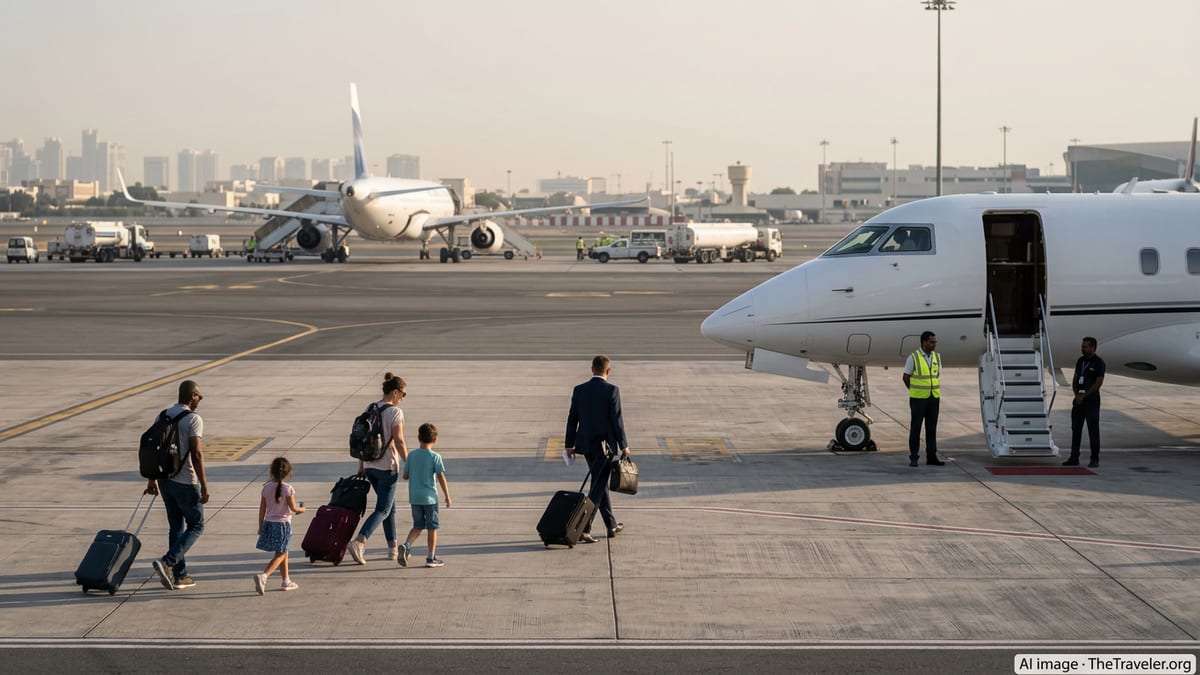
Coordinated security alerts across key Middle East hubs
Recent security notices circulated by US diplomatic missions in the Middle East advise Americans to exercise heightened caution and to prepare for the possibility of abrupt changes to travel plans. Publicly available advisories describe a risk of flight cancellations, temporary airspace closures and wider disruptions to commercial routes that connect the region to Europe, Asia and North America.
The guidance has been reposted or echoed by embassies and consulates in countries including Bahrain, Israel, Iraq, Jordan, Kuwait, Lebanon, Oman, Qatar, Saudi Arabia and the United Arab Emirates. In each case, the messaging stresses that Americans should review their personal contingency plans, ensure travel documents are current and monitor airline communications in case routes are suspended with little warning.
Reports indicate that the alerts are framed as precautionary rather than an immediate evacuation order, but the tone is more urgent than routine security reminders. Many notices explicitly encourage Americans either to consider departing while commercial options remain available or to be fully prepared to depart quickly if the situation deteriorates.
For travelers, the renewed focus on readiness underscores how fast conditions can change in a region where airspace closures and ground transport restrictions have previously unfolded within hours of new military developments.
Iran tensions drive renewed concern over regional flashpoints
The latest embassy messages come against the backdrop of an extended confrontation between the United States and Iran, including earlier strikes and a continuing military buildup in the wider Middle East. Open-source reporting on the conflict highlights how periodic escalations have repeatedly affected civil aviation, shipping corridors and cross-border travel across the Gulf and Levant.
Analysts note that even when direct hostilities are limited, heightened alert levels around military facilities, energy infrastructure and strategic waterways can trigger temporary closures of airports or airspace. Commercial carriers frequently reroute flights to avoid perceived risk zones, sometimes lengthening journeys or causing last-minute cancellations that leave travelers scrambling for alternatives.
The security advisories reference the potential for what is described as unforeseen or unexpected escalation. While no specific trigger is named in public postings, media coverage points to ongoing concerns that any new incident involving Iran or its regional partners could rapidly spill over into broader unrest, protests or cross-border attacks that complicate movement for foreign nationals.
In this environment, the message to Americans in the region is to assume that normal schedules cannot be guaranteed and that options to leave could narrow quickly if tensions spike again.
Implications for tourists, business travelers and expatriates
For leisure travelers, the alerts serve as a reminder to closely track both US government advisories and local developments before and during a trip. Travelers who decide to continue with planned visits are being urged in public guidance to register with official traveler enrollment programs, maintain flexible itineraries and keep sufficient funds and insurance coverage to handle unexpected route changes.
Business travelers and corporate mobility managers are also reassessing risk thresholds. Many companies with staff in Gulf and Levant markets appear to be revisiting internal evacuation and remote work plans, according to industry commentary and corporate travel bulletins. Some organizations are advising employees to keep passports readily accessible, store copies of key documents and have a clear plan for family members in the event of rapid departures.
For long-term expatriates, especially those with children in local or international schools, the call to be prepared to depart poses more complex decisions. Education calendars, housing contracts and residency permits can all be affected if families decide to leave early. Advisory language stopping short of mandatory departure leaves much of the risk calculation to individuals, prompting many to weigh their tolerance for uncertainty against the practical challenges of relocating at short notice.
Insurance providers and travel assistance firms are monitoring the situation closely, with some advising clients to check policy wording around war, civil unrest and government travel warnings, which can affect coverage for cancellations or emergency evacuations.
Embassy posture and consular service disruptions
Alongside the alerts to private citizens, recent months have seen periodic adjustments to staffing and operations at US posts in the Middle East. Earlier phases of the Iran crisis led to ordered or authorized departure of some nonessential personnel in selected locations, according to congressional correspondence and policy analyses, and similar measures remain a possibility if local security conditions deteriorate again.
When diplomatic missions reduce staffing or temporarily close public-facing sections, routine consular services such as visa interviews, passport renewals and notarial appointments are often postponed. International mobility firms and law practices tracking consular operations in the region have already pointed to recent closures and appointment cancellations at certain posts, underscoring how geopolitical tensions can quickly affect administrative timelines.
Security alerts typically emphasize that Americans should not rely on the US government for evacuation and that commercial options are the primary means of departure in most scenarios. Past crises in the region have shown that once airspace restrictions take hold, organizing departures can become considerably more complex and expensive, particularly for those who delayed travel decisions until late in a crisis.
Travelers are therefore being encouraged, in publicly available guidance, to make conservative assumptions about the availability of assistance and to think in terms of self-reliance, including maintaining multiple exit options where possible.
Practical steps for Americans currently in the region
While the latest alerts are rooted in evolving security dynamics, their practical focus is on preparation rather than alarm. Travel security specialists recommend that Americans in affected countries compile a checklist that includes confirming that passports and residence permits are valid, ensuring access to sufficient funds, maintaining local and international phone connectivity and knowing the locations of airports and overland border crossings that might serve as exit points.
Individuals are also advised in public guidance to keep a small departure bag ready, containing essential medications, basic clothing, chargers and important documents. Monitoring local news, airline announcements and official advisory channels at least daily can help travelers anticipate emerging bottlenecks or changes to transportation networks.
For those who choose to remain despite the advisories, documenting risk assessments and contingency planning can be important, particularly for employers with duty-of-care responsibilities. Organizations are encouraged by risk consultants to communicate clearly with staff about expectations, thresholds for relocation and the support that would be available if the situation worsens.
As the regional picture around Iran and its neighbors continues to shift, the core message of the US embassy alerts is that Americans should not be caught off guard. The call to consider departing, or to be ready to depart, reflects an effort to move preparation forward in time, giving travelers and residents a window to make deliberate choices rather than rushed decisions in the middle of a rapidly unfolding crisis.