


More news on this day
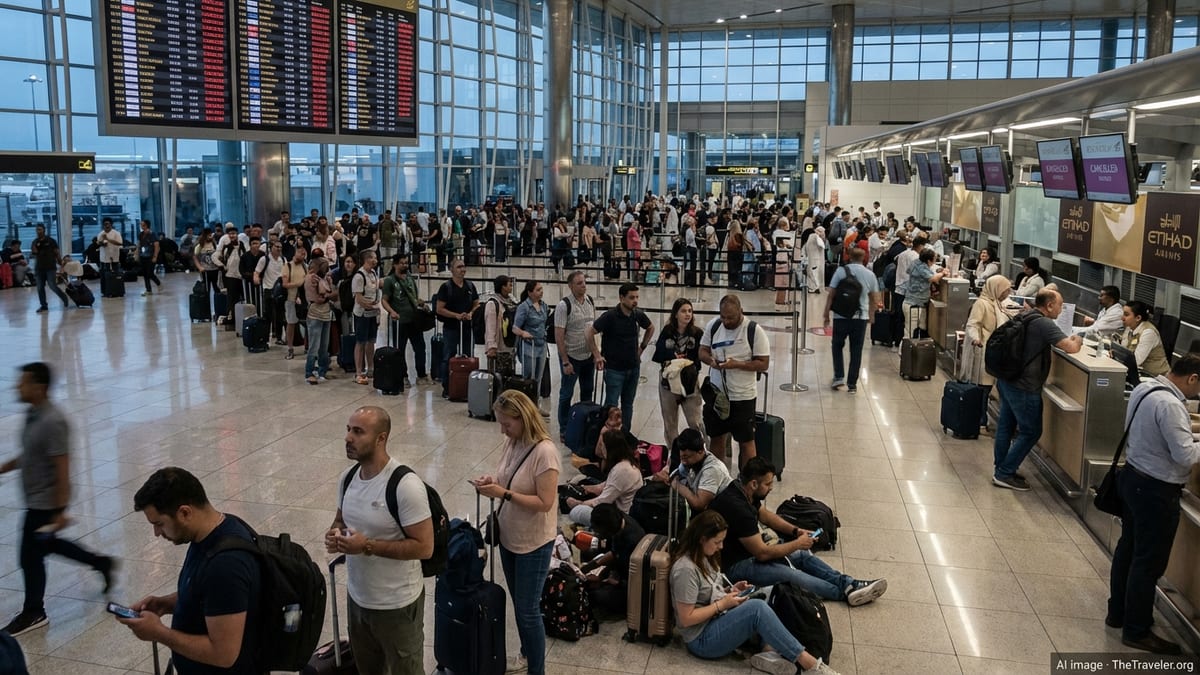
Donald Trump’s latest decision to pause additional military strikes on Iran is rippling through the aviation sector, as airlines, regulators and travelers across the United Arab Emirates weigh what the shifting security picture means for upcoming journeys.
Get the latest news straight to your inbox!
What Trump’s pause on Iran strikes actually changes
Recent reports indicate that Trump has agreed to halt new U.S. attacks on Iran following what has been described as a preliminary framework to curb hostilities and restore shipping and air traffic around the Strait of Hormuz. Coverage from multiple international outlets suggests this pause is politically fragile, coming after months of on off escalation in which strikes were repeatedly ordered, suspended and then resumed as talks stalled.
Analysts note that the pause reduces the immediate risk of fresh bombardment, but does not remove the underlying threats that have driven aviation warnings since late February, including missile, drone and air defense activity around key Gulf corridors. Aviation specialists point out that any renewed incident affecting aircraft, airports or critical energy infrastructure could quickly trigger new restrictions and diversions.
For travelers, the primary takeaway is that the pause eases pressure on regional planners in the short term, but it does not yet translate into a full return to pre conflict normality. Airlines and civil aviation authorities are expected to continue monitoring the security environment day by day, adjusting flight paths and schedules as necessary.
Current status of UAE airports and airspace
Publicly available information from the UAE’s General Civil Aviation Authority indicates that the country’s airspace is open and flight operations have largely normalised since the temporary closures and capacity cuts that followed the first wave of Iran related strikes earlier this year. In early May, the authority confirmed that precautionary restrictions were lifted and that air traffic across Dubai, Abu Dhabi and other hubs had resumed on a full commercial basis.
Earlier in the crisis, Dubai, Abu Dhabi and Sharjah airports experienced full ground stops and heavily reduced operations as Gulf states briefly closed segments of airspace in response to regional attacks. Traffic data compiled by aviation analytics firms showed hundreds of cancellations and widespread diversions across the Middle East during those peak days of disruption, with Dubai International Airport and Abu Dhabi’s Zayed International Airport among the most closely watched hubs.
Since then, flight tracking data and airline schedules indicate that the UAE has recovered more quickly than some neighboring countries, with major carriers restoring most long haul connections. However, residual constraints in nearby airspace and the possibility of sudden security alerts mean that operational flexibility remains limited, especially during busy connecting banks at Dubai and Abu Dhabi.
How airlines are routing flights around Iran
Even as UAE airspace is open, many airlines continue to route cautiously around Iranian territory and adjacent conflict zones. Industry reports describe a patchwork of restricted corridors over Iran, Iraq and parts of the Gulf, with carriers prioritising so called safe airspace protocols that favour longer, more northerly or southerly tracks where feasible.
Regional coverage of the crisis has highlighted how Gulf airlines have become adept at dynamic rerouting, adjusting flight levels, waypoints and timing windows in coordination with air traffic management units. Data from flight tracking platforms earlier this year showed Emirates, Etihad, flydubai and Air Arabia operating at reduced but steadily improving capacity while using narrower corridors and avoiding sensitive air defense areas.
For passengers, these adjustments can mean longer flight times on routes to Europe, North America and parts of Asia, as well as schedule changes when airlines consolidate frequencies to make the best use of available safe routes. Travelers may also notice aircraft holding patterns or unusual doglegs on in flight maps as crews navigate around restricted zones.
What UAE residents should check before flying
Travel experts advise that anyone flying from or transiting through the UAE in the coming days should pay close attention to airline notifications and airport advisories. With security conditions still fluid, carriers may introduce last minute timing changes, aircraft swaps or reroutings that affect connection windows or seat assignments.
Passengers are encouraged to confirm departure and arrival times on the day of travel, arrive at the airport earlier than usual and ensure that contact details are up to date within airline booking systems. This helps carriers send timely updates if a flight is delayed, retimed or rebooked due to route constraints. Those with tight onward connections through Dubai or Abu Dhabi may wish to allow a wider buffer than they would under normal circumstances.
Travel insurance remains another key consideration. Policy wording on war, terrorism and force majeure varies widely, and some products may exclude disruption linked to regional conflict or airspace closures. UAE based residents planning complex itineraries or non refundable stays may want to review coverage terms carefully or seek enhanced policies that explicitly address conflict related disruption.
Outlook for regional travel in the days ahead
With Trump’s pause on fresh strikes in place, industry observers see cautious optimism for a gradual stabilisation of air traffic patterns around the Gulf, provided there are no new attacks that threaten civilian aviation or major infrastructure. A reduction in immediate military activity could allow regulators to relax some of the most restrictive advisories and open additional routings, which would help shorten flight times and ease congestion in remaining corridors.
However, the recent history of this crisis suggests that conditions can change rapidly. Interim understandings between Washington and Tehran have broken down before, and shipping lanes and air routes near the Strait of Hormuz remain particularly sensitive. Airlines are therefore expected to maintain conservative risk assessments even if headline tensions appear to cool.
For UAE residents, the practical message is to stay informed rather than alarmed. The country’s airports are operational, major carriers continue to fly, and contingency planning is now deeply embedded in Gulf aviation. Yet with the geopolitical backdrop still volatile, flexibility around timings, routings and even destination choices will be an asset for anyone planning regional or long haul trips in the coming days.