


More news on this day
The United States has issued a fresh travel advisory for the Middle East, expanding earlier security alerts and urging Americans across the region to prepare for possible evacuation, flight disruptions, and rapidly changing conditions as tensions linked to the Iran conflict continue to simmer.
Get the latest news straight to your inbox!
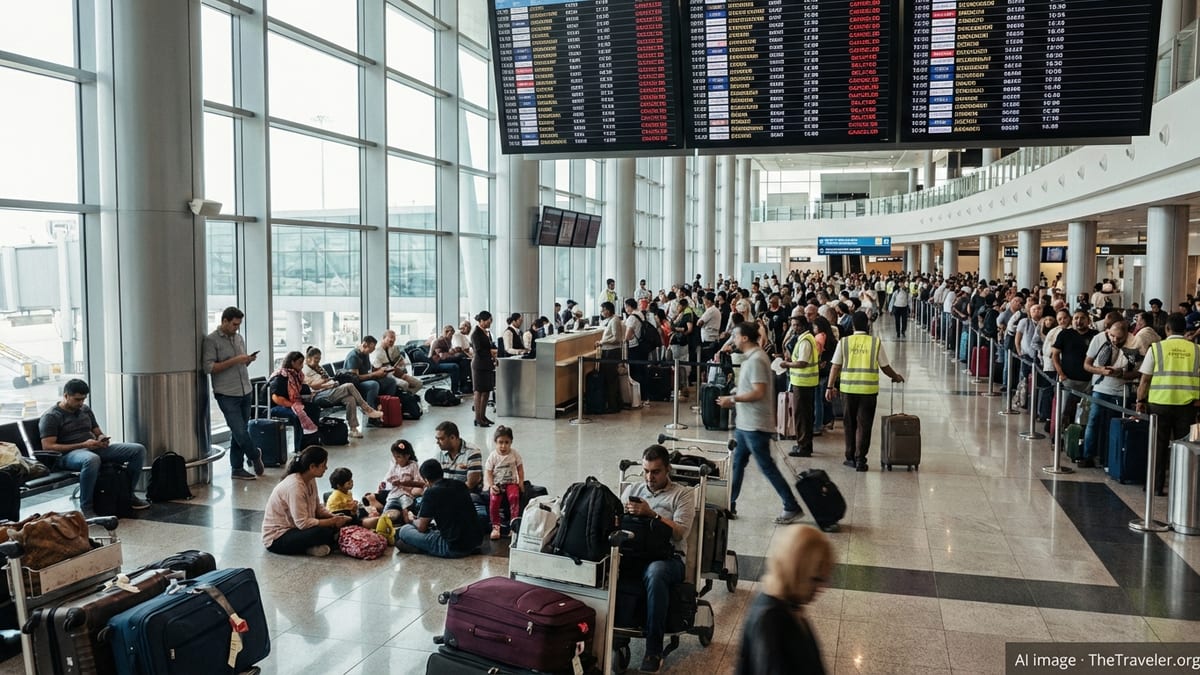
Expanded Warning Covers Key Gulf and Levant Hubs
Publicly available information from the US government and recent news coverage indicate that the latest advisory applies broadly across the Middle East, with particular focus on major air transit and expatriate hubs. Countries highlighted include Bahrain, Israel, Iraq, Jordan, Kuwait, Lebanon, Oman, Qatar, Saudi Arabia, and the United Arab Emirates, many of which had already been under elevated advisory levels earlier in the year.
The updated notice reiterates earlier guidance that many of these destinations carry a “reconsider travel” or higher risk posture due to the potential for hostilities, missile or drone activity, and localized unrest. The language reflects concern that even areas far from front lines could experience spillover effects, including sporadic security incidents, demonstrations, or disruptions to critical infrastructure.
Reports indicate that this is the most sweeping Middle East security alert since early summer, when a regional security notice urged Americans to exercise increased caution in the region amid the ongoing Iran war and related mobilizations. The new communication builds on that framework, signaling that US officials continue to see a volatile and unpredictable landscape for civilian travel.
For travelers, the advisory does not amount to a blanket ban on movement across the region, but it represents a clear shift toward heightened risk messaging and a call for detailed contingency planning before and during any trip.
Heightened Emphasis on Evacuation Readiness
The latest advisory places unusual emphasis on readiness to depart at short notice, reflecting lessons drawn from earlier phases of the Iran conflict, when thousands of Americans sought to leave the region amid sudden escalations and partial airspace closures. Public documents from Congress and research services over the past months have repeatedly highlighted challenges in evacuating citizens once commercial routes are curtailed.
Travelers are urged to maintain flexible itineraries, ensure access to funds for last‑minute ticket purchases, and keep passports and other key documents immediately accessible. Coverage in major US and international outlets notes that the advisory specifically warns of possible flight cancellations, periodic airspace closures, and broader travel disruptions that could unfold with little advance notice.
For Americans residing long term in countries such as Saudi Arabia, Qatar, Kuwait, and the United Arab Emirates, the message underscores the importance of registering contact details with official alert systems and considering personal thresholds for voluntary departure if tensions escalate further. Recent reports on embassy staffing drawdowns and prior evacuation planning efforts suggest that contingency preparations are already underway at multiple posts across the region.
Analysts following the situation say that the advisory effectively asks individuals to think ahead about where they would go, how they would get there, and what support networks they could draw on if commercial air links become constrained.
War in Iran Drives Regional Risk Calculus
The advisory is closely tied to the broader conflict involving Iran, which has dominated regional security assessments throughout 2026. Open sources detailing the Iran war describe a cycle of strikes, retaliatory attacks, and proxy activity that has pulled in neighboring states and raised the risk of miscalculation across the Gulf and Levant.
Background material from congressional and research bodies notes that earlier in the conflict, the United States urged citizens to leave several Middle Eastern countries due to “serious safety risks,” and tens of thousands of Americans ultimately departed the region in a matter of weeks. Those experiences appear to inform the wording of the new advisory, which stresses proactive planning rather than reactive scrambling once a crisis has already unfolded.
In particular, the advisory acknowledges that regional hubs such as Dubai, Doha, and Riyadh function as essential waypoints for travelers transiting to destinations like the Maldives, East Africa, and South Asia. Any closure or restriction in these hubs would reverberate far beyond the Middle East itself, affecting global tourism flows at the height of the Northern Hemisphere travel season.
For leisure travelers who might previously have treated Middle Eastern stopovers as routine, the renewed warning serves as a reminder that routing choices now carry added significance. Even a short layover through an affected hub could become complicated if airspace restrictions or security incidents arise unexpectedly.
What the Advisory Means for Tourists and Business Travelers
For Americans considering travel to the Middle East, the new advisory does not automatically invalidate existing bookings, but it introduces additional layers of risk assessment that go beyond standard pre‑trip research. Travelers are encouraged to review their destinations’ current advisory levels in detail, including any internal regional distinctions, such as higher warnings for border areas or conflict‑adjacent zones.
Industry reports and travel‑risk briefings suggest that visitors should confirm that their travel insurance and medical coverage remain valid in countries under elevated advisory levels, as some policies impose exclusions on destinations classified as high risk. Flexible airfares and hotel bookings, along with a clear understanding of refund and rebooking policies, have become more valuable than ever for itineraries touching the region.
Corporate travel managers, in particular, are reassessing duty‑of‑care obligations for staff operating in Gulf and Levant markets. According to business‑travel analyses published over recent weeks, some firms have begun shifting nonessential meetings to virtual formats or relocating them to alternative hubs in Europe and Asia to minimize exposure. Others are keeping itineraries in place but adding security briefings, check‑in protocols, and designated shelter‑in‑place plans.
Travelers already on the ground are being advised through public channels to maintain a low profile, monitor reliable news outlets, and stay alert to changing local conditions, including curfews, transport strikes, or spontaneous demonstrations linked to the regional conflict.
Practical Steps for Americans Planning Middle East Trips
Against this backdrop, travel experts and publicly available guidance outline several practical measures for Americans who still intend to visit or transit the Middle East in the coming weeks. These include mapping out multiple exit routes, such as alternative airlines or overland options through neighboring countries that may have more stable aviation links if primary hubs are disrupted.
Travelers are also encouraged to share detailed itineraries and copies of documents with trusted contacts outside the region, maintain charged communication devices and backup power banks, and keep a small “go bag” with essentials in case a quick relocation becomes necessary. Simple logistical steps, such as storing digital versions of passports and visas in secure cloud locations, can significantly ease rebooking or replacement processes if documents are lost during a crisis.
While the advisory underscores real and evolving risks, it also implicitly recognizes that the Middle East remains a vital destination for business, energy, and religious travel, and that many Americans live and work there on a long‑term basis. For this community, the renewed warning functions less as a call for immediate departure and more as a prompt to reassess personal risk tolerance and preparedness in a rapidly changing security environment.
As the Iran conflict and regional tensions continue to shape the geopolitical landscape, travelers and residents alike are being reminded that conditions can shift quickly. The latest advisory signals that, for now, prudence, flexibility, and a robust contingency plan are essential companions for any journey involving the Middle East.