


More news on this day
Sweden’s long-planned generation of faster intercity trains has reached a new milestone, with the first 250 km/h Zefiro Express units for national operator SJ now entering on-track testing in northern Europe, a key step toward what are expected to become the country’s fastest passenger services.
Get the latest news straight to your inbox!
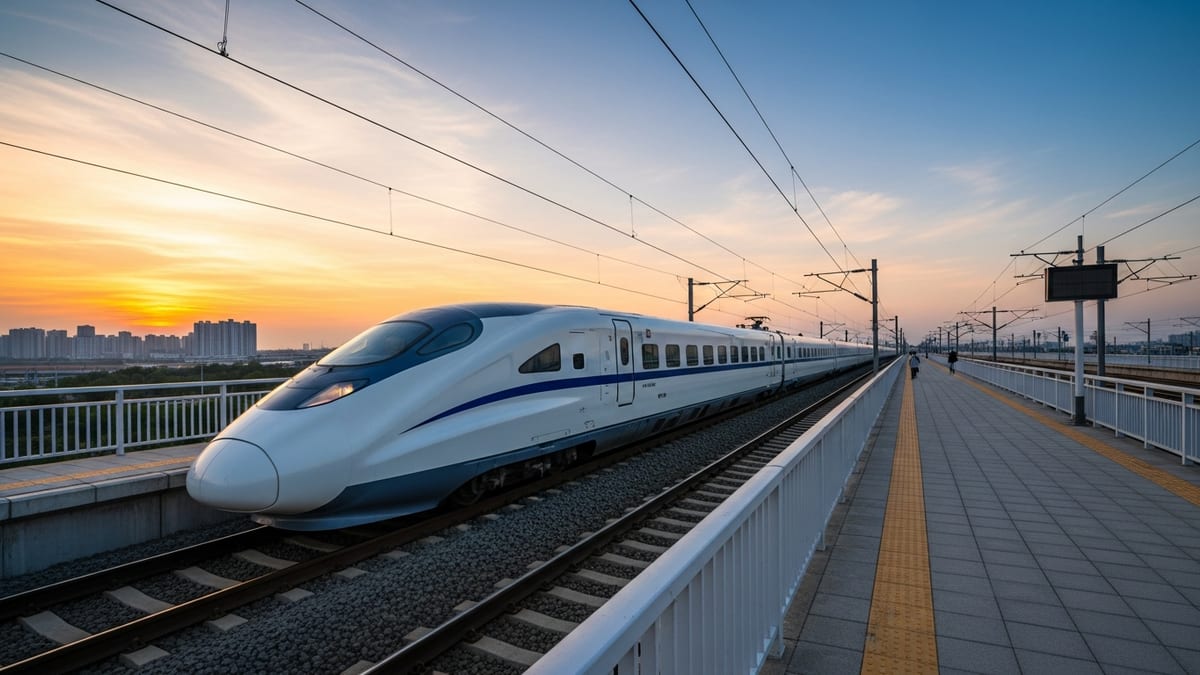
New fleet designed to become Sweden’s fastest trains
Publicly available information from manufacturer Alstom and SJ shows that 25 Zefiro Express electric multiple units have been ordered for Swedish long distance routes, with a maximum operating speed of 250 km/h. This makes them the fastest trains ever procured for use in Sweden, surpassing the current SJ X2000 tilting fleet and SJ 3000 units, both limited to 200 km/h in commercial service.
The Zefiro Express sets, sometimes referred to as SJ 250 in planning documents, are part of Alstom’s wider Avelia family of high and very high speed trains. The design is intended for Scandinavian conditions, with adaptations for low temperatures, ice and snow that are typical challenges for rail services in northern Sweden and along the Bothnia Line on the Gulf of Bothnia coast.
According to recent coverage in Scandinavian rail and infrastructure outlets, the first completed trainsets have moved from Alstom production facilities onto European test tracks, where they are undergoing dynamic checks, braking trials and systems integration tests at or near their design speed. These runs are a prerequisite before the trains can be transferred to Sweden for national approval and route-specific testing.
The new trains are expected to offer a step-change in onboard comfort compared with Sweden’s older high speed fleet, with updated interiors, modern passenger information systems and provision for improved onboard connectivity. Industry reports indicate that SJ intends the fleet to act as its flagship product for the next decades on key domestic and cross-border routes.
From X2000 to Zefiro Express: a new high speed chapter
Sweden has a long history of running comparatively fast intercity trains on conventional tracks rather than on dedicated high speed lines. Since the 1990s, the SJ X2000 tilting trains have been the symbol of fast rail travel in the country, operating at up to 200 km/h and using active tilt technology to maintain speed on curving legacy routes built in the nineteenth century.
In more recent years, SJ supplemented the X2000 fleet with the non-tilting Regina-derived SJ 3000 sets, which also reach 200 km/h and handle dense intercity timetables on corridors such as Stockholm to Sundsvall, Oslo and the west coast. Both types, however, are constrained by line speeds and signalling that were not originally designed for significantly higher velocities.
The arrival of the Zefiro Express fleet marks the first time SJ has invested in trains that are intended for sustained operation at 250 km/h. Although isolated test runs in Sweden have reached higher speeds in the past, those were experimental and not part of daily timetabled service. By contrast, the new units are being introduced with the explicit goal of raising regular top speeds once suitable infrastructure is available.
Reports in Swedish rail industry media suggest that, at least initially, the Zefiro Express trains will share routes with upgraded X2000 sets and SJ 3000 services, gradually taking over the longest and busiest intercity flows. Over time, the older fleets are expected to shift to secondary roles as the new trains assume the flagship positions on corridors where they can exploit their higher performance.
Testing focuses on winter resilience and cross-border operation
A significant part of the current test campaign is geared toward proving the trains’ reliability in harsh Nordic winters. Academic and industry studies on rail operations in northern Sweden have highlighted how snow, ice build-up and low temperatures can affect traction systems, braking equipment and underfloor components, making winter-proofing a critical priority for any new rolling stock intended for the region.
The Zefiro Express units are being tested with reinforced insulation, heated components and specially designed snow deflectors to mitigate these issues. Engineers are also focusing on door systems, couplers and roof-mounted equipment, which can be especially exposed in heavy snowfall and drifting conditions. The goal is to ensure that the new fleet can maintain punctual services during the long winter months along key routes north of Stockholm.
Cross-border compatibility is another focus. Published material on the project notes that SJ intends to use part of the Zefiro Express fleet on international services to Denmark and potentially Norway. This requires the trains to handle multiple power systems, signalling standards and safety rules while maintaining high performance. Test runs on continental European tracks are being used to validate these multi-system capabilities in advance of Swedish and Scandinavian approvals.
Telecommunications and onboard connectivity are also under scrutiny. Sweden has been gradually improving connectivity for rail passengers, and technical literature on high speed rail highlights the challenges of maintaining stable mobile and Wi-Fi connections at speeds above 200 km/h. The new trains are being equipped with modern antenna systems and interior networks designed to reduce interruptions for business and leisure travelers.
Infrastructure still lags behind train capabilities
While the Zefiro Express sets are engineered for 250 km/h, most of Sweden’s existing main lines do not yet allow such speeds in regular service. The current limit for fast passenger trains on many routes, including sections served by X2000, remains 200 km/h, constrained by signalling, track geometry and mixed traffic with slower passenger and freight trains.
Recent Swedish infrastructure coverage notes that only certain newer or upgraded sections of line have been designed for 250 km/h operation, and even these require additional systems work before the higher speed can be authorised. Planned projects such as the Ostlänken line between Stockholm and Linköping, and upgrades on the west and south main lines, are seen as essential if the full potential of the new trains is to be realised.
Industry commentators point out that SJ’s decision to purchase faster trains ahead of widespread infrastructure upgrades may increase pressure on the transport authorities to deliver higher-speed routes. The investments in rolling stock signal that the operator expects long term growth in rail demand and wants to be ready to capture it once higher-speed corridors come online.
Until that point, the first Zefiro Express services in Sweden are likely to run at speeds comparable to the current high speed fleet over much of the network, while still providing benefits in terms of capacity, comfort and energy efficiency. Over time, targeted infrastructure improvements could then allow for incremental increases in operating speeds on specific sections.
Potential impact on travel times and tourism
For travelers and the wider tourism sector, the testing of Sweden’s new fastest trains is viewed as an early indication of quicker and more comfortable intercity journeys in the coming years. Once approved and introduced into service, the Zefiro Express units are expected to shorten journey times between major cities such as Stockholm, Gothenburg and Malmö on sections where higher speeds are permitted.
On long-distance routes to northern Sweden, the combination of higher performance and winter-hardened design could improve reliability and make rail more attractive compared with domestic flights, particularly as airlines and passengers focus more on environmental considerations. Coastal routes along the Bothnia Line and inland connections toward the mountains may benefit from more consistent year-round operations.
The new trains are also expected to support cross-border tourism flows, particularly on the busy link between Sweden and Denmark across the Öresund region, and on potential future high speed services toward Norway. Faster and more frequent trains on these corridors could make it easier for international visitors to combine multiple Scandinavian destinations within a single trip.
As testing proceeds, attention in the travel and rail sectors will focus on when the first passenger-carrying trials will begin and how quickly the fleet can be phased into regular timetables. While full 250 km/h operation across Sweden remains a longer term prospect, the first Zefiro Express units on test tracks represent a tangible step toward a faster era for Scandinavian rail travel.