


More news on this day
A fatal collision involving a train in Manteca is under active investigation, with early reports indicating that the incident has reignited concern over rail safety and travel disruption in California’s Central Valley hub.
Get the latest news straight to your inbox!
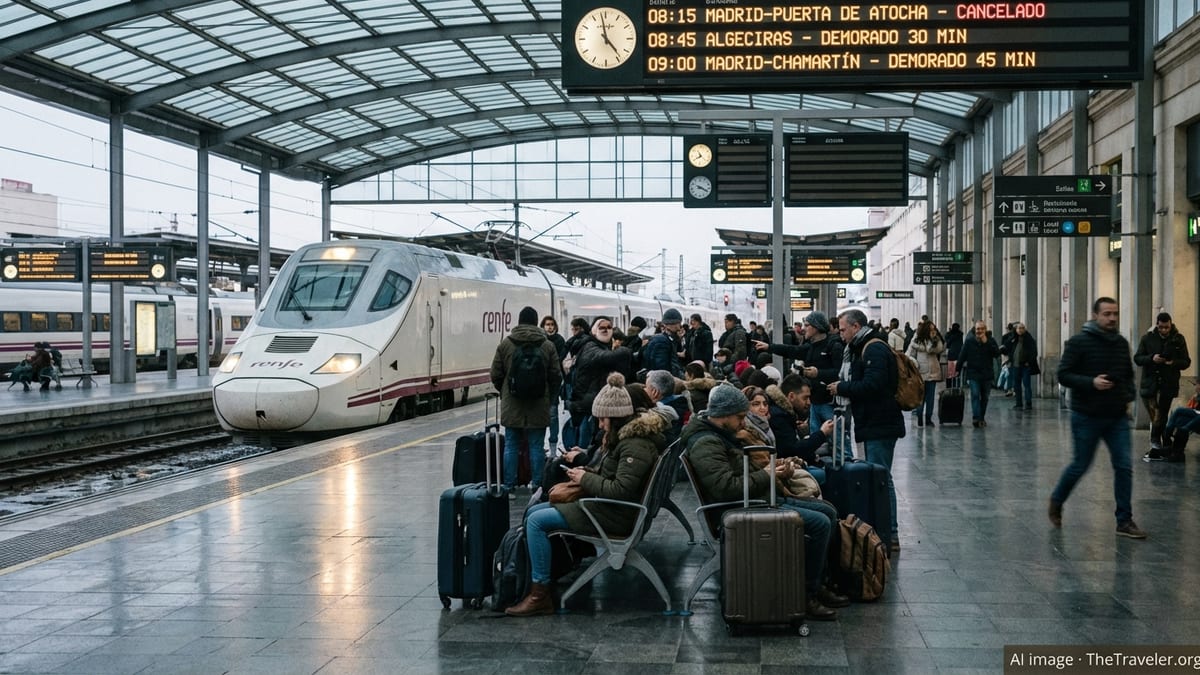
Central Valley Rail Hub Shaken by Deadly Crash
The city of Manteca, a key crossroads for freight and passenger movement in San Joaquin County, has once again found its rail infrastructure in the spotlight after the latest fatal collision. Publicly available coverage indicates that the train was traveling through a busy corridor that connects Central Valley communities with the Bay Area and the broader national freight network when the incident occurred.
Initial reports suggest that the crash happened at or near a grade crossing where road traffic intersects with active rail lines. These junctions are common throughout the region and are frequently cited in state and federal safety reports as among the most vulnerable points in the rail system. While the precise sequence of events in the Manteca incident remains under review, the outcome has been confirmed as deadly, adding to a troubling pattern of serious rail-related collisions across North America.
The collision immediately halted rail movements through the area, affecting both local residents and travelers passing through the Central Valley. Delays and rerouted traffic were reported on nearby highways as emergency responders, rail personnel, and investigators worked around the scene. For regular rail users, the episode served as a stark reminder of how quickly a routine journey can be upended by an incident on the tracks.
Investigators Focus on Crossing Conditions and Train Operations
The current inquiry is centered on several familiar questions in modern rail investigations: the condition and visibility of warning devices at the crossing, the behavior of roadway users approaching the tracks, and the operational status of the train at the moment of impact. Rail collision analyses commonly examine signal timing, horn use, train speed, and whether barriers or lights were functioning as designed.
California safety planning documents for Manteca and neighboring communities already highlight the risks around high-traffic intersections and crossings where freight trains, commuter services, vehicles, cyclists, and pedestrians converge. Those plans emphasize the importance of clear sightlines, consistent pavement markings, and predictable traffic patterns to give drivers and walkers as much reaction time as possible when a train is approaching.
Investigators typically complement on-scene observations with data from locomotive event recorders, sometimes referred to as black boxes, along with surveillance or dashcam video where available. In recent rail incidents around the United States, such material has played a crucial role in reconstructing timelines, verifying speeds, and clarifying whether crossing protections were active. A similar technical approach is expected to guide the Manteca investigation as officials work to determine what went wrong.
Impacts on Travelers and Rail Operations
For travelers, the immediate effects of a fatal rail collision are often felt in delays, cancellations, and detours. Rail operators typically suspend service through the affected segment while emergency personnel and investigators secure the scene, document evidence, and clear debris. In some cases, substitute bus services are arranged, while in others, passengers are advised to shift to highway travel or adjust their itineraries around temporary schedule changes.
Manteca’s position along key freight routes means that disruptions can ripple far beyond the city limits. Freight trains delayed in one segment can affect delivery schedules across multiple states, which in turn influences trucking patterns and congestion on the interstate network. For local residents, blocked crossings can temporarily sever direct access between neighborhoods, schools, and commercial areas until the line is reopened.
Travelers planning trips through California’s Central Valley in the coming days are being advised by publicly available notices and operator updates to check rail timetables frequently and to allow extra time for connections. While rail companies generally move quickly to restore service after a collision, follow-up inspections and any required infrastructure repairs can lead to adjusted speeds or modified stopping patterns in the short term.
Safety Record and Calls for Infrastructure Upgrades
The Manteca collision is drawing new attention to a longstanding debate over grade-crossing safety and the broader goal of separating road and rail traffic wherever feasible. Transportation planning materials for the region have pointed to the potential benefits of grade separations, such as overpasses or underpasses, which physically remove vehicles and pedestrians from the path of oncoming trains.
Across California and the wider United States, federal and state data show that a significant share of serious rail incidents occur at or near road crossings. Safety advocates often call for a combination of engineering changes, such as improved barriers and lighting, together with public education campaigns that stress the dangers of trying to beat a train or crossing when signals are active.
In communities similar to Manteca, completed projects have included the installation of raised medians to discourage risky turns, upgraded signal equipment, and redesigned approaches that slow traffic before it reaches the tracks. The latest collision is likely to feed into ongoing discussions over how such tools might be expanded along busy Central Valley corridors that see a mix of heavy freight and growing commuter volumes.
What Travelers Should Know Around Active Rail Lines
For rail passengers and road users alike, the incident in Manteca underscores several practical considerations when moving through rail corridors. Travel safety guidance from transportation agencies consistently stresses that trains can appear more distant and slower than they actually are, and that stopping distances for heavy freight consists are far longer than those of road vehicles. As a result, once an engineer sees an obstacle on the tracks, there is often little that can be done to avoid a collision at close range.
Motorists passing through the Central Valley are frequently advised to treat every crossing as active, even in the absence of visible trains, and to avoid driving around lowered gates or ignoring flashing lights. Pedestrians and cyclists are urged to cross only at designated locations, avoid walking along the tracks, and remain alert to multiple tracks where more than one train can pass in quick succession.
For visitors arriving in Manteca by rail, the city remains an important jumping-off point for exploring nearby destinations, from Delta waterways to Sierra foothill communities. Yet the latest fatal collision serves as a reminder that safe travel in and out of the region depends not only on the reliability of rail services, but also on the shared responsibility of everyone who approaches or uses the tracks.