


More news on this day
New figures from Spain’s State Aviation Safety Agency indicate that around 2.1 million air travelers suffered serious delays at Malaga-Costa del Sol Airport in the last year, but current rules mean only an estimated 50,000 passengers are likely to receive financial compensation.
Get the latest news straight to your inbox!
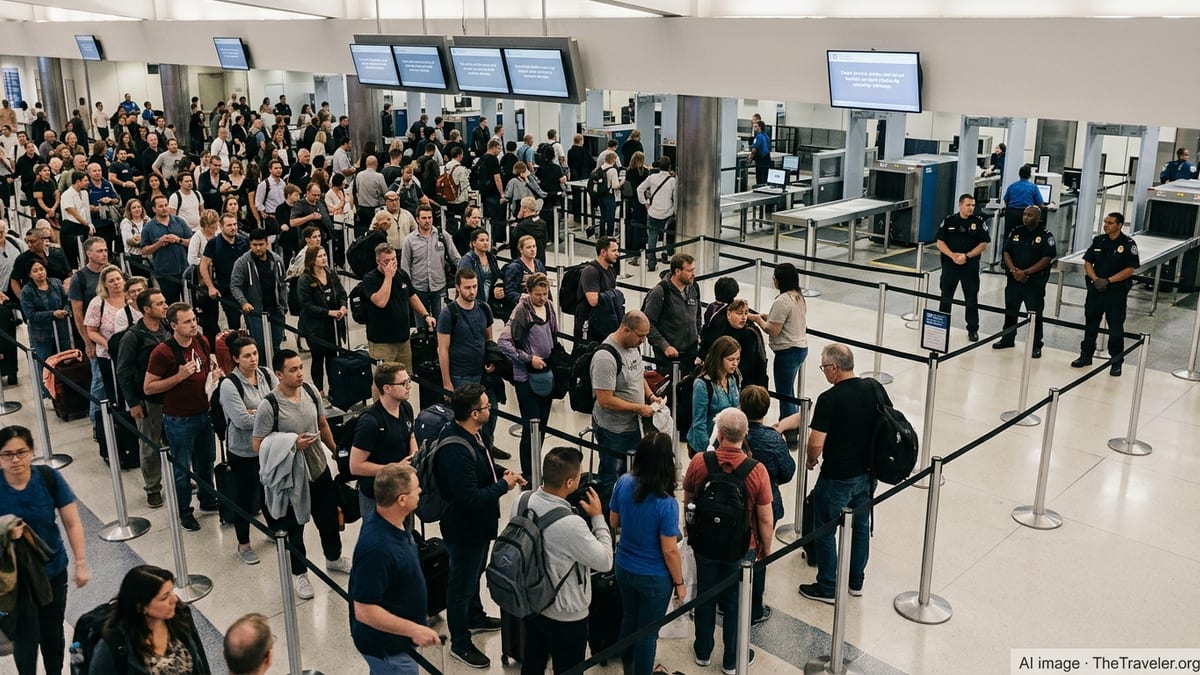
Millions disrupted at one of Spain’s busiest airports
Malaga-Costa del Sol Airport has emerged as a focal point in Spain’s wider surge in air traffic, with record visitor numbers to the Costa del Sol coinciding with a rise in flight disruptions. Publicly available data for the most recent 12‑month period show that roughly 2.1 million passengers experienced delays long enough to trigger at least basic assistance rights, such as food, drink or hotel accommodation, under European Union rules.
These disruptions include a mix of late arrivals and departures, missed connections and overnight delays. Malaga’s rapid growth as a tourism hub has driven heavy use of its terminals during peak seasons, while factors such as congested airspace around the Mediterranean, capacity constraints and seasonal storms have added strain on flight schedules.
Industry statistics indicate that Malaga now ranks among the top airports in Spain for both total passenger volume and number of disrupted journeys. Yet the vast scale of disruption is not mirrored in cash payouts to travelers, largely because many delays fall into categories considered beyond the legal responsibility of airlines.
Why only 50,000 passengers are expected to be paid
Under Regulation (EC) 261/2004, the core legal framework for air passenger rights in the European Union, travelers may be entitled to fixed-sum compensation when flights are cancelled or arrive more than three hours late, provided the disruption is deemed to be within the airline’s control. However, publicly available information from Spain’s aviation authorities and European institutions shows that a significant share of delays at Malaga Airport are linked to factors defined as extraordinary circumstances.
Extraordinary circumstances can include severe weather, air traffic control restrictions, unexpected runway closures and certain security or safety incidents. In such cases, airlines must still provide care and assistance to passengers when thresholds are met, but they are not obliged to pay the standard compensation amounts that range from 250 to 600 euros, depending on flight distance.
Based on recent case data and complaint statistics, analysts estimate that only around 50,000 of the 2.1 million delayed passengers at Malaga were on flights where the root cause was attributable to the operating airline, such as technical failures within its control, crew or operational planning problems. Many other passengers, although heavily inconvenienced, fall outside the scope of automatic financial redress.
In addition, passenger advocates note that some eligible travelers never claim the compensation they are owed, either because they are unaware of their rights or find the process complex. This further narrows the number of people who ultimately receive payments.
How EU rules shape what delayed travelers can claim
The European system for air passenger rights distinguishes between three types of entitlements: the right to information, the right to care and the right to compensation. Even when compensation is not due, passengers delayed beyond certain time limits are entitled to basic assistance, including meals, refreshments, communication facilities and, when necessary, hotel accommodation and transport between the airport and the hotel.
The amount of compensation, when applicable, is fixed by distance bands. Short-haul flights up to 1,500 kilometers typically carry a 250-euro entitlement, medium-haul journeys can trigger 400 euros, and long-haul routes up to and beyond 3,500 kilometers may lead to 600 euros per passenger. These amounts can be reduced by half if the airline offers rerouting that limits the arrival delay within specific thresholds.
Spanish regulators underline that passengers must first submit claims directly to the airline, supplying booking details, boarding passes and evidence of the delay. If the airline rejects or ignores the claim, individuals can escalate the case to Spain’s State Aviation Safety Agency, which can issue a decision on whether the carrier has complied with Regulation 261/2004. Recent changes mean that for newer cases, these decisions have binding effect in Spain, although travelers still retain the option to pursue court action.
Legal specialists point out that the distinction between ordinary operational problems and extraordinary circumstances is often the crux of disputes. Airlines may argue that a disruption stems from events beyond their control, while passengers and consumer organizations sometimes contest these assessments, particularly where technical issues or staffing decisions are involved.
New European reforms promise clearer rules
The situation at Malaga Airport comes as European institutions move to strengthen and clarify air passenger protections. In June and July 2026, the Council of the European Union and the European Parliament announced agreement on upgraded air passenger rights legislation, intended to update and refine the 261/2004 framework.
The political deal aims to codify clearer thresholds for delays, reinforce obligations on airlines to inform travelers of their rights and ensure timely reimbursement when passengers opt for refunds instead of rebooking. The reforms also seek to specify more precisely when carriers can invoke extraordinary circumstances to avoid compensation, with a view to limiting disputes and improving consistency of decisions across member states.
For passengers using Malaga and other busy holiday airports, the changes are expected to bring more transparent communication in the event of disruption, including electronic notifications about potential eligibility for compensation. Stronger rules on accommodation and assistance during long delays are also designed to ensure that travelers are not left without support when overnight stays become unavoidable.
Consumer groups argue that the upgrade is particularly important for tourism hubs where seasonal peaks amplify the impact of any operational weaknesses. With Malaga handling tens of millions of passengers annually, the way these new rules are applied in practice will be closely watched by airlines, regulators and traveler advocates alike.
What affected passengers at Malaga can do now
Travelers who experienced long delays at Malaga Airport are encouraged by advocacy organizations to review their flight documentation and check whether the cause of disruption may fall within the airline’s responsibility. Publicly available information from Spain’s aviation watchdog and the European Commission outlines the criteria for compensation claims, including minimum delay durations and the distinction between ordinary and extraordinary causes.
Experts recommend that passengers file claims promptly, keeping copies of boarding passes, booking confirmations and any written notices from the airline about the reason for the delay or cancellation. Where the airline’s response is unsatisfactory, Spain’s State Aviation Safety Agency provides an online channel for complaints, which can lead to a formal assessment of whether compensation and assistance rules were followed.
At the same time, airport and airline performance at Malaga is likely to remain under scrutiny, particularly during high summer and holiday periods when traffic peaks. Observers note that while only a relatively small proportion of the 2.1 million delayed passengers will receive direct financial compensation, the broader debate about service quality, staffing and infrastructure at major tourist gateways is set to continue.
As the European Union’s revised air passenger rights framework moves toward full implementation, Malaga’s experience illustrates the gap that can emerge between the sheer scale of disruption and the more limited circle of travelers who qualify for financial redress. For many visitors, the immediate priority remains more predictable operations at one of southern Europe’s busiest coastal airports.