


More news on this day
As interest in slow, scenic travel continues to climb, a new generation of U.S. travelers is rediscovering long-distance trains as an alternative to crowded highways and short-hop flights, turning a simple transfer into the centerpiece of the trip.
Get the latest news straight to your inbox!
California Zephyr: Rockies, Canyons and the Heartland
Frequently cited by rail enthusiasts as one of the most scenic routes in the Amtrak system, the California Zephyr traces a roughly 2,400-mile line between Chicago and the San Francisco Bay Area, crossing the Midwest, the Rocky Mountains and the Sierra Nevada. Publicly available route descriptions highlight the run between Denver and western Colorado as a particular standout, with the train climbing into the Front Range before threading through a succession of canyons along the Colorado River.
Timetables and independent route guides indicate that westbound departures from Denver are timed so that many of the most dramatic segments, including the passage through Glenwood Canyon, take place in daylight for much of the year. Travelers report that this stretch, with rafters on the river below and sandstone walls rising on either side of the track, often feels more like a moving observation deck than a conventional intercity train.
Farther west, the Zephyr traverses high desert in Utah and Nevada before ascending the Sierra Nevada into California, offering a stark contrast of landscapes over a single journey. The full two-night itinerary appeals to travelers who want the train to function as both transportation and rolling hotel, with sleeper cabins and a glass-lined lounge car creating an experience that differs markedly from driving Interstate 80 across the same corridor.
Empire Builder: Following the Northern Tier to Glacier Country
The Empire Builder, another of Amtrak’s flagship long-distance services, runs between Chicago and the Pacific Northwest, splitting to serve both Seattle and Portland. Schedules and rail travel guides describe it as the principal passenger route across the northern tier states, cutting through Wisconsin, Minnesota, North Dakota and Montana before reaching the Cascade Range. For many travelers, its calling card is the daylight segment along the southern edge of Glacier National Park on the westbound trip.
During summer, when daylight lingers late into the evening, passengers often have extended views of Glacier’s peaks, valleys and broad river plains. Rail-focused publications note that this section can be especially compelling for travelers who choose the Seattle branch, which continues along the Puget Sound with open-water views and frequent sightings of ferries and coastal towns.
Beyond headline scenery, the Empire Builder offers a close look at rural communities and wide-open plains that can blur into a monotone from the highway. Many riders frame the journey as an introduction to the scale of the American interior, trading billboards and truck plazas for small depots and grain elevators that anchor towns scattered far from any major interstate.
Coast Starlight: The West Coast by Rail
Running between Seattle and Los Angeles, the Coast Starlight follows a north–south corridor that highway travelers typically experience on Interstate 5. Route maps and service descriptions show that the train diverges frequently toward more scenic territory, especially along the Pacific shoreline in California and the forested slopes of Oregon’s Cascade Range.
On the southern half of the journey, the Coast Starlight hugs the coast for significant stretches between roughly San Luis Obispo and Oxnard, where tracks run directly above beaches and bluffs seldom visible from the freeway. Travel features in consumer magazines often single out this portion of the route as one of the rare opportunities in the continental United States to spend hours watching open ocean from a long-distance train.
In the Pacific Northwest, the train skirts the Puget Sound and crosses multiple mountain passes, offering a sequence of water views, forests and snow-capped peaks when conditions allow. Combined with a timetable that supports overnight travel between major West Coast cities, the service has developed a reputation among rail fans as both a practical link and a scenic rail cruise positioned as an antidote to congested interstate driving.
Alaska Railroad: Into the Backcountry on the Denali Star and Coastal Classic
Beyond the contiguous United States, the Alaska Railroad has emerged as a standout option for travelers seeking rail-based access to remote landscapes that highways only partially reach. The Denali Star, identified by the railroad as its flagship summer train, connects Anchorage and Fairbanks, passing through Talkeetna and Denali National Park. Official route information notes that the line climbs through Broad Pass and follows the Nenana River canyon, providing wide-angle views of the Alaska Range when weather is clear.
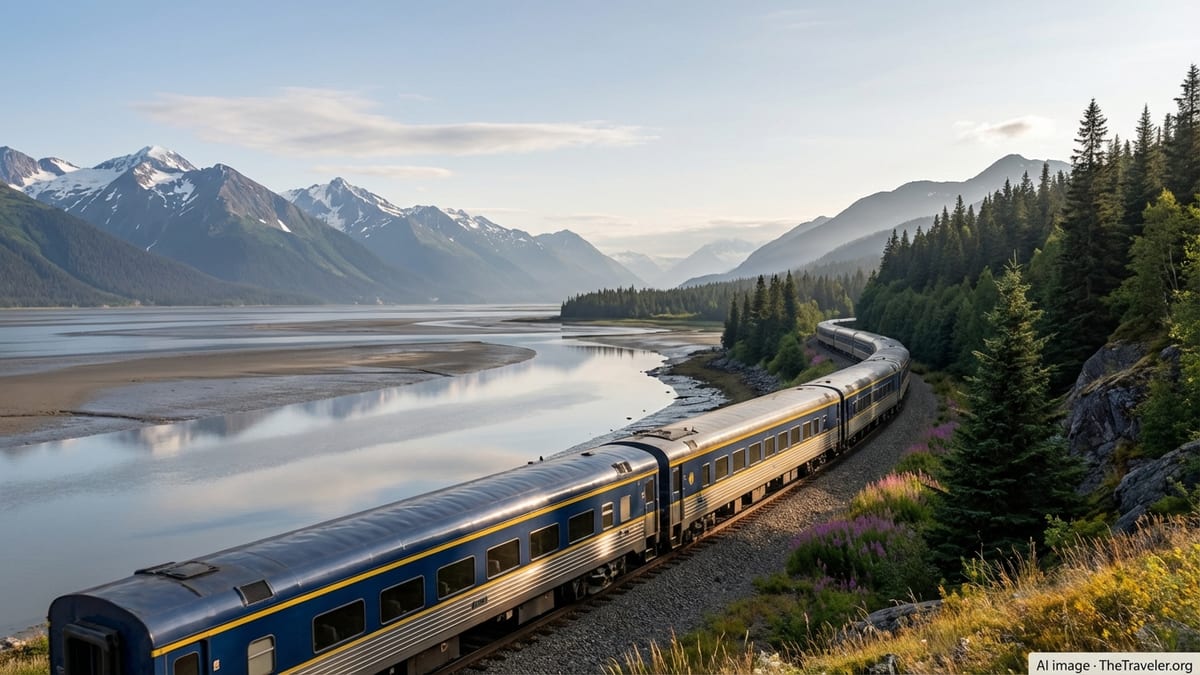
South of Anchorage, the Coastal Classic has become known among tour operators and destination marketing organizations as one of the state’s most scenic single-day rides. The train runs between Anchorage and Seward along Turnagain Arm, where the tracks squeeze between steep mountainsides and tidal flats that can reveal beluga whales and bore tides in season. From there, the line continues into the Kenai Mountains, offering glimpses of hanging glaciers and deep valleys that remain off-limits to road traffic.
Travel planning resources emphasize that both trains offer a choice between standard seating and upgraded dome cars, allowing passengers to prioritize budget or panoramic views. For visitors who might otherwise rely on rental cars along the Parks and Seward highways, these rail journeys provide an alternate way to reach national parks, fjords and small towns while keeping eyes on the scenery instead of the road.
Rockies to the Red Rocks: A New Luxury Link in the Desert Southwest
The youngest of the major rail journeys appealing to international visitors is Rockies to the Red Rocks, operated by Rocky Mountaineer. Company fact sheets and tourism board materials describe the route as a two-day, daylight-only journey between Denver and Moab with an overnight stop in Glenwood Springs. Unlike traditional intercity rail that prioritizes speed, this service is marketed as a rail cruise, with slower pacing, inclusive meals and glass-domed coaches designed specifically for sightseeing.
On the eastbound and westbound itineraries, the train traverses segments of track shared with freight and Amtrak services along the Colorado River before branching toward Utah’s canyon country. Promotional materials and independent travel writeups highlight towering red rock walls, remote ranchlands and desert mesas as central visual draws, particularly between Glenwood Springs and the Utah state line.
Because the journey is structured around daylight operation rather than overnight sleepers, travelers spend evenings in hotels at intermediate stops, a format that differs significantly from the traditional Amtrak model. For many visitors, that combination of hotel stays and uninterrupted daytime scenery has placed Rockies to the Red Rocks alongside older American rail legends, offering another way to bypass the interstate in favor of a slower, more theatrical passage through the interior West.