


More news on this day
A series of same-day flight cancellations at Bucharest Henri Coandă International Airport has triggered significant disruption for passengers across Europe, constraining regional connections and drawing fresh attention to mounting capacity pressures at one of the continent’s faster-growing hubs.
Get the latest news straight to your inbox!
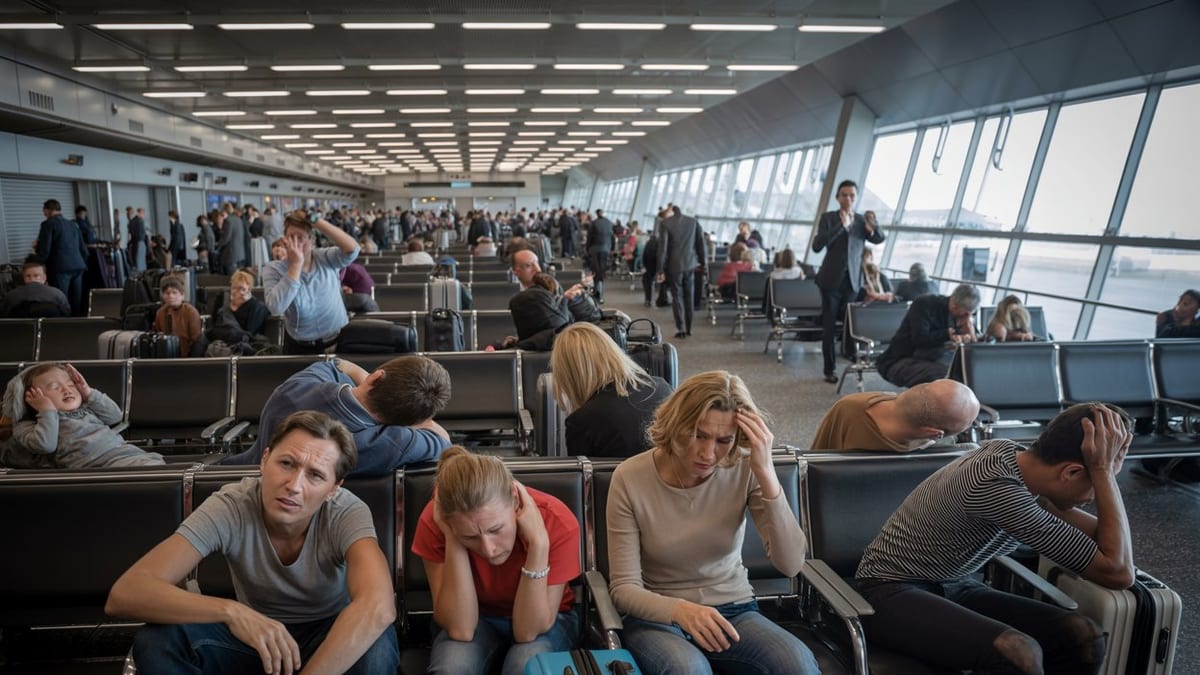
Regional Routes Abruptly Withdrawn From the Schedule
Monitoring data from multiple flight-tracking and schedule platforms on 10 June 2026 indicate that at least ten short- and medium-haul departures normally operated from Bucharest Henri Coandă were absent from the day’s schedule, effectively cancelled rather than simply retimed. These include popular leisure and regional services such as Bucharest to Nice, Antalya, Thessaloniki and other seasonal links that typically feed into the wider European network.
The affected services are dispersed across several carriers, including low-cost, holiday-focused, and regional airlines. In some cases, the routes are not scheduled to operate at all on 10 June, while in others recent timetables show seasonal cuts or capacity consolidation. For travelers who had booked earlier in the year based on preliminary summer schedules, the removal of these flights has translated into abrupt rebookings, longer connection times, or outright loss of viable itineraries.
Although individual cancellations may appear modest at airport level, their combined effect on a single day is to thin out Bucharest’s connectivity to secondary European cities. With many of these flights designed to connect onward to other short-haul or long-haul services, the disruption radiates beyond Romania, affecting passengers starting or ending journeys in neighboring countries and key Mediterranean destinations.
Publicly available passenger accounts circulating on travel forums highlight cases where multi-leg itineraries involving Bucharest have been broken apart by schedule changes, leaving gaps in the middle of journeys and forcing travelers to renegotiate routings or request refunds. Such experiences underscore how the cancellation of a relatively small number of segments can cascade through the wider European travel network.
Network Effects Across Europe’s Summer Travel Corridors
The timing of Bucharest’s latest wave of cancellations coincides with an already strained European aviation system heading into the core summer period. Recent network performance reports show that delays and cancellations across the European Civil Aviation Conference area have been creeping upward again, with en-route congestion, weather disruption and staffing issues all playing a role. Even modest schedule reductions at one hub can therefore interact with pre-existing bottlenecks elsewhere.
In this environment, the loss of ten flights from Bucharest in a single operational day does more than inconvenience local travelers. Many of the affected routes feed passengers into major Mediterranean resorts or onward connections at larger hubs. When those links disappear, passengers are rebooked onto fewer remaining services, increasing load factors and reducing flexibility for last-minute changes or recovery after subsequent disruptions.
Airlines operating from Bucharest are also navigating broader commercial and operational pressures. Carriers across Europe have been adjusting schedules in response to crew availability, aircraft maintenance requirements and demand patterns that fluctuate more sharply than before the pandemic. When capacity at a given airport is already tight, these tactical adjustments can translate into the kind of clustered cancellations now visible at Henri Coandă.
For Europe’s interconnected network, the net result is a web of knock-on effects that may not be immediately visible in a single airport’s departure board, but are acutely felt by travelers missing self-planned connections, tour groups relying on charter-style operations, and regional airports that depend on Bucharest as a transfer point.
Growing Capacity Pressure at Romania’s Busiest Gateway
The disruption comes as Bucharest Henri Coandă is preparing for a structural shift in how its capacity is managed. Recent announcements from the airport’s operator and specialist aviation publications describe plans for the hub to move to full slot coordination, known in industry terminology as Level 3 status, from the 2026 to 2027 winter season under a multi-year agreement with a dedicated coordination provider.
This change reflects sustained traffic growth at Romania’s main gateway, where rising passenger numbers and seasonal peaks have pushed existing infrastructure closer to its practical limits. Slot coordination is intended to align flight schedules more closely with declared runway, terminal and apron capacity, with the aim of reducing congestion, smoothing peaks and improving on-time performance.
The same factors that justify introducing tighter coordination, however, also help explain the present-day volatility that passengers are facing. As airlines jostle for the most commercially attractive times and routes, marginal flights or lightly booked rotations are more likely to be trimmed when aircraft or crews are needed elsewhere in the network. Until the new coordination regime is fully in place, that process can manifest in short-notice cancellations and schedule reshuffles of the sort now affecting Bucharest.
Industry analyses of recent summers in Europe have pointed to a pattern in which airports with fast-rising traffic but constrained expansion options experience bouts of concentrated disruption. Bucharest’s current difficulties fit into this broader picture, illustrating how growth that outpaces infrastructure and process changes can quickly translate into operational stress.
Passenger Impact and Limited Rebooking Options
For travelers caught by the cancellations, the most immediate consequence has been the struggle to secure timely alternatives. Published timetables show that some of the dropped flights have only a handful of comparable options on the same day, often operated by the same carrier or alliance. That leaves passengers dependent on rerouting via more distant hubs or accepting overnight stays.
Reports shared on consumer platforms in recent weeks describe itineraries involving Romanian airports being split into multiple tickets or rebooked across different departure points as airlines reconfigure their networks. Where a Bucharest segment disappears, travelers may find themselves offered departures from other cities several hours’ drive away or connections that are no longer practical for their original plans.
The wider European context also limits options. With many peak-season flights already heavily sold, rebooking large numbers of passengers from ten cancelled Bucharest departures requires squeezing them into an already dense network. Travelers report longer total journey times, additional layovers, and higher costs for those choosing to self-rebook on alternative airlines when original options prove unsuitable.
Consumer advocates generally urge passengers affected by cancellations to consult official airline communications regarding compensation and care obligations, particularly on itineraries touching European Union airports. However, awareness of these rights remains uneven, and some travelers accept vouchers or complex rerouting without fully exploring available remedies.
What the Disruption Signals for Europe’s Summer Ahead
The clustered cancellations at Bucharest Henri Coandă are being interpreted by industry observers as an early warning of how fragile Europe’s air travel recovery remains. Even as overall traffic approaches or exceeds pre-pandemic levels in many markets, the underlying system continues to grapple with structural and staffing constraints, periodic weather extremes and evolving patterns of demand.
Bucharest’s move toward full slot coordination illustrates an effort to manage these pressures proactively by tightening the alignment between scheduled flights and physical capacity. Yet the present disruption shows that such reforms take time to filter through to day-to-day reliability, especially when airlines are making real-time decisions about where to deploy limited resources.
For travelers planning itineraries through Central and Eastern Europe this summer, the situation underscores the value of building additional buffer time into connections, favoring single-ticket journeys where possible, and monitoring schedules closely in the days leading up to departure. While most flights from Bucharest still operate as planned, the disappearance of even a modest number of key departures can have outsize effects on complex, multi-stop trips.
How quickly operations at Henri Coandă stabilize in the coming weeks will offer a useful barometer for the broader European system. If similar clusters of cancellations continue to appear at other growth-constrained airports, the summer travel season may once again test the resilience of airlines and passengers alike.