


More news on this day
Travelers across Australia and New Zealand faced widespread disruption today as regional and domestic carriers, including QantasLink, Virgin Australia, Jetstar and Sounds Air, grounded 28 flights and logged at least 262 delays, snarling operations at major hubs such as Melbourne, Sydney, Canberra and Wellington.
Get the latest news straight to your inbox!
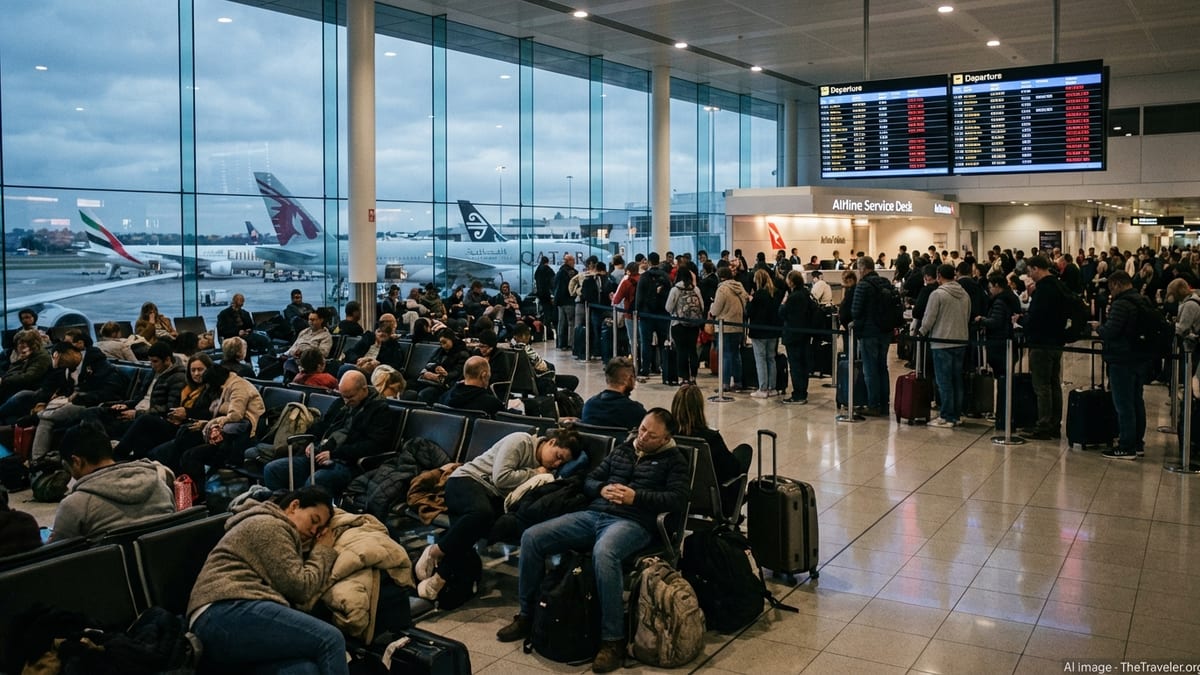
Groundings and Delays Ripple Across Major Gateways
Publicly available flight tracking boards and operational data indicate that the latest disruption is concentrated on the dense domestic and trans-Tasman corridors linking Melbourne, Sydney, Canberra and Wellington with a web of secondary cities. Airlines operating under the Qantas Group banner, alongside Virgin Australia, Jetstar and New Zealand regional carrier Sounds Air, appear among the most affected brands, with a mix of outright cancellations and extended rolling delays.
The 28 grounded services span a mixture of short-haul domestic routes and cross-border sectors between Australia and New Zealand, while more than 260 additional flights are reported as significantly late. The imbalance between cancellations and delays is creating particular difficulty for travelers relying on tight connections, as even relatively short postponements cascade into missed onward departures later in the day.
Melbourne and Sydney again feature as primary pressure points, reflecting their role as key domestic and international hubs. Canberra and Wellington are also seeing disproportionate effects relative to their size, as high-frequency shuttles and regional links lose aircraft and crew to the broader network disruption.
Although the total number of grounded flights is modest compared with overall schedule volumes, the concentration of 28 cancellations and 262 delays within a compressed window is enough to destabilize operations across multiple carriers, particularly where fleets and crews rotate frequently between Australia and New Zealand.
Impact on Passengers in Melbourne, Sydney, Canberra and Wellington
At Melbourne and Sydney, passengers are encountering long queues at check in counters and service desks as they seek new itineraries, overnight accommodation or replacement connections on already crowded services. Data compiled from airport boards shows delays stacking up on trunk routes between the two cities, as well as on heavily used sectors linking them to Canberra and other capitals.
In Canberra, where schedules are thinner and many flights feed into the larger hubs, even a handful of disrupted services is enough to leave travelers with few same-day alternatives. Regional flyers heading to Sydney or Melbourne for onward long-haul departures are particularly exposed, with limited options once the afternoon bank of flights begins to slide behind schedule.
Across the Tasman, Wellington is experiencing a similar pattern, with Sounds Air and other regional operators contending with late running aircraft, while QantasLink and partner-branded services face knock-on disruption from problems upstream in Australia. Travelers on routes connecting Wellington with Melbourne and Sydney are reporting multi-hour delays, along with a scattering of cancellations that are forcing rebookings on later days.
The uneven distribution of services means that some passengers can be re-accommodated relatively quickly on alternative flights, while others, especially those bound for smaller regional airports, are confronting waits of 24 hours or more before a replacement seat becomes available.
Operational Strain on QantasLink, Virgin Australia, Jetstar and Sounds Air
Operational reports and schedule data suggest that QantasLink is bearing significant strain, in part because of its role in feeding passengers from regional centers into the Qantas domestic and international network. When delays affect its turboprop and regional jet operations into Melbourne, Sydney and Canberra, disruption quickly spreads throughout the group’s wider schedule.
Virgin Australia and Jetstar, both major players on domestic trunk routes, are also grappling with congested rotations. Their services between Melbourne, Sydney and other capitals such as Brisbane and Adelaide are showing elevated delay rates, and the latest cluster of 262 late departures and arrivals indicates that aircraft and crew are struggling to return to planned positions as the day progresses.
In New Zealand, Sounds Air operates a smaller but strategically important network linking regional communities to Wellington and other gateways. Groundings and delays reported on its services are contributing to gaps in connectivity for passengers attempting to bridge onward to Australian destinations via trans-Tasman links.
Industry monitoring reports published in recent months have highlighted the sensitivity of Australasian airline operations to even modest increases in same-day cancellations and delays. With fleets tightly scheduled and spare capacity limited, a spike of 28 groundings and hundreds of late flights is sufficient to test recovery plans across multiple carriers simultaneously.
Knock-on Effects for Trans-Tasman and Regional Routes
The geography of today’s disruption underscores how closely intertwined domestic and international schedules have become in the Australia and New Zealand market. Flights between Melbourne, Sydney and Wellington, alongside other trans-Tasman sectors, are heavily reliant on feeder traffic from regional centers served by QantasLink, Virgin Australia’s regional partners, Jetstar and Sounds Air.
When early-morning services into Melbourne or Sydney depart late or are cancelled outright, passengers booked through to New Zealand often miss midday departures across the Tasman. In turn, the need to reaccommodate those travelers onto later flights can displace others, creating a rolling backlog that may take days to clear fully, even after punctuality begins to improve.
Regional communities are also feeling the effects, particularly on routes with only one or two daily services. Once an inbound aircraft from a hub arrives late, the remainder of its day’s flying is at risk of sliding behind schedule, with delays propagating across several cities and, ultimately, across the border.
Travel information services tracking today’s events note that similar patterns have emerged in prior disruption waves in the region, where seemingly isolated operational problems in one city have quickly produced broader network imbalances across Australia and New Zealand.
What Travelers Can Expect in the Coming Days
Based on recent disruption episodes, publicly available aviation performance data suggests that residual delays may persist for at least another 24 to 48 hours as airlines work to reposition aircraft and crews. Even if weather and technical conditions stabilize, it can take multiple schedule cycles before on-time performance recovers to more typical levels.
Passengers booked with QantasLink, Virgin Australia, Jetstar, Sounds Air and other regional carriers are likely to see ongoing minor timing changes, aircraft swaps and occasional short-notice cancellations while operations normalize. Travelers connecting between Australia and New Zealand, or relying on smaller regional airports, remain among those most exposed to lingering disruption.
Consumer advocates and travel experts regularly advise passengers in similar situations to monitor airline apps and airport departure boards closely, arrive early for departures, and build additional buffer time into itineraries that involve connections or same-day returns. Flexible fare conditions and travel insurance may also provide some recourse where delays trigger missed events or additional accommodation costs.
While the current wave of 28 cancellations and 262 delays is modest compared with some previous mass disruption events in the region, it highlights the ongoing fragility of tightly scheduled airline networks across Australia and New Zealand, and the disproportionate impact a single day of operational strain can have on thousands of travelers.