


More news on this day
Air travelers across the United States are facing another difficult day as live tracking data shows 2,329 flights delayed and 165 canceled today, disrupting operations at major hubs in Texas, Florida, Los Angeles, Atlanta, Boston, Philadelphia, Phoenix and other cities and affecting passengers flying on American, Southwest, Delta, United, Alaska and additional carriers.
Get the latest news straight to your inbox!
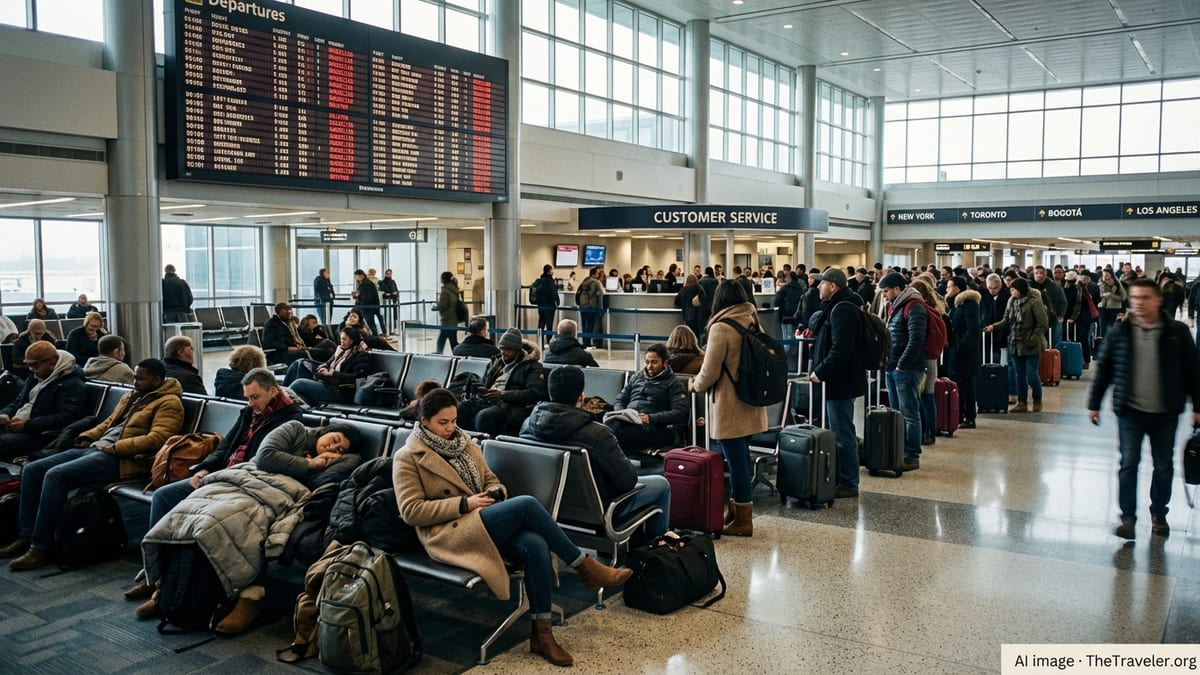
Nationwide Disruptions Hit Key Holiday Travel Corridors
The latest wave of delays and cancellations is rippling across the national airspace on Monday, May 25, with publicly available tracking tools indicating that disruptions are concentrated at some of the country’s busiest airports. The pattern reflects continuing strain on the system during the late spring travel period, when leisure and business demand are both elevated.
Data aggregation platforms that compile airline status reports in real time show that more than two thousand flights are arriving or departing behind schedule within, into or out of the United States today, with an additional 165 flights listed as canceled. These figures represent only a portion of global activity but underscore the scale of disruption facing domestic travelers.
Major hubs in Texas and Florida are again prominent in the statistics, alongside large coastal and Sun Belt airports. Routes touching cities such as Los Angeles, Atlanta, Boston, Philadelphia and Phoenix account for a significant share of today’s delayed departures and arrivals, creating knock-on effects for passengers making connections throughout the national network.
The situation follows a month in which multiple weather systems and operational challenges have repeatedly pushed airlines and airports close to capacity. Industry briefings and recent reports on previous disruption days have highlighted how a relatively modest number of cancellations, layered on top of heavy delay volumes, can cascade quickly through tightly scheduled fleets and crews.
Weather, Congestion And Operational Strain Converge
Published federal airspace information for today points to a mix of weather and volume-related constraints at several major facilities. Ground delay programs at busy airports, sometimes implemented because of low clouds, visibility issues or thunderstorms in the terminal area, have contributed to longer departure queues and extended arrival spacing.
Recent advisories for airports such as Boston Logan and Chicago O’Hare in the days leading up to today have illustrated how even relatively short-lived rounds of poor weather can force air traffic managers to reduce arrival rates. When this occurs during already busy bank periods, flights stack up on the ground and in holding patterns, driving up the total number of delayed operations that later appear in daily statistics.
In parallel, high passenger demand around the Memorial Day travel window is adding to congestion. Airlines have scheduled dense timetables from key hubs in Texas, the Southeast and the West, and any disruption early in the day can quickly affect later rotations. Operational briefings circulated earlier in May noted that some carriers were still working through crew positioning challenges from earlier storms and schedule changes, a factor that can lead to last-minute cancellations even when skies are largely clear.
Infrastructure issues have recently played a role as well. Reporting in recent weeks on incidents such as runway maintenance and airfield repairs at major airports has shown how temporary capacity reductions can exacerbate weather- or volume-driven slowdowns. While today’s disruptions appear more closely tied to the familiar combination of congestion and variable conditions, they come against a backdrop of ongoing infrastructure pressure across the system.
Major Carriers And Hubs Bear The Brunt
According to flight-status dashboards that allow users to filter disruptions by carrier and airport, the brunt of today’s delays and cancellations is falling on the largest U.S. airlines and their primary hubs. American, Southwest, Delta, United and Alaska all show elevated numbers of delayed flights, reflecting their heavy exposure to the busiest airports and most traveled corridors.
American and Southwest, with dense operations through Texas and key Florida airports, are particularly sensitive to storms, air traffic flow programs and any volume-related constraints in those regions. Delta’s extensive schedule from Atlanta and major coastal gateways such as Boston means that slowdowns at a single hub can reverberate across its network. United’s large presence at coastal and mid-continent hubs, and Alaska’s reliance on complex West Coast airspace, similarly leave them vulnerable when conditions tighten.
Hubs including Atlanta, Los Angeles, Dallas-area airports, Phoenix and busy Florida gateways are central nodes in this disruption map. When departure rates fall at these locations, passengers across the country may experience missed connections, aircraft swaps or rebookings onto later flights. Secondary airports that depend on feed from these hubs can see their own on-time performance deteriorate as inbound aircraft arrive late.
Regional affiliates and codeshare partners are also affected. Because many flights marketed by the major brands are operated by regional carriers under capacity purchase agreements, disruption statistics for American, Delta and United often incorporate flights flown by smaller operators. This can complicate rebooking and customer-service processes when irregular operations stretch across multiple companies.
Passengers Confront Long Lines And Limited Options
For travelers, today’s numbers translate into crowded terminals, long customer-service queues and, in some cases, overnight stays. Travel advisories issued by aviation analysts and consumer advocates in recent disruption events emphasize the importance of checking flight status frequently through airline apps and independent trackers, as schedules can change rapidly when congestion builds.
Recent guidance documents produced in response to earlier weather events this year have urged passengers to keep receipts for meals, hotels and alternative transport, noting that reimbursement policies vary significantly by airline and by cause of delay. In previous large-scale disruptions, some carriers have offered waivers permitting fee-free changes for affected routes on specific dates, while others have limited their assistance to rebooking on the next available flight.
Today’s disruptions once again highlight the uneven patchwork of passenger protections in the United States. While federal rules address issues such as tarmac delays and provide transparency requirements for cancellations and lengthy waits, there is still no comprehensive nationwide mandate for compensation similar to regimes in some other regions. As a result, travelers’ experiences depend heavily on the specific airline’s contract of carriage and its willingness to provide vouchers, credits or hotel accommodations.
Consumer advocates consistently recommend that passengers facing cancellations or extended delays document all interactions, monitor multiple flights that could serve the same route and act quickly when rebooking options appear, particularly on busy holiday-adjacent days. Seats on alternative flights can disappear quickly when disruption numbers climb into the thousands, as they have today.
What Today’s Numbers Signal For The Summer Travel Season
Although today’s 2,329 delays and 165 cancellations represent only a snapshot in time, they arrive at the cusp of the peak summer travel season and add to concerns about system resilience. Aviation data compiled over recent months shows that severe weather, air traffic control staffing challenges and high demand have driven several notable disruption days since the start of the year.
Analysts examining patterns from previous seasons note that early summer can be particularly volatile, as convective weather increases and airlines operate full schedules with limited slack in aircraft and crew availability. When demand is strong, carriers are reluctant to trim capacity, which can leave little room to absorb unexpected ground stops or airspace restrictions.
Industry observers suggest that travelers should anticipate more days like today as the summer unfolds, particularly around weekends and holidays when networks run at their most congested. While airlines and federal airspace managers have signaled ongoing efforts to improve scheduling, staffing and information-sharing, today’s statistics underscore that even incremental disruptions at a handful of major hubs can quickly translate into widespread delays across the country.
For now, the best strategy for passengers planning trips in the coming weeks remains preparation and flexibility. Monitoring conditions at key hubs in Texas, Florida, California, Georgia, Massachusetts, Pennsylvania and Arizona, building extra time into itineraries and having backup options in mind may help mitigate the impact when the next round of delays and cancellations appears on the boards.