


More news on this day
Travelers flying to and from Riyadh are facing a new round of disruption after five international carriers temporarily suspended services to the Saudi capital, as regional security tensions ripple across Middle East airspace and force last minute schedule changes.
Get the latest news straight to your inbox!
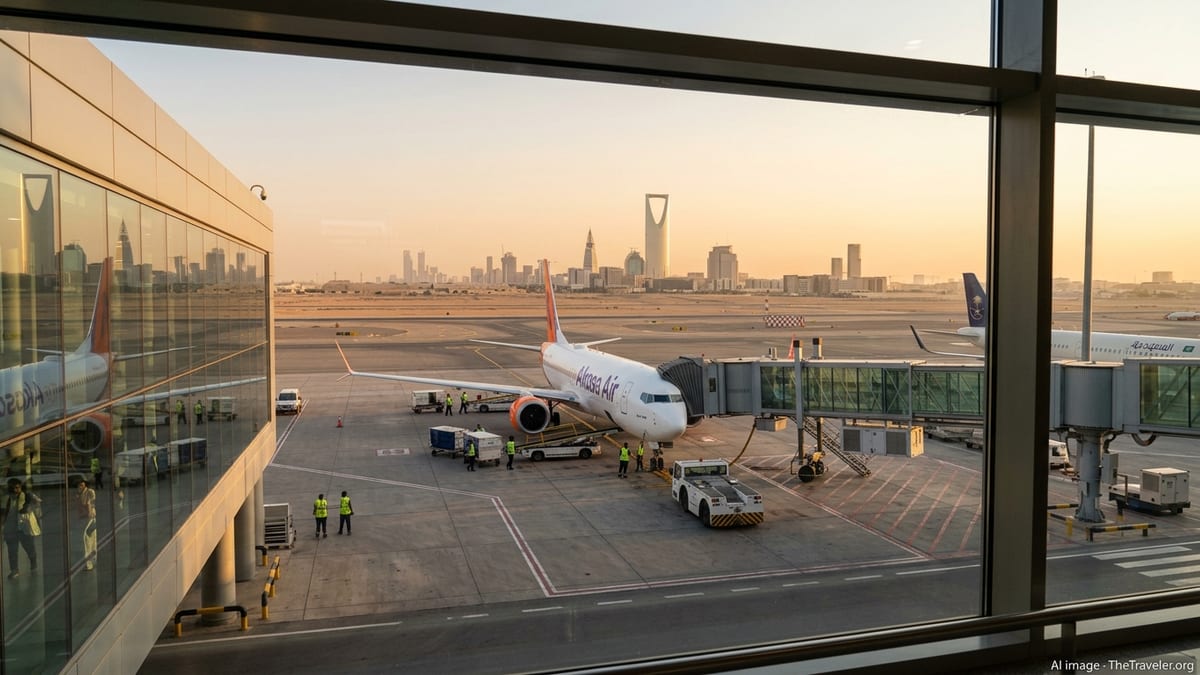
Multiple carriers suspend Riyadh routes amid regional tensions
According to recent airline statements and regional media coverage, at least five foreign carriers have now halted or curtailed flights linking their hubs with Riyadh. The latest moves are part of a broader reassessment of operations across the Gulf following renewed security concerns and shifting guidance from aviation regulators.
European network airlines have been among the most visible in announcing temporary suspensions. Publicly available information shows that one major European flag carrier has stopped operating its Riyadh route for several days, aligning the pause with similar measures affecting Dubai and Beirut. The airline has cited the need to continuously evaluate the regional security environment and adjust routes and schedules in response.
Regional and low cost operators are also trimming services. Reports from travel industry channels and passenger communications indicate that some Middle East based and Asian budget airlines have removed Riyadh flights from schedules or issued rolling cancellations, often alongside reductions in services to other high traffic Gulf cities. These changes are adding pressure to an already stretched network of alternative connections.
The suspensions come on top of an earlier wave of cuts by several European and Asian carriers that had already reduced frequencies or halted certain Saudi destinations in recent months. Collectively, these decisions have sharply reduced the number of nonstop options into Riyadh from major hubs in Europe and parts of Asia, forcing many passengers to rely on multi stop itineraries.
Regulatory advisories and airspace risks shape airline decisions
Aviation regulators and risk consultancies have repeatedly highlighted the Middle East as a complex operating environment in 2026. Recent conflict zone bulletins from European authorities advise airlines to avoid or carefully assess overflight in parts of the Gulf region, encouraging operators to consider alternative routings even when airports remain open for traffic.
Separate travel advisories issued by Western governments in July point to the possibility of short notice airport and airspace restrictions affecting Saudi Arabia and neighboring states. Public guidance to travelers notes that key hubs, including Riyadh, Jeddah and airports across the wider Gulf, could experience sudden flight cancellations, longer diversion routes and knock on delays as carriers react to changing risk assessments.
Industry risk assessments circulated to corporate clients since the spring describe Saudi airspace as a critical east west corridor at a time when several neighboring flight paths have become constrained. Analysts note that this concentration of traffic increases sensitivity to any operational disruption, as rerouting large numbers of flights away from preferred corridors can quickly overwhelm alternative hubs and air traffic control capacity.
Against this backdrop, airlines suspending Riyadh flights are balancing security, operational complexity and commercial pressure. Carriers with smaller fleets or limited flexibility on crew and aircraft rotations may find it more practical to pause services entirely, rather than attempt daily schedule changes that reverberate across long haul networks.
Air France pause highlights wider European retrenchment
Among the most closely watched developments is the temporary suspension of flights to Riyadh by Air France. Coverage in European travel media indicates that the French flag carrier has halted its Riyadh services for several days in late July, while maintaining a plan to gradually resume flights once conditions allow. The airline has taken a similar approach in Dubai and Beirut, signaling a cautious stance on routes considered to be more exposed to current tensions.
Air France’s moves follow a broader pattern among European groups that have either delayed the relaunch of Saudi routes or scheduled a later than expected resumption. Announcements from Lufthansa Group in mid July, for example, detail plans to restart Riyadh flights from September, after an extended interruption linked to the regional security environment and airspace constraints.
These staggered resumptions mean that, even as some carriers confirm future return dates, the immediate availability of seats to Riyadh remains constrained. Passengers booked on near term flights are seeing itineraries cancelled or rerouted through different hubs, while those planning travel in late summer and early autumn are monitoring airline communications closely to see whether restart dates hold.
For European travelers, the combination of temporary suspensions, delayed resumptions and reduced frequencies is reshaping the marketplace for Saudi bound travel. Some are turning to Gulf based carriers that continue to operate, while others are postponing trips or shifting to alternative destinations until flight schedules stabilize.
Knock on effects for regional connectivity and hubs
The pause in Riyadh services is contributing to a wider reshuffling of traffic patterns across the Middle East. With multiple airlines simultaneously adjusting or suspending flights to Saudi Arabia, Dubai, Kuwait and other key hubs, regional capacity is fluctuating day by day. This creates challenges not only for point to point travelers, but also for those using Gulf hubs as connecting points between Europe, Asia and Africa.
Reports from regional news outlets describe congestion and longer layovers at some alternative hubs as airlines reroute traffic away from more constrained airspace. In certain cases, flights that once crossed the Gulf on direct great circle routes are now taking longer trajectories to avoid sensitive areas, extending flight times and putting additional stress on crew and aircraft rotations.
Riyadh’s role as a growing gateway for Saudi tourism, business and religious travel adds another dimension to the current suspensions. New domestic and international capacity planned for 2026 and 2027 was expected to build on the capital’s connectivity, but the present security climate is temporarily curbing that momentum, particularly for international transfer traffic.
Analysts note that even short disruptions can have lasting commercial effects. Corporate travel programs may shift preferred carriers or hubs if reliability remains uncertain, while leisure travelers often rebook to destinations with clearer schedules. This dynamic puts pressure on airlines serving Riyadh to communicate changes quickly and provide workable alternatives.
What affected travelers can expect in the coming days
For passengers, the latest suspensions mean that planning flexibility is essential. Airlines that have paused Riyadh services are generally offering a mix of refunds, rebooking on later dates and, where possible, rerouting through other hubs still served by their networks or partners. The specific options depend on each carrier’s policy and the timing of travel.
Travel industry advisories recommend that passengers check flight status frequently in the 24 to 48 hours before departure, as schedules can change at short notice while security assessments and airspace availability evolve. Travelers are also being encouraged to allow additional time for connections and to consider itineraries that build in buffer periods in case of missed onward flights.
Some corporate travel managers and specialist risk consultancies are advising clients to avoid non essential trips into the most affected parts of the region in the short term, or to favor airlines and routings that appear less exposed to rapid schedule changes. For many leisure travelers, the decision comes down to tolerance for uncertainty and the availability of flexible ticket conditions.
While there is no clear timeline for a full restoration of Riyadh services across all affected airlines, recent announcements about staged resumptions in September and beyond suggest that carriers are planning for a gradual normalization once security conditions and airspace constraints permit. Until then, flight cancellations and suspensions into and out of the Saudi capital are likely to remain a prominent feature of the Middle East travel landscape.