


More news on this day
Passengers using Pune’s busy international airport are increasingly voicing frustration over baggage delays, with several recent cases describing waits of close to an hour to collect luggage after flights of less than 50 minutes.
Get the latest news straight to your inbox!
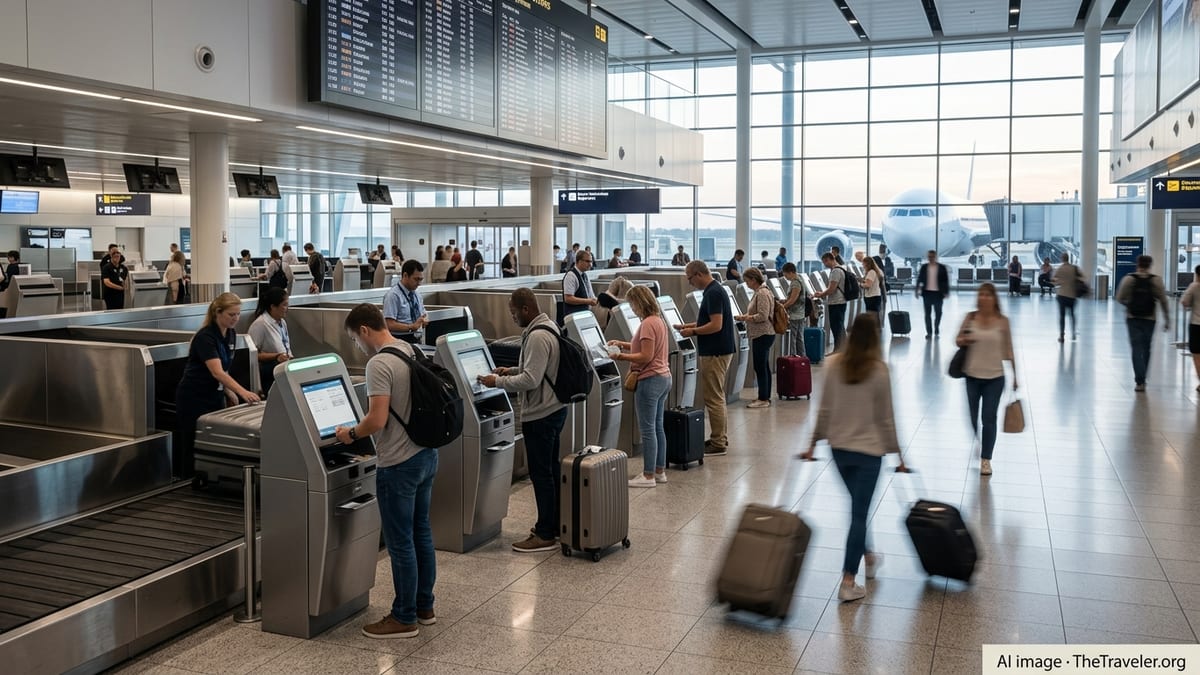
Short flights, long waits at the carousel
Recent social media posts and traveller accounts have highlighted a widening gap between flight duration and baggage delivery times at Pune airport. Passengers arriving on short domestic sectors, some taking around 50 minutes in the air, report queuing at baggage belts for 45 to 60 minutes before their checked bags appear.
These experiences have added to broader complaints about congestion and queuing at the city’s terminal, including long lines for check in and security during peak hours. Travellers have described the experience as disproportionate, noting that time on the ground frequently exceeds the time spent in flight, particularly on high-frequency connections with nearby cities.
Publicly available information indicates that Pune airport has seen rapid growth in passenger traffic over the past few years, with expanded domestic and international connectivity. As volumes rise faster than terminal capacity, pressure on landside processes such as baggage handling has become increasingly visible to travellers.
Underlying strain on infrastructure and capacity
Pune airport operates as a civil enclave within an air force station, which limits options for rapid physical expansion. According to publicly available data, the main terminal already handles several million passengers a year, placing it among India’s busier mid-sized airports. This structural constraint has made it harder to match terminal capacity with the pace of demand.
Reports from local media and aviation trackers suggest that peak-hour crowding has become common, affecting check in, security and baggage reclaim. Even when runway and airside operations return to normal after weather or operational disruptions, the terminal can take longer to clear accumulated passenger volumes, creating knock-on effects at baggage belts.
Separate coverage of monsoon-related disruptions earlier in July indicated that heavy rain and reduced visibility temporarily affected flight schedules into Pune. While terminal facilities were reported as functioning, any backlog of arrivals can quickly translate into pressure on baggage systems and ground staff, especially when multiple flights land in close succession.
New facilities on the way, but relief is gradual
Airport development plans point to incremental improvements intended to ease the growing strain. Local news coverage has noted that work on a new security hold area at Pune airport is largely complete, with the facility expected to add check in counters, additional baggage screening capacity and more boarding gates once regulatory clearances are secured.
The new zone is designed to smooth passenger movement through the terminal and reduce crowding in existing areas. While it is focused on security and boarding rather than arrivals, any redistribution of passenger flows can indirectly help baggage operations by reducing choke points and allowing staff to be deployed more flexibly during peaks.
However, reports also indicate that bringing new infrastructure fully online can take several months after construction, due to testing, certifications and coordination with multiple agencies. For travellers currently facing long waits at baggage carousels, these improvements are still some distance away, and day-to-day experience remains shaped by the existing layout.
Pune in a wider pattern of baggage disruptions
The complaints emerging from Pune sit within a broader pattern of baggage-related delays reported at airports worldwide. Recent media coverage has described several high-profile incidents in which mechanical faults or system outages left passengers in cities such as Orlando and Shannon waiting hours for luggage or seeing bags arrive on later flights.
In some cases, airports have attributed disruptions to failures in automated baggage handling systems, which require time to repair and reset. Elsewhere, staff shortages and sudden surges in flight activity have been linked to slower baggage delivery times. Analysts note that while such events are often short-lived, they have an outsized impact on passenger perception when they occur repeatedly at the same airport.
For Pune, the recent baggage complaints follow other widely reported instances of lengthy delays affecting flights in and out of the city, including overnight waits for some international departures in June. Together, these episodes have reinforced a sense among some travellers that the airport’s current systems are operating close to their limits.
Calls for clearer communication and realistic expectations
As baggage waits draw attention, many passengers are focusing not only on delay durations but also on how information is shared while they wait. Travellers posting online frequently highlight a lack of timely updates at the carousel, saying that even basic estimates of remaining wait times would make the experience less stressful.
Aviation analysts point out that airports and airlines can ease tensions by setting more realistic expectations around total journey time, including the possibility of extended waits at baggage reclaim during peak periods or after disruptions. Some international hubs publish typical processing and baggage delivery times by hour of day, giving travellers a clearer sense of what to expect.
For now, passengers arriving in Pune are advising one another to factor in extra time after landing, especially when planning onward road or rail connections. Until new facilities become operational and ground processes are further streamlined, the gap between a short hop in the air and a much longer wait at the carousel is likely to remain a recurring concern for those using the city’s growing airport.