


More news on this day
Hundreds of passengers across Europe are facing severe disruption as widespread delays and cancellations hit key hubs in France, Germany, the United Kingdom, the Netherlands, Spain, and Italy, with Paris Charles de Gaulle, Frankfurt, London Heathrow, and Amsterdam Schiphol among the worst affected.
Get the latest news straight to your inbox!
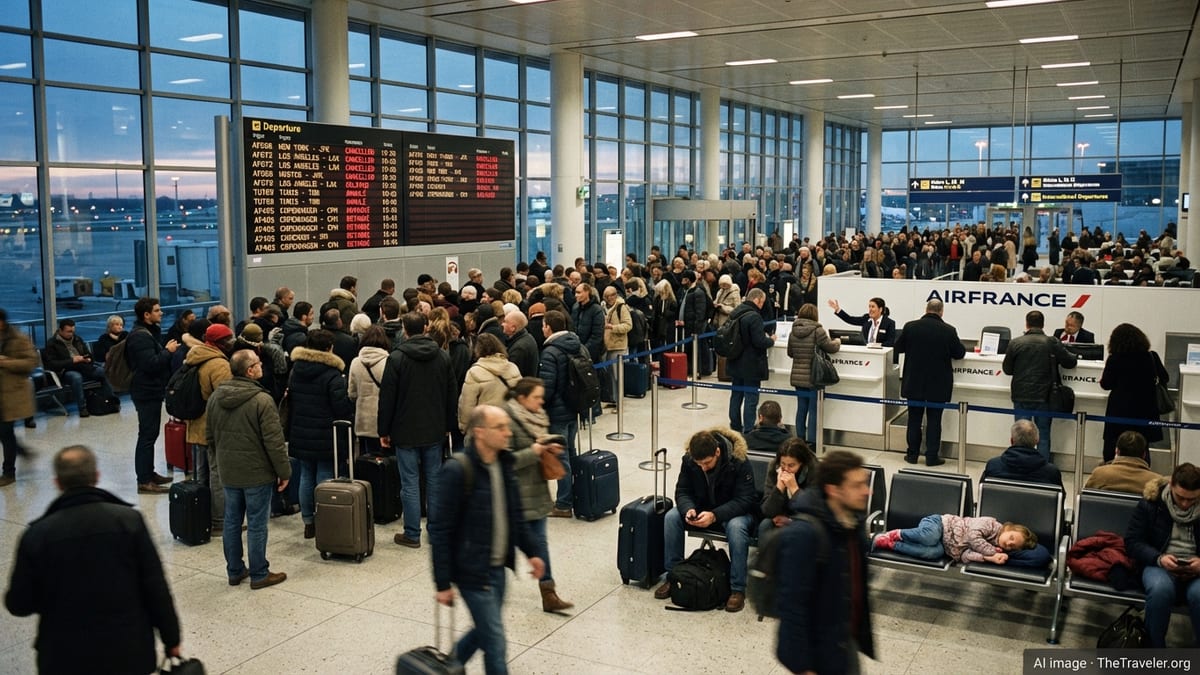
Major Hubs Buckle Under a New Wave of Disruption
Publicly available operational data indicate that flight delays and cancellations have surged across Europe in recent days, with more than 2,000 delayed services and close to 200 cancellations recorded in a single day across the continent. Large hubs including Amsterdam Schiphol, Frankfurt Airport, London Heathrow, Barcelona El Prat, and Munich have been central to the disruption, creating knock-on effects throughout national and regional networks.
Paris Charles de Gaulle has now joined this pattern. Data compiled for June 24 show a concentrated burst of disruption at the French capital’s main airport, with multiple same-day cancellations and more than one hundred delayed flights involving carriers such as Air France, HOP, KLM, and Air Baltic. The problems have rippled through domestic routes, cross-Channel services to the United Kingdom, and connections to Northern and Eastern Europe.
Similar pressures have been visible at London Heathrow and Frankfurt, where tight schedules and heavy reliance on connecting passengers mean that even modest operational issues can cascade into extensive delays. Reports from travel analytics platforms and passenger-rights organizations describe hundreds of affected flights across these hubs, leaving travelers facing missed connections and long waits.
At Amsterdam Schiphol, recent operational snapshots describe substantial backlogs and a particularly high volume of delayed and cancelled flights. On some days this year, Schiphol has recorded hundreds of cancellations within hours, underscoring how vulnerable a high-volume transfer hub can be when weather or staffing issues hit at peak times.
Weather, Strikes, and System Strain Combine
Industry and regulatory reporting points to a complex mix of causes behind the latest wave of disruption. EUROCONTROL’s European aviation overview for mid-June highlights weather as the single largest contributor to en-route air traffic flow management delay, particularly in France and Germany. Thunderstorms, strong winds, and extreme temperatures have forced air traffic managers to slow traffic flows and reduce capacity, which then feeds directly into airport delays.
At the same time, a series of transport and aviation strikes has been weighing on operations in France, Italy, Spain, Belgium, and other countries. Specialist travel coverage notes that coordinated industrial actions this summer have compelled major low-cost and network airlines to trim schedules, reroute flights, and rotate aircraft at short notice. Even where services are not cancelled outright, reduced staffing and work-to-rule campaigns can degrade punctuality across the day.
Airports and airlines are also confronting structural system strain. EUROCONTROL network reports show that hubs such as Amsterdam Schiphol, Paris Charles de Gaulle, Frankfurt, and London Heathrow rank among Europe’s busiest, with heavy daily movements and limited spare capacity. In such an environment, ground radar faults, fire alarms in control facilities, or temporary runway closures for de-icing or maintenance can generate tens of thousands of minutes of delay in a short period.
These factors are interacting with a sharp rebound in demand. Traffic levels in many markets now rival or exceed pre-pandemic volumes, while staffing, infrastructure, and technology upgrades have not always kept pace. The result is a system that can operate smoothly in normal conditions but quickly becomes overloaded when weather, industrial action, or technical issues arise simultaneously.
Impact on Passengers Across France, Germany, the UK, the Netherlands, Spain, and Italy
The practical impact for passengers in France, Germany, the United Kingdom, the Netherlands, Spain, and Italy has been substantial. Travel news outlets have documented instances in which hundreds or even thousands of travelers are left grounded on a single disruptive day, particularly when multiple hubs experience problems at once. Long queues at check-in, security, and border control, combined with repeated gate changes and rolling departure times, have been recurring themes in recent reports.
European hubs such as Paris Charles de Gaulle, Frankfurt, Heathrow, Schiphol, Madrid Barajas, and Rome Fiumicino are central to this story because of their role as transfer points. When an inbound flight from one country arrives late, onward services to others can be delayed or cancelled, amplifying the disruption far beyond the original weather cell, staffing shortage, or technical fault. Travelers connecting between, for example, Spain and Germany or Italy and the United Kingdom may never set foot in France or the Netherlands yet still experience consequences from issues in Paris or Amsterdam.
Individual accounts shared on public forums describe missed connections at Frankfurt following delays on flights from Italy, and lengthy waits at Heathrow and Schiphol as passengers attempt to clear crowded border-control and security checkpoints. Some travelers have reported building in four to five hours of connecting time at key hubs and still encountering tight transfers because of late-arriving aircraft and congestion in terminal facilities.
The wider network effects stretch beyond Europe. Long-haul departures to North America, the Middle East, and Africa from Washington Dulles, for example, have recently experienced notable disruption, and many of those flights feed directly into European hubs such as London, Frankfurt, and Paris. When aircraft and crew arrive late from overseas, the following day’s European rotations may already be compromised before boarding begins.
Legal Protections and Passenger Rights Under EU and UK Rules
Despite the operational chaos, passengers caught in these disruptions benefit from a relatively strong regulatory framework in Europe. Under EU Regulation 261/2004, which also applies in closely similar form in the United Kingdom, travelers on flights departing from EU or UK airports, or operated by EU or UK carriers, can be entitled to compensation for significant delays and cancellations in many circumstances.
Public guidance from compensation specialists and aviation-rights organizations explains that eligible passengers may receive fixed-sum payments that typically range from roughly 250 to 600 euros per person, depending on flight distance and the length of the delay on arrival. Airlines are also required to provide care and assistance in the form of meals, refreshments, and hotel accommodation where necessary during long waits, as well as refunds or re-routing when flights are cancelled.
However, these entitlements are not automatic. Airlines do not have to pay compensation where they can show that the disruption was caused by extraordinary circumstances that could not reasonably have been avoided, such as severe weather, volcanic ash, or certain types of air traffic control restrictions. In recent weeks, carriers have frequently cited thunderstorms, strong crosswinds, and heat-related air traffic limitations, particularly in France, Germany, and the Netherlands, when explaining mass delays and cancellations.
Specialist commentators advise that passengers document everything, including boarding passes, booking confirmations, written notifications from airlines, and receipts for meals or accommodation. Many claims are now handled online through carrier portals or dedicated third-party services, which use operational and meteorological data to assess whether a particular disruption falls within the scope of compensable events.
How Travelers Can Navigate a Volatile Summer
With France now clearly part of a broader arc of disruption stretching from the United Kingdom and the Netherlands to Spain, Italy, and Germany, travel experts are urging passengers to adjust their planning for the peak summer period. Guidance from aviation analysts and consumer organizations recommends allowing much longer connection windows at busy hubs, especially when itineraries involve transfers at Paris Charles de Gaulle, Frankfurt, Amsterdam Schiphol, or London Heathrow.
Travel coverage also suggests favoring earlier flights in the day where possible, because morning departures are less exposed to the cumulative effect of rolling delays. When conditions deteriorate later, airlines have more options to re-accommodate passengers from disrupted evening flights onto remaining services. Booking non-stop routes instead of connections, even at a higher fare, can also reduce the risk of missed onward flights and stranded baggage.
Practical preparation remains important. Passengers are being urged to monitor flight status closely using airline apps, sign up for alerts, and check airport departure and arrival boards before leaving for the terminal. Having essential items, medication, and valuables in carry-on bags, along with digital or printed copies of important documents, can make it easier to cope with unexpected overnight stays or long waits in crowded terminals.
As Europe’s aviation system continues to operate near capacity, the combination of volatile weather, sporadic strikes, and infrastructure bottlenecks means that further waves of disruption are likely through the summer. For travelers moving through Paris, Frankfurt, Heathrow, Schiphol, and other key hubs, building flexibility into itineraries and understanding compensation rights may be the best available tools for managing a turbulent season in the skies.