


More news on this day
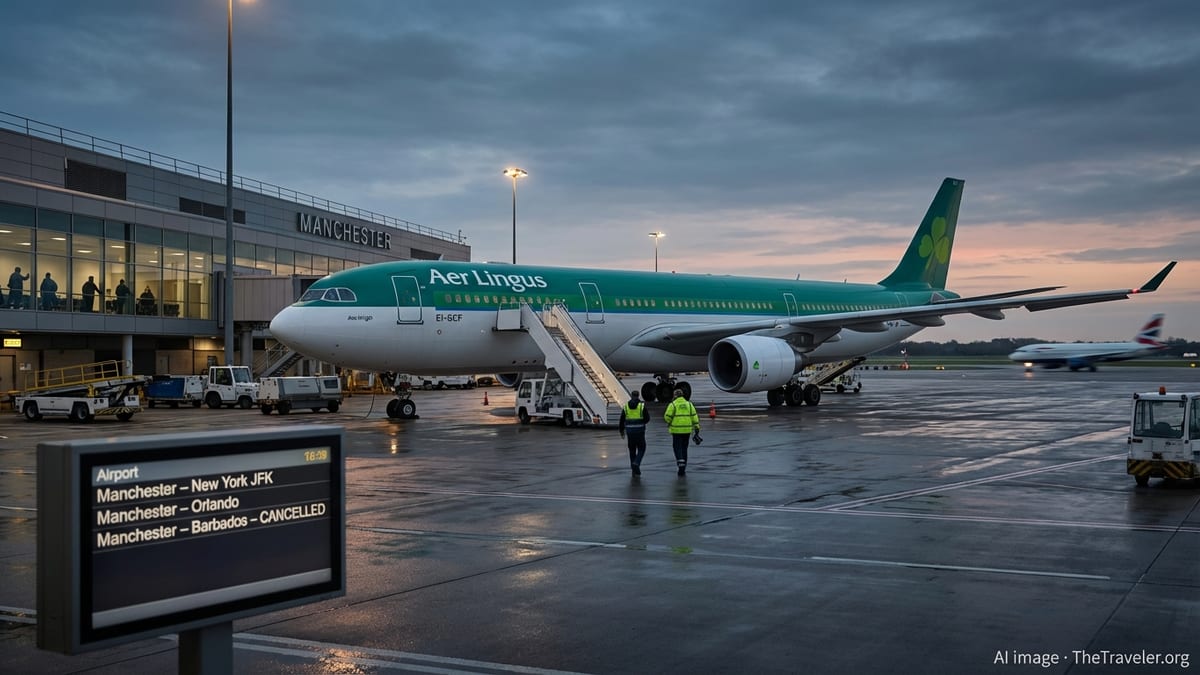
Passengers flying from Manchester Airport on Wednesday 10 June 2026 faced a scattered but sometimes significant pattern of delays, as a combination of weather, airspace congestion and earlier disruptions affected departures and arrivals across several major airlines.
Get the latest news straight to your inbox!
Morning peak sees rolling knock-on delays
Publicly available flight-tracking information for Wednesday’s early peak period indicates that the first substantial delays began to emerge around the 06:00 to 09:00 window, when traffic at Manchester Airport is typically at its busiest. Several short-haul European departures pushed back later than scheduled, with some services appearing 30 to 60 minutes behind timetable.
Reports from passengers on social platforms and community forums suggest that a number of early departures left stands later than planned after late-arriving inbound aircraft and routine congestion built up across the morning wave. A small number of flights appear to have exceeded an hour’s delay, though most departures remained within a window of up to 45 minutes.
Arrival data shows that a cluster of inbound services landing from major European hubs also experienced minor delays, adding further pressure to aircraft turnaround times. Operational documents published ahead of the summer 2026 season highlight how closely spaced departure slots at peak times can amplify even modest disruptions, leaving limited flexibility to recover the schedule once delays begin to accumulate.
Despite these pressures, security queues and check-in operations were reported to be flowing relatively smoothly in the early morning, with recent airport performance updates emphasising an ongoing focus on keeping processing times under control even when the airfield is busy.
Weather and airspace constraints shape mid-day operations
As the morning peak tapered off, mid-day flight operations on Wednesday appeared generally more stable, though some services continued to show residual delays from earlier disruptions. Eurocontrol network statistics for spring 2026 point to average departure delays of under 10 minutes per flight across European airports, but these averages can mask localised spikes when airspace or weather issues arise.
Industry-wide operational summaries for 2026 indicate that air traffic flow management restrictions and en-route weather remain leading causes of schedule disruption. On Wednesday, published regional forecasts and airline updates pointed to areas of unsettled weather and localised congestion along several key western European corridors, factors that frequently translate into modest holds for flights to and from northern England.
For Manchester specifically, capacity planning documents for the summer 2026 season show that the airport schedules heavy use of its runway system through the middle of the day, particularly for holiday and leisure routes. When airspace restrictions or minor weather deviations occur, these tightly planned schedules can translate into short ground delays for some departures as controllers manage spacing and flow.
By early afternoon on 10 June, available tracking data suggests that many services were operating close to schedule, with only scattered flights showing more pronounced lateness. Where longer delays occurred, they were often linked to aircraft arriving late from earlier sectors or to wider network issues rather than to local ground handling problems in Manchester.
Evening departures hit by late-running inbound aircraft
The busiest late-afternoon and evening window brought a further run of delays, particularly on services relying on aircraft that had already accumulated lateness earlier in the day. Airline timetables often depend on tight aircraft rotations, so a single delayed inbound can impact one or more later departures from the same base airport.
According to publicly visible schedules on Wednesday, some late-evening leisure and city-break flights from Manchester departed between 45 minutes and 90 minutes behind plan. Passenger posts referencing these services describe extended gate waits while crews prepared aircraft that had only just arrived from previous legs, a familiar pattern during periods of high seasonal demand.
Operational information published by the airport for the 2026 summer season notes that dual-runway operations are typically concentrated into peak periods to maximise capacity. While this configuration is designed to accommodate high traffic volumes, it can also mean that any disruption occurring late in the afternoon has limited recovery time before night restrictions reduce operational flexibility.
Despite the scattered delays, there were no indications on Wednesday evening of widespread cancellations or severe disruption affecting large numbers of flights simultaneously. Most late-running services eventually departed, albeit outside their scheduled slots, allowing airlines to reposition aircraft for the following morning.
Impact on passengers and advice for upcoming travel
For travellers, the pattern of delays on 10 June translated into longer-than-expected waits at departure gates and, for some, missed onward connections. Anecdotal accounts posted online reference passengers rebooking trains and coaches after arriving later than planned into Manchester, underlining how even modest flight delays can ripple into ground transport plans.
Recent passenger experience discussions around Manchester Airport emphasise that security times have generally improved through early 2026, but also highlight that flight delays remain a concern during busy travel days. Contributors regularly advise allowing extra time for transfers and avoiding tight same-day connections where possible, particularly during high-summer schedules when load factors and aircraft utilisation are at their peak.
Industry guidance for summer 2026 suggests that travellers should continue to monitor airline apps and airport information boards closely on the day of travel, as same-day schedule adjustments remain common. Rebooking policies, digital boarding passes and real-time notifications are now central tools for managing disruption, but they rely on passengers checking updates regularly.
Looking ahead to the remainder of June, capacity declarations and network forecasts signal another busy period for Manchester Airport, with high passenger numbers and dense schedules likely to persist. While Wednesday’s delays did not amount to a system-wide breakdown, they illustrate how quickly pressure can build on peak days, and why travellers are being encouraged to plan with additional buffers when flying through one of the United Kingdom’s busiest regional hubs.