


More news on this day
Passengers travelling through Manchester Airport on Wednesday 10 June 2026 encountered a mixed picture of disruption, with a series of delayed departures and late-running arrivals reported across a range of short and medium haul routes.
Get the latest news straight to your inbox!
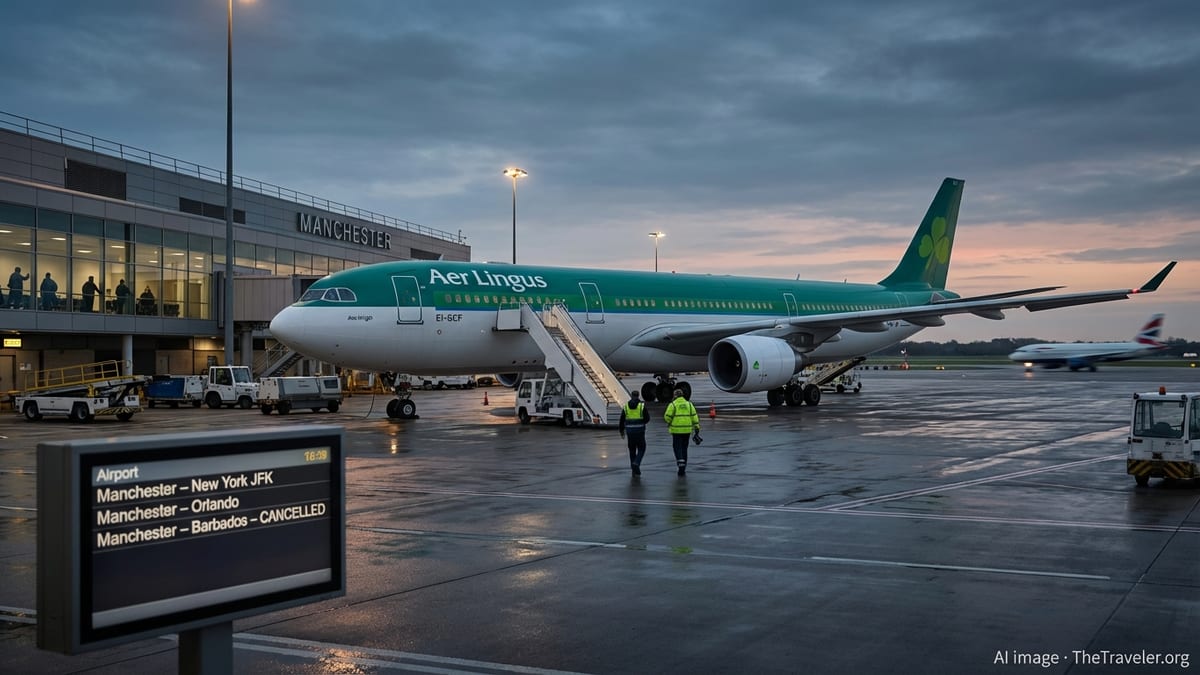
Patchy disruption across departures schedule
Publicly available flight-tracking data for Wednesday 10 June indicates that Manchester Airport’s departure boards showed a scattered pattern of delays rather than a single, system-wide failure. Early morning services generally ran close to schedule, but punctuality deteriorated as the day progressed, particularly on busy leisure routes to southern Europe.
Several mid-morning and early afternoon departures to destinations including Spain and Portugal were reported as delayed, in some cases by an hour or more. These hold-ups appeared uneven, with some flights leaving on time from neighbouring gates while others waited for aircraft arriving late from previous sectors, illustrating how reactionary delays can ripple through a tightly timed summer schedule.
By the late afternoon peak, the departure programme was under more visible strain, with a number of services pushed back from their planned slots. However, most affected flights were still expected to operate the same day rather than being cancelled outright, limiting the need for large-scale rebooking but leaving passengers with extended waits airside.
Evening departures showed a gradual improvement as aircraft and crews were repositioned and schedules caught up. Nonetheless, scattered late-running services remained, underscoring how a relatively small number of disruption events earlier in the day can continue to affect punctuality well into the night.
Arrivals impacted by weather and air traffic flow
On the arrivals side, live data and aviation monitoring platforms show a series of delays into Manchester on 10 June, with some inbound flights landing significantly after their scheduled times. Weather patterns over parts of Europe, combined with air traffic flow restrictions en route, contributed to aircraft arriving late into the UK.
Reports relating to flights from Iberian destinations in the days leading up to 10 June highlight how extended delays on certain routes have become more frequent during the early summer period. When an inbound aircraft arrives several hours behind schedule, its onward departure from Manchester is typically pushed back as well, linking arrivals performance directly to departure punctuality.
Operational information and publicly available planning documents for the summer 2026 season indicate that Manchester Airport is operating close to its declared capacity during peak hours. When combined with variable weather and air traffic control regulations elsewhere in Europe, this leaves limited room to absorb disruption without some impact on arrival times.
Despite the delays, there was no indication of a blanket suspension of arrivals or a prolonged closure of runways at Manchester on 10 June. Instead, the pattern points to localized airborne holding, altered routings and minor flow restrictions that together extended journey times for a proportion of passengers.
Capacity pressures in a record passenger year
Manchester Airport is entering the main summer season following a period of strong passenger growth, with recent statistics showing more than 32 million people using the airport over the previous year. As a major base for several low-cost and leisure carriers, its schedule in June is heavily concentrated into morning and late-afternoon banks of flights.
Summer 2026 capacity declarations published for the airport set out tight limits on the number of take-offs and landings permitted in each 15-minute window. While this structured approach is designed to keep runway operations stable, it also means that even modest disruption on busy days can force flights to be re-timed into later slots, appearing to passengers as rolling delays on the departure and arrivals boards.
Operational guidance for the current season also notes that dual-runway use is typically reserved for peak periods, with overnight hours largely restricted to single-runway operations. This arrangement can reduce flexibility if aircraft run late into the late-evening shoulder, as there are fewer opportunities to schedule catch-up movements without breaching noise and night-flight constraints.
Industry-wide data for early 2026 points to a general reduction in average delay minutes per flight across Europe compared with the previous year, yet reactionary delays and weather remain leading causes of hold-ups. Manchester’s experience on 10 June appears to reflect these broader trends, with airport infrastructure operating within declared limits but still exposed to wider network pressures.
What the disruption meant for passengers
For travellers at Manchester Airport on Wednesday, the practical impact of these delays varied widely depending on destination, airline and time of travel. Passengers on early-morning services often experienced only minor schedule changes, while those booked on popular holiday flights later in the day faced longer waits at the gate or extended time on board before departure.
Social media posts and recent online discussions about using the airport suggest that many travellers now factor in the risk of disruption when planning connections to onward trains or coaches. Advice shared by frequent users typically recommends allowing a wider margin for potential delays, particularly when relying on evening ground transport connections out of Manchester Airport station.
Within the terminal, accounts from recent weeks describe security processing that is generally swift, with many passengers clearing checks in a matter of minutes. On a day of patchy flight delays, that can mean more time spent in departure lounges rather than in queues, although busy gate areas and pressure on seating are recurring themes in traveller commentary during peak summer periods.
For arriving passengers, delayed landings can push journeys into busier border control windows or later rail and tram timetables. While the majority of flights on 10 June ultimately reached Manchester the same day, even moderate delays can lengthen door-to-door travel times and increase fatigue, especially for families and those connecting from long-haul services.
Managing expectations for the rest of June
Wednesday 10 June serves as an early indicator of the conditions passengers may encounter at Manchester Airport through the remainder of the month as the summer schedule intensifies. With airlines running high load factors and turnaround times tightly planned, operational resilience will continue to depend on stable weather and smooth air traffic management across Europe.
Industry briefings and publicly available airport information emphasise that travellers can reduce the impact of disruption by checking flight status before setting off, allowing extra time for transfers, and remaining alert to gate changes. Airlines are expected to continue using digital channels and terminal screens to update passengers when schedules shift during the day.
For Manchester Airport, maintaining punctuality through June will involve balancing runway and terminal capacity, night-time operating restrictions and a continued surge in leisure demand. The mixed pattern of delays seen on 10 June highlights how even a largely functioning operation can still deliver a challenging experience for some passengers, particularly during the busiest hours of the day.