


More news on this day
Beijing Capital International Airport reported a fresh wave of operational disruption today, with publicly available flight-tracking data indicating 19 cancellations and 102 delays across domestic and international services operated by Air China, China Eastern, Dalian Airlines and several foreign carriers.
Get the latest news straight to your inbox!
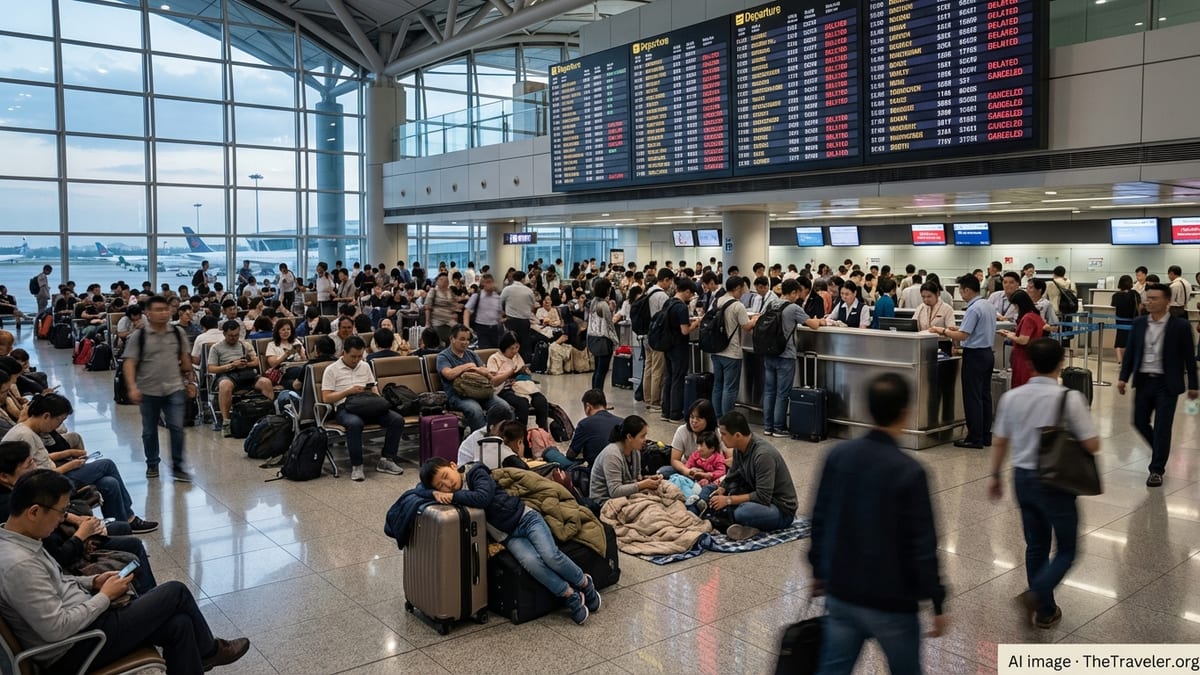
Targeted Cancellations Hit Key Asian and Transpacific Routes
Flight status boards for Beijing Capital on major tracking platforms show cancellations concentrated on a mix of domestic trunk routes and international links, including services to Canada, Japan, South Korea, Taiwan and Thailand. The disruptions appear clustered across several hours of the morning and early afternoon schedule, affecting both departures from Beijing and inbound flights that feed onward connections.
Northbound and transpacific passengers have been among those most exposed to schedule changes. Services linking Beijing with major Canadian gateways are shown as either significantly delayed or withdrawn from the schedule, disrupting itineraries for travelers connecting between North America and cities across mainland China. Similar patterns are visible on flights to and from Japan and South Korea, both of which serve as important regional hubs for business and leisure traffic.
Regional markets closer to the Chinese mainland are also feeling the impact. Flights between Beijing and Taiwan, as well as popular leisure routes to Thailand, show a mix of outright cancellations and rolling delays, complicating same-day connections to onward domestic services. For some travelers, this has meant unplanned overnight stays or last-minute rerouting via alternative hubs in East and Southeast Asia.
Operational data for the day indicate that although the total number of cancellations remains limited compared with peak disruption events seen earlier in the year across China’s aviation network, the concentration of affected flights at a single hub is amplifying the effect on passengers with tight connection windows.
Air China, China Eastern and Dalian Airlines Bear the Brunt
According to aggregated flight-status feeds, Air China appears prominently among the disrupted operations at Beijing Capital, reflecting the carrier’s role as a primary hub airline at the airport. Delays affecting Air China departures are contributing to knock-on schedule changes on later rotations, particularly on multi-leg itineraries that connect China with Canada, Japan and South Korea.
China Eastern, which maintains a significant presence at Beijing Capital alongside its expanded operations at Beijing Daxing, is also listed among the carriers facing delays and selective cancellations. Industry analyses of China’s aviation network have repeatedly highlighted how hub-based structures at major airports such as Beijing Capital can magnify the effect of even a relatively small number of disrupted flights once aircraft and crews fall out of position.
Dalian Airlines, a regional operator with close ties to Air China, features in the day’s tally of affected services as well. Although the airline’s network is smaller, its role in feeding traffic between northeastern China and Beijing means that canceled or delayed segments can sever onward links for passengers traveling to international destinations. International carriers serving Beijing Capital are also present in today’s disruption statistics, particularly on East Asian routes where schedules have already seen adjustments in recent months.
Recent aviation data studies point to Beijing Capital as one of China’s most delay-sensitive hubs, with average arrival and departure hold-ups historically outpacing many smaller airports. The combination of dense traffic volumes, limited rerouting options and complex airspace management often leaves airlines with little flexibility once irregular operations begin to build.
Weather, Congestion and Network Fragility Fuel Wider Travel Chaos
While the precise trigger for today’s wave of delays and cancellations at Beijing Capital has not been fully detailed in early reporting, patterns across China’s aviation network in recent months provide context. Previous disruption episodes have frequently been linked to rapidly changing weather systems, airspace congestion and the ripple effects of earlier delays at other major hubs such as Shanghai and Guangzhou.
Industry commentary on recent Chinese flight disruptions notes that a relatively small number of initial delays can cascade into a much larger operational problem, especially when aircraft are tightly scheduled and spare capacity is limited. When a departure from Beijing is held on the ground or canceled outright, the aircraft and crew may miss subsequent rotations to destinations such as Tokyo, Seoul, Taipei or Bangkok, compounding the impact for travelers far from the original point of disruption.
Publicly available analyses of China’s air transport system describe it as particularly vulnerable to such domino effects, given the concentration of traffic at a handful of mega-hubs and the heavy reliance on banked waves of departures and arrivals. On days like today, that vulnerability is reflected in a sharp increase in delays within a relatively short timeframe, even when the number of outright cancellations remains below the thresholds seen during major storms or large-scale control restrictions.
Travel data providers tracking punctuality at Beijing Capital generally rate its on-time performance as relatively strong on most days, which underscores how noticeable a spike of 19 cancellations and more than 100 delays can be for passengers accustomed to tighter schedules.
Passengers Scramble to Rebook Across China and Beyond
For travelers passing through Beijing Capital today, the disruption is translating into longer queues at check-in desks and service counters, as well as heavier reliance on airline apps and third-party booking platforms. Many passengers heading to Canada, Japan, South Korea, Taiwan and Thailand are being re-accommodated on later departures from Beijing or rerouted via alternative hubs in the region.
Travel planners often recommend that passengers facing such irregular operations document their original itinerary and any boarding passes or delay notifications, as these records can be helpful when seeking refunds, vouchers or schedule changes under airline policies. In practice, rebooking options may be most constrained on long-haul and late-night departures, where frequencies are lower and spare seats are limited.
Reports from recent disruption episodes across Chinese airports suggest that travelers with separate tickets for domestic and international segments are particularly exposed when delays mount at major hubs. Missed connections in Beijing can be more difficult to resolve if the onward flight is operated by a different carrier on an unprotected itinerary, sometimes requiring the purchase of an entirely new ticket to continue the journey.
Passenger-rights frameworks vary significantly between the jurisdictions affected by today’s disruptions. While some countries, such as Canada and several East Asian markets, have codified compensation or care obligations under defined circumstances, others rely more heavily on individual airline policies and contract-of-carriage provisions. Travelers are frequently encouraged to review these rules in advance of travel so they can respond quickly when schedules change at short notice.
What Today’s Chaos Signals for Peak Summer Travel
Today’s disruption at Beijing Capital arrives as airlines across Asia prepare for another busy northern summer season, with demand on routes linking China to Canada, Japan, South Korea, Taiwan and Thailand continuing to recover. Aviation analysts observing recent patterns in cancellations and delays across the Chinese network have warned that sustained high load factors could strain capacity during peak travel weeks if weather or airspace constraints intensify.
The concentration of 19 cancellations and 102 delays at one of the country’s primary hubs serves as a reminder of how quickly conditions can deteriorate for passengers, even in the absence of a single headline weather event or technical failure. For many travelers, resilience now depends on building additional buffer time into itineraries and being prepared to adjust routing when disruption begins to spread.
Some travel-advice outlets are suggesting that passengers connecting through Beijing Capital to long-haul flights consider longer layovers than they might have chosen before the pandemic. Wider connection windows can help absorb upstream delays from domestic feeders or regional routes, particularly when traveling on complex journeys that involve multiple carriers or separate tickets.
As airlines, airports and regulators continue to refine schedules and operating practices, today’s events at Beijing Capital illustrate the broader challenge of managing a rapidly recovering air travel market within one of the world’s most congested airspace systems. For passengers moving across China and the wider Asia Pacific region, close monitoring of flight status and flexible planning remain central to navigating days of concentrated disruption such as this one.