


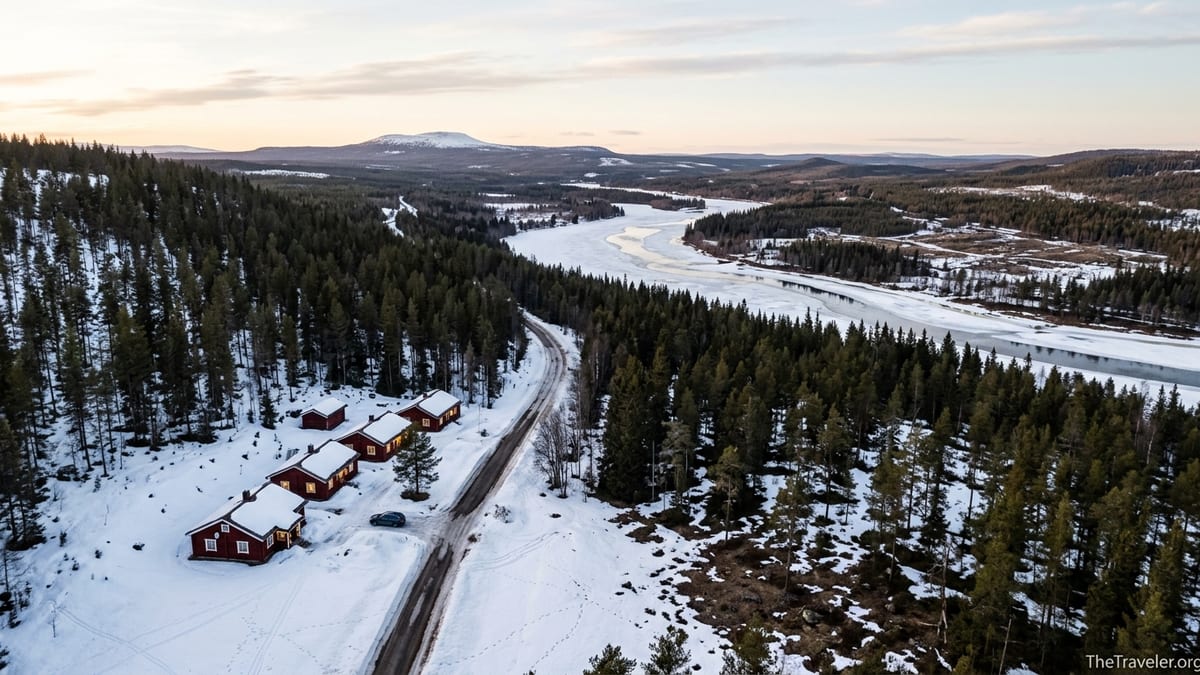
Lapland is one of those places where timing really does change everything. The same forest that glows under a pastel winter sky in January is bright green and sunlit at midnight in June. Whether you are dreaming of northern lights, Santa Claus Village, or summer hikes above the tree line, understanding Lapland’s seasons and a few visitor essentials will help turn a bucket-list idea into a comfortable, realistic trip.
Get the latest updates straight to your inbox!
Understanding Lapland and Its Seasons
When travelers talk about Lapland, they usually mean the northernmost parts of Finland, Sweden and Norway, above or close to the Arctic Circle. Rovaniemi in Finnish Lapland is often the gateway, with smaller destinations like Levi, Ylläs, Saariselkä and Inari further north providing quieter wilderness and strong chances for northern lights in winter. Distances are large, towns are small and the climate is genuinely Arctic in winter, which makes planning around the seasons essential.
Winter, roughly from late November to early April, is the classic picture-book Lapland season. This is when you get thick snow, frozen lakes, snowmobile and husky safaris, and, if you are lucky, skies lit by the aurora borealis. In Rovaniemi and ski resorts like Levi, the snow season typically begins in November, with reliable deep snow from December through March. Many visitors time their trips for December for the Christmas atmosphere, or for February and March, when days are brighter but the snow is still firm.
Summer in Lapland, from June to August, is a completely different experience. Instead of darkness and snow, you get the midnight sun and hiking trails that stay light around the clock. According to recent visitor guidance, the midnight sun in Rovaniemi usually runs from late May to mid-July, with the peak around the June solstice when the sun does not set at all. Further north, around Utsjoki, the sun can stay above the horizon for more than two months. Warm days with temperatures around 20 to 25 degrees Celsius are common in July, although cooler, rainy spells are always possible.
Spring and autumn are transition seasons and can feel short. April often still has snow on the ski slopes in Levi or Ylläs, while river ice begins to break. October can bring the first proper snowfalls in the fells, but also periods of bare ground and rain. The reward in autumn, especially from early September to early October, is ruska, the Lapland word for autumn colors: birch trees turn bright gold, the ground vegetation burns red, and nights are dark enough again for northern lights.
Choosing the Right Time: Northern Lights, Midnight Sun or Snow
Before you book, it helps to decide what you most want from Lapland, because you cannot have everything in one trip. If your top priority is to see the northern lights, you need dark skies and reasonably clear weather. Across Finnish Lapland, local and tour operator information typically describes the aurora season as running from late August until early April. The strongest chances align with the darker months between September and March. In practical terms, that means you should plan to be in Lapland for at least three or four nights in winter or late autumn, away from big city lights, to improve your odds.
For a classic “snowy Lapland” holiday with reindeer rides, husky trips and skiing, most families choose December through March. December is high season around Rovaniemi and Levi because of Christmas and New Year, with higher prices and more tours fully booked. If you are looking for a calmer, often better-value time, late January to mid-March in resorts like Saariselkä or Ylläs usually offers reliable snow, longer daylight and frequent northern lights. For example, many ski areas in Finnish Lapland keep their main slopes open until early or mid-April in good snow years, giving you bright, sunny “spring winter” days when locals ski in lighter jackets.
If midnight sun and hiking are your goals, June and early July are best. In June, trails in areas like Urho Kekkonen National Park near Saariselkä and Pallas-Yllästunturi National Park usually become largely snow-free, and river crossings are more manageable than in May when snowmelt runs high. Expect to walk in bright light even at midnight, which means you will want a sleep mask in cabins and hotels that do not have full blackout curtains. Do note that mosquitoes and other biting insects peak in late June and July, especially near lakes and wetlands, so insect repellent and long sleeves are practical essentials.
Autumn is a quieter, increasingly popular choice. In early September, temperatures are cool but not yet wintery, bugs are mostly gone, and the ruska colors are at their most vivid for roughly two weeks, varying slightly by year and location. Accommodation prices often dip compared with Christmas and the winter school holiday periods, and many hikers head for multi-day treks like the Hetta to Pallas route or shorter day hikes from Kilpisjärvi or Saariselkä. Nights are already dark enough for aurora sightseeing, though you may contend with more frequent rain than in winter.
Weather, Daylight and How They Shape Your Trip
Visitors are often surprised by how dramatically daylight shifts with the seasons in Lapland. Around Rovaniemi, the polar night period when the sun does not rise lasts only a few days in late December, but even in early December you will get only a few hours of weak daylight and long periods of blue twilight. Further north, in places like Utsjoki or Kilpisjärvi, the sun can stay below the horizon for 40 to 50 days. This does not mean complete darkness around the clock, but it does mean that any outdoor activities need to be planned around the handful of brighter hours each day.
In winter, temperatures routinely drop well below freezing. In Rovaniemi, daytime temperatures around minus 5 to minus 15 degrees Celsius are common in January and February, and it can be colder inland or on exposed fells. Short sharp drops to minus 25 or lower are possible. Cold is easier to cope with when it is dry, and much of Lapland’s winter weather is indeed cold and clear. Still, wind on open fells can change a comfortable day into a difficult one quickly, which is why tour providers insist on proper clothing and often supply outer layers, boots and mittens for safaris.
By contrast, summer days can feel unexpectedly warm. Locals in Finnish Lapland report that temperatures in July increasingly reach the mid 20s Celsius, and occasional heatwaves can push even higher. The main challenge in summer is rarely cold, but rather sun exposure and insects. With the sun circling low and bright at night, it is easy to underestimate how long you spend outdoors. Sunglasses, a brimmed hat and sunscreen are as important in June as a headlamp is in December.
Spring and autumn are the most changeable. April can offer a mix of crusty morning snow perfect for cross-country skiing and slushy afternoons that soak ordinary shoes. In October you might wake to fresh snow that melts by lunchtime. For travelers, this means packing flexible layers and waterproof footwear and being prepared to adjust plans daily. A planned hike may turn into a museum day or a slow drive if sleet or high winds move in. Having a realistic expectation of weather swings, rather than a postcard ideal, makes Lapland much more enjoyable.
Key Destinations and Seasonal Highlights
Rovaniemi, marketed as the official hometown of Santa Claus, is the busiest gateway to Finnish Lapland and is served by an airport and rail connections from southern Finland. Just north of the city, Santa Claus Village sits directly on the Arctic Circle and welcomes visitors year-round. You can meet Santa in his office, visit Santa Claus Main Post Office, and cross the painted Arctic Circle line in both winter snow and summer sun. The village is particularly popular from late November through early January, when shops and attractions keep extended hours, often from around 9 in the morning to early evening, and the whole area is decorated with lights and snow sculptures.
For skiing and winter sports, Levi is one of Finland’s largest and most developed ski resorts. Recent price lists for the 2025 to 2026 season show a typical adult day ski pass costing slightly under 60 euros, with three-day and six-day passes priced progressively cheaper per day when bought as a package. Children receive discounted rates, and kids under six often ski free with a helmet and a paying adult. Levi usually offers downhill skiing from late autumn until April, and adds winter activities such as snowmobiling, reindeer sleigh rides and ice karting, making it a full-scale winter holiday hub.
Further north, Saariselkä and Inari provide a quieter atmosphere, with fells, open tundra and easy access to national parks. Saariselkä sits on the edge of Urho Kekkonen National Park and is a favorite for cross-country skiing and hiking. Local tourism information highlights that this area often has a slightly longer snow season than more southern resorts, and clearer skies in mid-winter can mean strong aurora viewing when conditions are right. Inari, with its large lake and strong Sámi cultural presence, offers opportunities to learn about the indigenous culture of Lapland through museums, handicraft shops and reindeer-herding experiences.
Across the border in Swedish Lapland, towns like Kiruna and Abisko are known for both winter northern lights and summer hiking. Norway’s Finnmark region, including Alta and Tromsø just below Lapland proper, offers similar seasonal contrasts. Many travelers combine regions, for example flying into Tromsø for a few nights of aurora hunting by the fjords and then continuing overland into Finnish Lapland for Santa-themed activities, skiing or wilderness cabins.
Costs, Booking Windows and Practical Budget Tips
Lapland is not a low-budget destination, especially in the peak winter weeks. Accommodation in Rovaniemi around Christmas can sell out nearly a year in advance, and prices for central hotels and family cabins typically rise sharply from late November to early January. Small group tours, such as a half-day visit to Santa Claus Village with transfers, can easily start around 100 to 200 euros per adult during this period. Husky or snowmobile safaris of a few hours are often priced in a similar range, especially when they include warm clothing and a meal.
In ski resorts like Levi, typical recent prices show that a single adult day ski pass sits just under 60 euros, with a six-day pass around the mid-200 euro range for adults. Renting skis, boots and poles for a day may add another 30 to 40 euros, and more for high-end equipment. Families can reduce costs by choosing smaller, less commercial resorts such as Saariselkä or Pyhä, where lift passes and rental prices tend to be somewhat lower, and by traveling outside the main Christmas and school holiday weeks.
Food and basic expenses are in line with the rest of Finland, which means higher than many other European destinations but predictable. A simple café lunch of soup and bread in Rovaniemi might run around 10 to 15 euros, while a main course in a mid-range restaurant is commonly in the 20 to 30 euro range. Supermarkets are well stocked, and many cabins and apartments have kitchenettes or full kitchens, so self-catering can cut costs substantially. Card payments are accepted almost everywhere, from taxis to small souvenir stands, and cash is rarely necessary.
To keep your budget under control, consider visiting in shoulder seasons. A March or early April trip can offer high-quality snow and northern lights but slightly lower accommodation prices than December. A September hiking trip during autumn colors can mean cheaper flights and quieter trails compared with peak July. Booking flights and key tours several months ahead is still wise in all seasons, but if you are flexible and avoid the busiest weeks, you will often find better availability and value.
Packing for Lapland: Clothing, Gear and Seasonal Essentials
The right clothing can make the difference between a magical Lapland memory and a miserable one. In winter, focus on layers. A typical local setup for a January day in Rovaniemi or Levi would be thermal base layers, a warm fleece or wool mid-layer and a windproof, insulated outer jacket and trousers. Add wool socks, insulated winter boots rated for at least minus 20 degrees Celsius, a warm hat that covers your ears, a buff or scarf for your neck and face, and insulated mittens or gloves. Many tour operators provide outer suits and boots for snowmobiling or husky safaris, but you will still need proper base and mid-layers of your own.
Chemical hand warmers, a thermos flask and a small backpack are practical additions for long days outdoors. Phone batteries drain quickly in the cold, so keep electronics in an inner pocket and carry a power bank. If you plan to photograph the northern lights, bring a camera or smartphone that allows manual control of exposure, plus a tripod or at least a stable surface to rest the camera on. Even in organized tours, you will often spend long periods standing still on lakes or hilltops at night, which feels significantly colder than walking during the day.
In summer, gear shifts to lightweight and breathable. Hiking pants, moisture-wicking shirts, a fleece or light down jacket, and a waterproof shell are the core. Sturdy walking shoes or light hiking boots with good grip are sufficient for most marked trails. Do not forget sun protection, a cap, sunglasses and a sleep mask for the midnight sun. Because insects are a reality near lakes and bogs, pack insect repellent, and consider a thin long-sleeve shirt and trousers for evenings even when it is warm.
Year-round, it is worth carrying a reusable water bottle. Tap water in Lapland is safe and high quality, often straight from local lakes and underground sources. A small first-aid kit with blister plasters, basic pain relief and any personal medication is also sensible, as pharmacies in small towns can have limited hours. Finally, pack patience and flexibility. Weather, daylight and local conditions can change quickly in the Arctic, so a mindset that allows for plan B and plan C will keep stress levels low.
Getting Around and Other Visitor Essentials
Most international visitors reach Lapland via Helsinki, then connect by domestic flight or overnight train. Rovaniemi, Kittilä and Ivalo airports serve different parts of Finnish Lapland, with Rovaniemi convenient for Santa Claus attractions, Kittilä for Levi and Ylläs, and Ivalo for Saariselkä and Inari. Overnight trains from southern Finland carry both passengers and cars north, which can be cost-effective for families and those wanting their own vehicle for exploring.
Within Lapland, public transport is functional but relatively sparse compared with central Europe. Around Rovaniemi, local buses connect the city center with Santa Claus Village and the airport, often with a dedicated Santa-themed bus running more frequently in winter. In ski resorts like Levi and Ylläs, shuttle buses or ski buses circulate between slopes, accommodations and nearby villages, typically included in or discounted with ski passes in the peak season. For more remote areas or flexible schedules, renting a car is often the most practical option. Road conditions in winter require caution, but highways are well maintained and rental cars are usually equipped with proper winter tires.
Language is rarely a barrier. Finnish and Swedish are official languages in Finland, but English is widely spoken in hotels, restaurants and on tours. Payment is almost entirely cashless, and mobile connectivity is strong even in many rural areas, though signal can drop in deep valleys or remote fells. It is still wise to download offline maps and keep printed confirmations of key bookings in case your phone battery struggles with the cold.
Respecting local culture and nature is part of being a good visitor. Much of Lapland is Sámi homeland, and you will see references to Sámi languages, reindeer herding and traditional handicrafts. Choose experiences that work with local communities and avoid any that treat reindeer or huskies as mere photo props. Stick to marked trails in national parks, follow “leave no trace” principles, and be aware that driving off-road on fragile tundra is usually illegal and can cause lasting damage.
The Takeaway
Lapland is not a one-season destination. It is a region where the experience of the same place can feel like visiting different planets depending on whether you arrive in deep winter or bright summer. A thoughtful trip starts with one simple question: do you want northern lights and snow, or midnight sun and green hills? From there, you can match your travel window, budget and packing list to the realities of Arctic weather, daylight and costs.
With realistic expectations and a bit of seasonal knowledge, Lapland becomes far more accessible. Families can plan magical December visits to Santa Claus Village in Rovaniemi, skiers can chase perfect March snow in Levi or Ylläs, hikers can wander under the midnight sun in June, and photographers can frame ruska colors and auroras in September. Whichever season you choose, layering your clothes, booking early for peak weeks and allowing flexibility in your plans will help you enjoy the quiet moments in between the big sights: the crunch of snow underfoot, the glow of a kota fire, or the almost silent Lapland forest at midnight that never quite gets dark.
FAQ
Q1. When is the best time to visit Lapland for the northern lights?
The northern lights are most commonly visible in Lapland from late August to early April, with the strongest chances between September and March when nights are darkest. Plan at least three or four nights in the region to improve your odds, preferably away from major town lights.
Q2. Which month is best for a classic snowy Lapland holiday with kids?
For deep snow, family-friendly activities and enough daylight, late December through March is ideal. December offers the most festive atmosphere but is very busy and expensive. Many families find late January to mid-March a good compromise, with slightly lower prices, more daylight and reliable snow.
Q3. Is Lapland only worth visiting in winter?
No. Winter is the most famous season, but summer and autumn are excellent in different ways. June and July bring the midnight sun and green forests, while early autumn offers colorful foliage, fewer insects and a new northern lights season. Each season changes what you can do, from skiing and huskies in winter to hiking and canoeing in summer.
Q4. How cold does it actually get in Lapland?
In mid-winter, typical daytime temperatures in places like Rovaniemi range from around minus 5 to minus 15 degrees Celsius, with occasional dips to minus 25 or lower. Further north and on exposed fells, it can feel colder, especially with wind. With layered clothing and good boots, most visitors cope well, especially since many tours provide additional outerwear.
Q5. Do I need to rent a car to get around Lapland?
It depends on your plans. If you stay in a main hub like Rovaniemi or Levi and mainly join organized tours, public transport, airport transfers and local shuttle buses are usually enough. If you want to explore smaller villages, move between resorts or hike in more remote areas, renting a car gives you far more flexibility, especially outside the busiest winter weeks.
Q6. How far in advance should I book accommodation and tours?
For Christmas and New Year in places like Rovaniemi and Levi, it is wise to book accommodation 9 to 12 months in advance, and key tours several months ahead. For February and March, a few months’ lead time is usually enough. In summer and autumn, you can often book closer to your travel dates, though popular cabins and glass igloos still fill early on peak weekends.
Q7. What should I pack for a winter trip to Lapland?
Pack thermal base layers, a warm fleece or wool mid-layer, an insulated windproof jacket and trousers, wool socks, insulated winter boots, a hat, scarf or buff and thick mittens or gloves. Add hand warmers, a power bank to keep your phone charged in the cold, lip balm, moisturizer and any camera gear you want for northern lights photography. Many activity companies will loan outer suits and boots, but you still need your own warm under-layers.
Q8. Are activities like husky and snowmobile safaris suitable for children?
Most major operators in Finnish Lapland offer family-friendly versions of husky, reindeer and snowmobile outings, with age and height limits clearly stated. Younger children usually ride as passengers in sleds or sleighs, while older children and adults can sometimes drive under supervision. Always check the specific tour’s requirements, duration and weather conditions before booking with kids.
Q9. How expensive is Lapland compared with the rest of Europe?
Lapland is generally more expensive than many European destinations, especially in peak winter. Accommodation around Christmas and New Year, guided activities and ski passes can quickly add up. Everyday costs like supermarket food are similar to the rest of Finland, while restaurant meals tend to be on the higher side. Traveling in March, April, June or September, self-catering and choosing smaller resorts can help keep your budget manageable.
Q10. Is it possible to combine Lapland with other Nordic destinations in one trip?
Yes. Many travelers fly into Helsinki, spend a couple of days there and then continue by train or plane to Rovaniemi or another Lapland destination. Others combine Finnish Lapland with Tromsø or Kiruna, or cross borders by bus or rental car. If you plan to visit in winter, allow extra time between connections in case weather delays flights or road conditions slow travel.