


More news on this day
Air travel across parts of the Middle East is facing fresh disruption as airports in Qatar, the United Arab Emirates, Saudi Arabia and Iraq report at least 20 flight cancellations and more than 180 delays, impacting passengers at major hubs in Doha, Dubai, Riyadh and Erbil.
Get the latest news straight to your inbox!
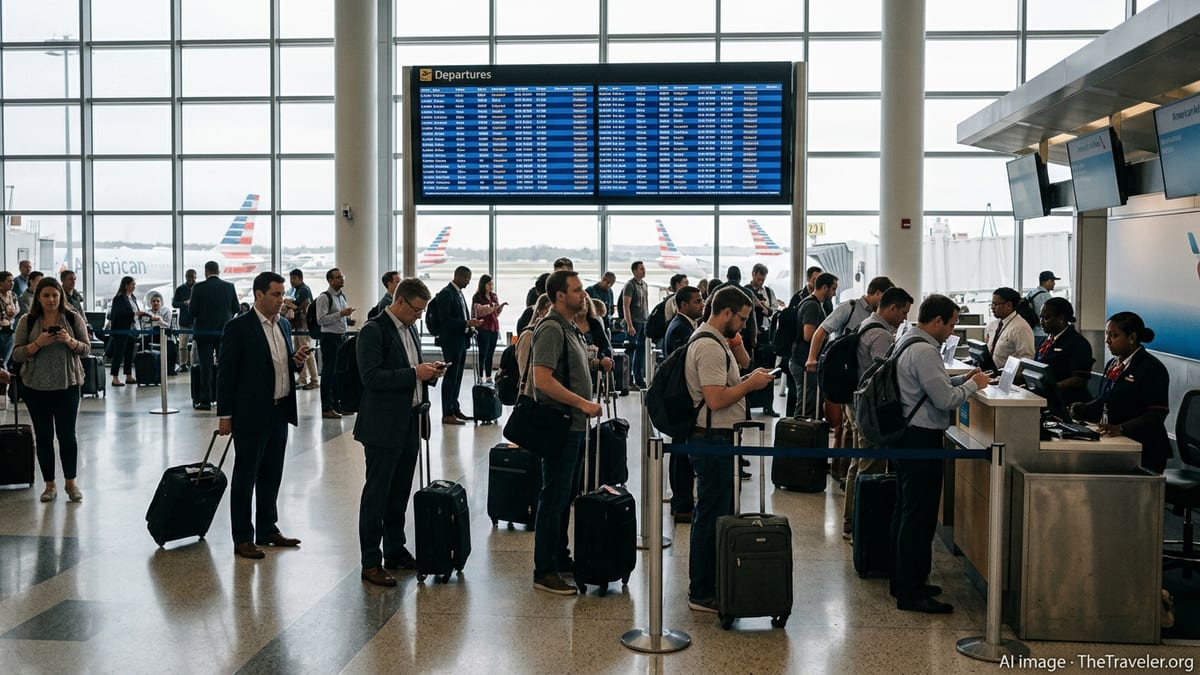
Regional hubs struggle with renewed operational strain
Publicly available aviation data and regional news coverage indicate that key Middle Eastern hubs are once again grappling with operational bottlenecks, adding a new round of cancellations and delays to a year already marked by repeated disruptions. The latest figures point to at least 20 flights cancelled and around 185 delayed across airports in Qatar, the UAE, Saudi Arabia and Iraq, with the busiest effects concentrated at Doha’s Hamad International Airport, Dubai International Airport, Riyadh’s King Khalid International Airport and Erbil International Airport.
These hubs serve as critical connectors between Europe, Asia, Africa and the Americas, meaning even relatively small clusters of cancellations can have outsized knock-on effects on long-haul itineraries. As schedules tighten into the summer peak, any reduction in operational flexibility makes it harder for airlines to absorb even brief interruptions without triggering wider delays.
Reports from route trackers and flight-status aggregators show that the latest wave follows earlier episodes in April and May in which airports such as Dubai, Riyadh, Doha and Jeddah recorded dozens of cancellations and hundreds of delays on single days. Those earlier spikes were linked to a mix of airspace constraints, high traffic density and network rescheduling by Gulf carriers, conditions that appear to be resurfacing in a milder but still disruptive form.
Qatar Airways and Doha feel the pressure
Qatar Airways, which operates a hub-and-spoke model through Doha, is among the airlines most exposed when regional traffic patterns become unstable. The carrier has spent recent months rebuilding and expanding its network, reinstating and increasing services to destinations across the Middle East and beyond, even as it navigated intermittent schedule adjustments tied to airspace and security considerations.
Travel alerts and schedule revisions published by the airline show that it has been operating a limited but steadily growing roster of flights to and from Doha, while also outlining contingency options for passengers affected by cancellations. At various points this year, passengers on Doha routes to cities such as Erbil, Baghdad and European gateways have reported short-notice changes, highlighting how quickly regional dynamics can filter down to individual itineraries.
In the current phase of disruption, data from flight-status platforms suggest that while only a small fraction of Qatar Airways departures are fully cancelled, late departures and extended ground times in Doha remain a concern. Even moderate delays on high-frequency regional legs, such as connections to Riyadh or other Gulf capitals, can ripple into long-haul services that depend on tight transfer windows at Hamad International Airport.
FlyDubai, Saudia and other Gulf carriers adjust schedules
In the United Arab Emirates and Saudi Arabia, carriers such as FlyDubai, Saudia and others are again adjusting schedules as they balance strong demand with operational and regional constraints. Recent reporting on UAE and Saudi hubs described earlier episodes where FlyDubai, Emirates, Saudia and several regional competitors logged elevated numbers of cancellations and delays in a single day, especially at Dubai and Riyadh.
Current disruption levels appear more limited in scale but follow a similar pattern, with short- and medium-haul regional services bearing much of the burden. Network analyses show that during previous waves, FlyDubai and Emirates led a substantial share of cancellations from Dubai, while Saudia saw notable schedule pressure at Saudi airports including Riyadh and Jeddah. Those precedents suggest that when network stress reappears, airlines tend to concentrate adjustments on high-frequency routes in order to protect long-haul operations where possible.
Observers of regional aviation trends note that many Gulf carriers are still fine-tuning post-adjustment schedules introduced after earlier airspace issues in late winter and early spring. As new capacity is added for the summer season, any mismatch between planned block times, airport handling resources and evolving airspace routings can quickly show up as rolling delays.
Erbil and Iraq routes reflect wider regional vulnerabilities
Iraq’s Erbil International Airport has featured repeatedly in recent Middle East schedule updates, reflecting its role as both a regional destination and a transit point in complex routing patterns. Publicly available flight-status information shows periodic cancellations and reschedulings on Erbil services operated by Gulf-based carriers, including sectors connecting Erbil with Doha and other hubs.
These adjustments have often coincided with broader regional airspace developments, where carriers temporarily reroute or trim operations to Iraq and neighboring countries while monitoring security and overflight conditions. Airline advisories and travel alerts across multiple carriers earlier this year pointed to evolving risk assessments on certain corridors, influencing how often and under what timings flights to Iraqi destinations would run.
In the present round of disruption, Iraq-linked flights form part of the tally of at least 20 cancellations and nearly two hundred delays across the region. While most services continue to operate, even a small number of suspended or late flights can create a perception of fragility among passengers planning trips to or through Iraq, particularly for those relying on tight, multi-leg connections via Gulf hubs.
Passengers face missed connections and uncertain itineraries
For travelers, the headline figures of 20 cancellations and 185 delays translate into missed connections, extended layovers and, in some cases, last-minute changes of airport or even city. Passenger accounts collected across travel forums this year describe a pattern in which relatively minor schedule changes at origin airports can result in overnight stays at hubs such as Doha or Dubai when connecting flights are missed.
Booking data and customer reports indicate that some travelers have opted to proactively rebook away from the tightest connection windows in the region, especially when itineraries involve multiple Gulf and Iraqi airports. Others have chosen to hold on to existing bookings while monitoring airline travel alerts and local media for signs of further disruption.
Industry analysts observing Middle East operations suggest that as long as regional airspace and security conditions remain fluid, periodic clusters of cancellations and delays at airports like Doha, Dubai, Riyadh and Erbil are likely to persist. Passengers planning trips through these hubs in the coming weeks are widely advised, in publicly available guidance, to allow extra connection time, keep contact details up to date with airlines, and check flight status frequently in the 24 hours before departure.