


More news on this day
Hundreds of passengers moving through Melbourne, Sydney and Auckland airports on June 9 faced a difficult start to the Southern Hemisphere winter travel period, as operational disruptions triggered 249 flight delays and three cancellations across the trans-Tasman corridor.
Get the latest news straight to your inbox!
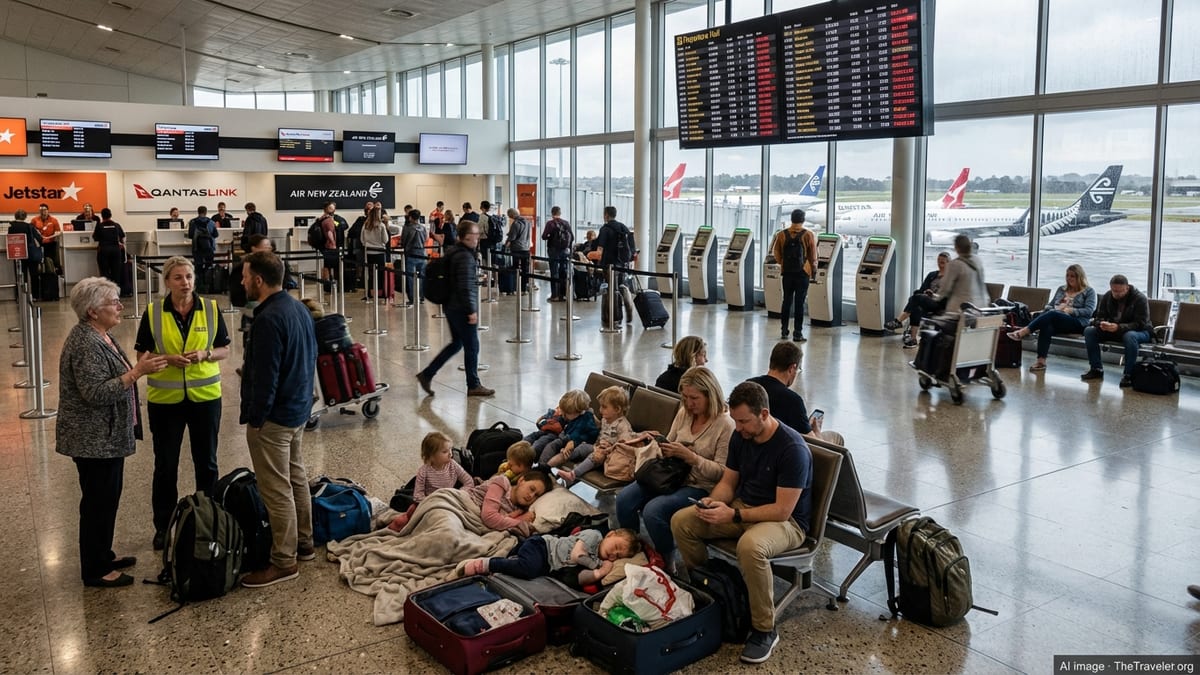
Disruptions Concentrated Around Peak Bank of Services
Operational data compiled from multiple flight-tracking platforms for June 9 indicates that the delays were concentrated around the busy morning and early afternoon banks of services linking Melbourne, Sydney and Auckland, along with long-haul departures crossing the Pacific and Southeast Asia. While overall airport operations continued, a significant proportion of flights ran late enough to push missed connections and force some last-minute rebookings.
Publicly available flight histories show that a mix of domestic shuttle routes and international services were affected. Short-haul links such as Sydney to Melbourne and Melbourne to Auckland, as well as connecting trans-Tasman flights feeding into North America and Asia-bound departures, accounted for many of the late operations. Long-haul departures generally left, but in several cases after extended gate holds or revised departure times.
The three cancellations recorded across the three hubs added further pressure, particularly for passengers already relying on tight connections. With winter schedules still bedding in and demand remaining strong, re-accommodation options for some travelers were limited to later same-day departures or flights over the following 24 hours.
Despite the disruption, airport infrastructure remained fully open, and there were no indications of large-scale shutdowns of runways or terminals. The impact instead reflected a combination of schedule compression, aircraft rotations arriving late from elsewhere in the network, and the knock-on effect of a small number of cancelled sectors.
Likely Drivers: Winter Weather, Tight Rosters and Knock-on Delays
Early winter conditions across southeastern Australia and New Zealand can create a fragile operating environment, particularly for morning and late-evening flights when low cloud and reduced visibility are more common. Meteorological data for early June shows changeable conditions around major airports in the region, including stronger winds and passing showers that can prompt spacing requirements between arriving and departing aircraft and modest reductions in runway capacity.
Industry planning documents for Melbourne and Sydney highlight how peak-hour schedules are already running close to available runway and gate capacity on busy days. When aircraft arrive late from previous sectors, or when extra spacing is required for safety or weather reasons, even relatively short delays of 15 to 30 minutes can cascade quickly through the day’s rotations. June 9 appears to have produced exactly that kind of compounding effect, with multiple short delays accumulating into a sizable total.
Carrier networks linking Melbourne, Sydney and Auckland also depend on complex aircraft and crew rosters that span several sectors. If a single early-morning service operates behind schedule or is removed from the timetable altogether, the aircraft and crew it was meant to position for subsequent flights may no longer be available, prompting further delays or cancellations. The three cancellations seen on June 9 are consistent with the kind of tactical adjustments carriers sometimes make to reset their schedules after earlier disruptions.
Reports from previous seasons in the region show that such patterns are not unusual around the start of winter, when heavier weather, high load factors and lean staffing models can coincide. Travel analysts have noted that, in this environment, even airports that remain technically open and unconstrained can still see large numbers of delayed services if networks are running with minimal slack.
What Passengers Flying Today Should Do
Travelers heading through Melbourne, Sydney or Auckland in the days following June 9 are being urged by consumer advocates and travel specialists to treat the disruption as a reminder to build more resilience into their plans. Publicly available guidance from airlines stresses the importance of checking flight status repeatedly in the 24 hours before departure, as schedules can change several times before aircraft actually leave the gate.
Passengers holding separate tickets for onward connections are particularly exposed when large numbers of flights run late, because airlines generally prioritise rebooking travelers who are on a single through-ticket. Consumer groups recommend leaving larger buffers between self-arranged connections, especially when switching between terminals or carriers, and considering travel insurance that explicitly covers missed onward flights caused by delays.
Those already at the airport on a day of disruption are generally advised to stay as close as possible to the departure gate area once check-in and security formalities are complete. Same-day schedule adjustments can see boarding brought forward at short notice when a gap opens in traffic flows, and there is a risk of missing a flight if a revised time is posted while passengers are away from gate screens.
Published travel guidance also suggests that passengers should keep boarding passes, delay notifications and any receipts for meals or accommodation in case they are eligible for reimbursements or partial compensation later. While compensation rules differ between countries and carriers, clear documentation of the times and causes of disruption is often necessary when submitting claims.
How June 9 Fits Into Wider 2026 Disruption Patterns
The June 9 delays across Melbourne, Sydney and Auckland form part of a broader picture of global aviation strains in 2026. Data from flight-tracking providers and air-navigation agencies shows that airlines in several regions, including Europe and North America, have already recorded above-average delay and cancellation figures on multiple days this year, often linked to weather events, air traffic control constraints or crewing pressures.
Regional planning material for Melbourne highlights that on so-called bad-weather days, the combination of reduced capacity and full schedules can lead to notable displacement of flights and crowded peak periods. Similar assessments for Sydney point to runway and airspace complexity during busy arrival and departure waves. Auckland, as the main long-haul gateway for New Zealand, faces its own sensitivity to disruptions when connecting banks line up tightly around morning and evening international waves.
In this context, the 249 delays and three cancellations recorded on June 9 stand out as a rough but telling snapshot of how sensitive interconnected networks have become. Even without a single dramatic trigger event, modest operational challenges can accumulate into significant disruption across several airports within the same travel corridor.
For passengers, the pattern underscores that on-time performance statistics alone may not fully capture the risk of a disrupted journey. The experience of June 9 suggests that travelers should think in terms of network resilience, connection buffers and contingency plans, particularly when journeys rely on multiple short-haul segments feeding into a single long-haul departure.
Practical Planning Tips for Upcoming Winter Travel
With the Southern Hemisphere winter season now underway, travel specialists are encouraging anyone flying through Melbourne, Sydney or Auckland to plan as if further pockets of disruption are likely, even on days with relatively benign forecasts. That does not mean cancelling or postponing trips, but rather taking simple steps that can reduce stress if flights are delayed.
Booking the first flight of the day on a given route, where possible, is often recommended because early departures are less exposed to knock-on delays from earlier sectors. Allowing extra time for terminal transfers, security and border processing can also help, especially in Sydney, where some domestic-to-international connections require movement between terminals.
Passengers heading to or from Auckland on trans-Tasman services feeding long-haul flights may wish to consider longer layovers than they might have scheduled in previous years. While longer waits in the terminal are not ideal, they can be preferable to the cost and disruption of missing a once-daily onward service.
Ultimately, the events of June 9 serve as a timely reminder that careful preparation remains one of the most effective tools available to air travelers. In an era of tightly wound schedules and seasonal weather volatility, even well-run airports can experience days when hundreds of flights arrive or depart behind schedule, and the passengers who fare best tend to be those who planned ahead for that possibility.