


More news on this day
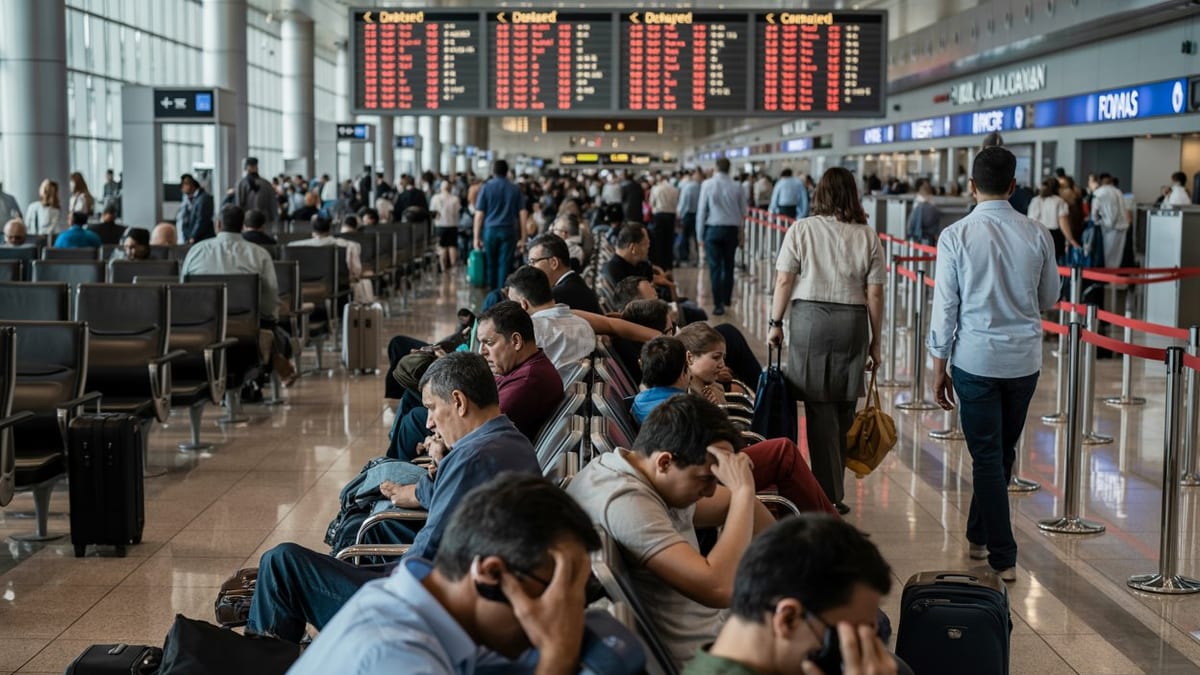
Travelers faced significant disruption at Luxembourg Airport as dozens of flights were delayed or canceled, stranding passengers on domestic and international routes and triggering a ripple effect across several major European hubs.
Get the latest news straight to your inbox!
Widespread Delays and Cancellations Hit Key European Routes
Publicly available flight-tracking data and local media reporting indicate that 76 flights connected with Luxembourg Airport were delayed and at least 9 were canceled over the course of the day, affecting services operated by Luxair, Lufthansa, Air France, KLM, British Airways and several codeshare partners. The disruption impacted popular business and leisure routes linking Luxembourg with Paris, Frankfurt, London and Amsterdam, among other destinations.
The pattern of disruption showed extended turnaround times and missed departure slots from Luxembourg, which in turn affected inbound rotations from major European hubs. A number of services reportedly remained on the ground well beyond their scheduled departure times, while others were removed from schedules altogether, leaving passengers with last minute rebooking or overnight stay decisions.
According to published timetables and recent operational data, these connections form part of a dense short haul network that typically relies on tight scheduling and shared aircraft. When several rotations are delayed early in the day, later departures can become increasingly difficult to recover, particularly where airport operating hours and crew-time limitations are strict.
Travel forums and social media posts from passengers described lengthy queues, uncertainty at departure gates and limited options for immediate alternative travel, with some travelers reporting missed onward rail and air connections at larger hubs.
Luxair and Partner Airlines Struggle to Recover Schedules
Luxair, which operates the bulk of passenger traffic at Luxembourg Airport, appeared to be at the center of the disruption as its regional network connects directly into the hubs of partner airlines. Historically, the carrier accounts for well over half of commercial traffic at the airport, and any disturbance to its operations tends to be widely felt across the schedule.
Published operational notices from previous disruption events at Luxembourg Airport show how quickly a series of delays or a short term runway constraint can translate into multiple cancellations and diversions. Earlier episodes have required Luxair to suspend or reroute flights and subsequently thank passengers for what the airline described as support during exceptional runway closures and technical issues affecting air traffic and airport infrastructure.
On this latest occasion, travelers on Lufthansa, Air France, KLM and British Airways services to and from their home hubs were also affected. These flights are often operated in coordination with local and partner carriers under codeshare agreements, meaning that a disruption in Luxembourg can alter metal allocation, crew distribution and available seat capacity on multiple brands at once.
Because many of the disrupted routes feed into long haul banks at Paris Charles de Gaulle, Frankfurt, London and Amsterdam, missed departures from Luxembourg left some passengers without their planned same day transcontinental connections, heightening the impact beyond the short haul market.
Knock-On Effects Across Europe’s Hub Network
The sequence of delays and cancellations at Luxembourg Airport contributed to wider schedule challenges around Europe, as aircraft and crews arriving late from the Grand Duchy then departed late to their next destinations. In some cases, aircraft scheduled to operate early evening flights arrived so far behind schedule that the subsequent legs were either heavily delayed or canceled.
Europe’s tightly interconnected hub system means that smaller airports such as Luxembourg play an outsized role in feeding large long haul networks. Even when the original source of disruption is localized, passengers in multiple countries can experience secondary delays, especially when slots at busy hubs are difficult to reassign at short notice.
Recent months have also seen a broader pattern of schedule adjustments and cancellations among European carriers in response to air traffic control strikes, capacity constraints and regional security concerns. While the current disruption at Luxembourg Airport appears primarily operational in nature, it comes against a backdrop of airlines trimming schedules on certain days and routes to build more resilience into their networks.
Passengers attempting to rebook at the airport reportedly encountered limited same day alternatives due to high load factors on parallel services and reduced late evening connectivity, which constrained the ability of airlines to reposition travelers quickly.
Passenger Rights and Rebooking Options
Publicly available guidance on European air passenger rights notes that travelers whose flights are significantly delayed or canceled may, in many cases, be entitled to assistance such as meals, refreshments and, where an overnight stay is required, accommodation. On some routes and under certain conditions, financial compensation may also apply, although this depends on the cause of the disruption and the exact distance and timing of the affected flight.
In practice, passengers in Luxembourg reported a mix of automated and manual rebooking, with some able to secure alternative connections via nearby hubs and others offered travel on later dates. Those with flexible tickets or travel insurance often had more options, including rerouting via nearby airports in neighboring countries.
Consumer organizations regularly advise travelers caught in similar situations to retain boarding passes, booking confirmations and any receipts for additional expenses, as these documents are often required when submitting claims for reimbursement or compensation. They also recommend monitoring airline apps and airport information screens closely, as gate assignments and departure times can change with little warning when schedules are under stress.
Given the complexity of today’s disruption and the number of airlines involved, it is expected that sorting out compensation claims, refunds and unused connecting segments will take several days for booking systems and customer service teams to process.
Ongoing Monitoring as Operations Stabilize
By late evening, flight tracking platforms indicated that operations at Luxembourg Airport were gradually moving back toward a more regular pattern, although residual delays remained visible on a number of departures. Some late night flights appeared to be operating out of sequence as carriers sought to reposition aircraft to the right bases and ensure that early morning schedules could start on time.
Travelers with departures from Luxembourg in the following days have been encouraged, through publicly accessible advisories, to arrive early, verify their flight status frequently and allow extra time for connections at onward hubs. Airlines have also reminded customers that mobile apps and text alerts can be among the fastest ways to receive updates when schedules change repeatedly in a short period.
Industry observers note that while this incident underscores the vulnerability of tightly wound regional networks to sudden disruption, it also highlights the increased transparency offered by modern tracking tools. These platforms allow passengers to see in close to real time how individual aircraft move through the system, making it easier to anticipate potential delays but also revealing the scale of the challenge airlines face when recovering from a day of widespread disruption.
As air travel across Europe heads into the peak summer period, both carriers and airport operators will be under pressure to limit the recurrence of similar episodes, even as they continue to manage a complex environment shaped by operational constraints, staffing pressures and volatile travel demand.