


More news on this day
Hundreds of passengers across Canada faced unexpected overnight stays and missed connections as major airports in Calgary, Montreal, Toronto, Vancouver and Halifax logged at least 25 cancellations and 178 delays within a 24-hour period, disrupting operations for Air Canada, WestJet, Jazz, Air Transat and several smaller carriers.
Get the latest news straight to your inbox!
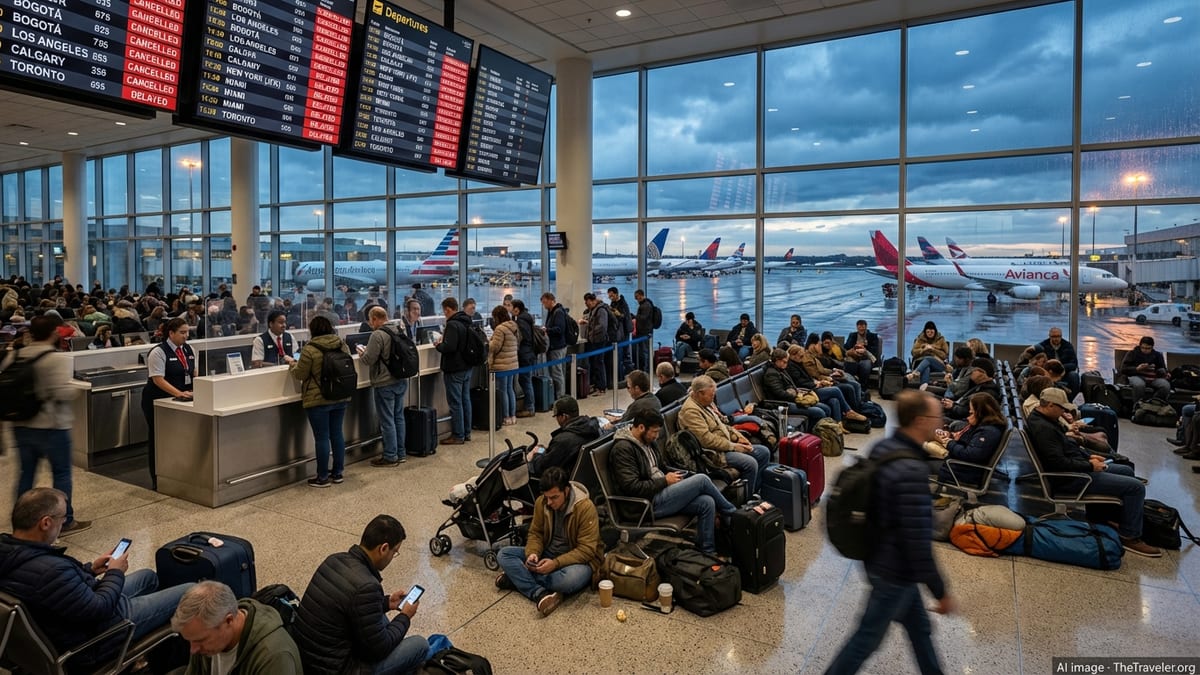
Network Snarls Hit Canada’s Busiest Gateways
Publicly available airport and flight-tracking data on Wednesday indicated a wave of disruptions rippling through Canada’s largest hubs, with Toronto Pearson, Vancouver International, Montreal Trudeau, Calgary International and Halifax Stanfield all reporting elevated levels of late and cancelled services. The combination left departure boards dominated by yellow and red status flags for much of the day as airlines struggled to keep aircraft and crews in position.
Across those five airports, at least 25 flights were cancelled outright alongside roughly 178 delayed departures and arrivals, according to aggregated schedule and status information. While the majority of services continued to operate, the concentration of problems at Canada’s busiest transfer points amplified the effect, stranding passengers mid-journey and forcing airlines to improvise rebookings.
The impact was most acute on domestic and transcontinental routes linking Western Canada with Ontario and Quebec, along with several international services feeding into Toronto and Montreal. With many flights already running near capacity at the start of the summer travel season, same-day alternatives were limited, pushing some travelers onto itineraries involving overnight layovers or lengthy detours.
Operational data shows that even a relatively modest number of cancellations can create outsized disruption in a tightly scheduled network. When one or two key rotations between major hubs are scrubbed, the aircraft and crews expected to operate downstream flights may be left out of place, triggering a chain reaction of late departures and missed connections across the day.
Major Carriers Bear Brunt as Delays Cascade
The brunt of the disruption fell on Canada’s largest airlines and their regional partners, including Air Canada and its Air Canada Express operations flown by Jazz, along with WestJet and Air Transat. These carriers collectively account for the majority of movements at the affected hubs, and their networks are closely interlinked through shared airports and connecting banks of flights.
Real-time trackers showed multiple WestJet services on core domestic corridors such as Calgary to Vancouver and Calgary to Toronto operating off-schedule, with at least one Calgary–Vancouver rotation marked as cancelled during the latest reporting window. Similar patterns appeared in Air Canada’s schedule, where short-haul and regional services under the Air Canada Express brand experienced extended delays as aircraft arriving late from other cities were turned around for new departures.
Air Transat, which operates a mix of leisure and transatlantic services primarily from Montreal and Toronto, also faced knock-on effects as late inbound aircraft compressed turnaround times and narrowed the window for on-time departures. Although some of its flights continued to operate broadly on schedule, delays among partner and codeshare services complicated connections for long-haul passengers.
For Jazz, which flies many of the shorter Air Canada Express routes serving Halifax, Montreal and other regional centers, even small gaps in aircraft availability can mean fewer options for rerouting customers. Once peak morning and evening waves are disrupted, the remaining off-peak frequencies may not be sufficient to absorb all displaced travelers on the same day.
Weather, Congestion and Crew Positioning Among Key Factors
Air-help and passenger-rights monitoring platforms have recently highlighted how periods of unsettled weather and operational bottlenecks can quickly cascade into widespread delays across Canada’s aviation network. Recent storm systems and low-visibility conditions have periodically forced airlines to trim schedules, particularly at Western hubs such as Calgary, while traffic surges at Toronto and Montreal have added pressure on airport infrastructure and air traffic control.
On days when several hubs experience weather or congestion at the same time, airlines often resort to strategic, or “proactive,” cancellations on selected routes in an attempt to stabilize the broader network. While that approach can reduce the risk of hours-long rolling delays for some flights, it inevitably leaves certain city pairs without service for part of the day and forces travelers onto alternative routings through other hubs.
Crew and aircraft positioning has become another recurring challenge. When storms or earlier disruptions prevent a plane from reaching its scheduled airport overnight, the first departures of the following morning can be delayed or cancelled, creating a knock-on effect that grows throughout the day. Industry data from recent months show that carriers across North America, including in Canada, have periodically struggled to rebuild normal operations after such events.
Reports from passenger forums and recent published coverage indicate that staffing constraints also remain a factor at some airlines and airports, particularly in ground handling, maintenance and customer service roles. Even when weather improves, limited staff availability can slow de-icing, baggage loading and boarding, extending turnaround times and pushing departure slots later into already congested periods.
Passengers Face Long Lines, Missed Connections and Limited Options
For travelers, the latest wave of disruptions translated into long queues at rebooking desks, crowded departure lounges and prolonged waits for updates via airline apps and departure boards. Many passengers with onward connections through Toronto, Montreal or Vancouver reported missed links to domestic and international destinations, with some forced to overnight in hub cities while waiting for the next available seat.
Travel-rights resources note that Canadian regulations require airlines to provide certain forms of assistance during extended delays or cancellations, depending on the cause and duration of the disruption and the size of the carrier. This can include meal vouchers, accommodation, ground transportation to hotels and, in some circumstances, monetary compensation for issues within the airline’s control.
However, passengers often face a complex patchwork of rules that differ depending on the airline, the length of the delay and whether the disruption is attributed to weather, safety, third-party issues or internal operational challenges. Consumer advocates frequently advise travelers to retain boarding passes, written notices and screenshots of flight status changes to support potential claims later on.
With summer travel demand rising, experts suggest that passengers build in longer connection times on itineraries involving two or more Canadian hubs and monitor flight status closely in the 24 hours before departure. Flexible routing, early-morning departures and travel insurance that explicitly covers missed connections and delays are also highlighted as strategies to reduce the impact of future disruption events similar to the one currently affecting Canada’s key gateways.