


More news on this day
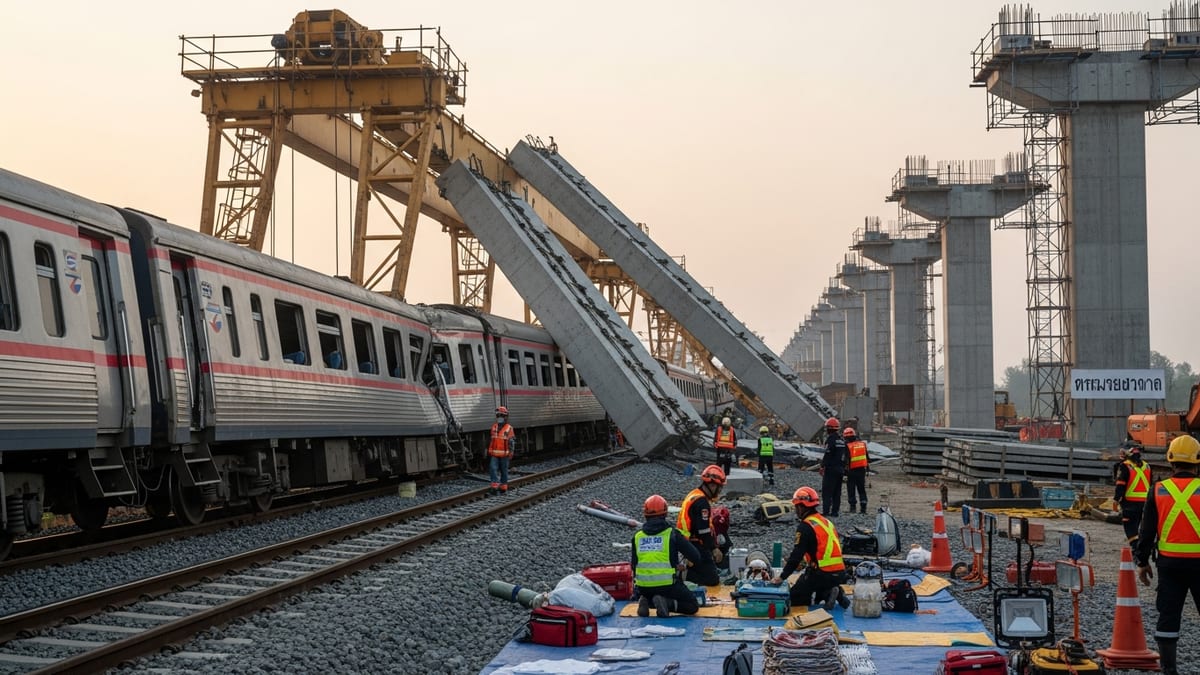
BNSF Railway and the Billings Fire Department recently conducted a hands-on rail safety drill in Billings, Montana, designed to sharpen local responders’ skills with train shutoffs, hazardous cargo identification and rail-specific rescue techniques along one of the region’s busiest freight corridors.
Get the latest news straight to your inbox!
Rail Hub Puts Emergency Readiness in the Spotlight
The city of Billings sits at a junction of major freight routes, with Burlington Northern Santa Fe trains and other carriers moving high volumes of industrial materials through the community each day. Publicly available planning documents note that these rail lines run close to residential neighborhoods, refineries and highway interchanges, creating a complex operating environment for first responders. Against that backdrop, a joint field drill offered both BNSF personnel and Billings firefighters a chance to rehearse how they would coordinate if a train incident affected people or infrastructure near the tracks.
The exercise took place along an active BNSF corridor where long freight consists, including hazardous materials tank cars, are a routine sight. Training scenarios focused on realistic conditions rather than classroom simulations, with responders working directly around locomotives and railcars. Participants practiced moving safely in the rail environment, identifying potential hazards on and around the right-of-way, and establishing clear communication lines with railroad contact points during an unfolding emergency.
For Billings Fire, which provides fire suppression, rescue and hazardous materials response across the city, the event aligned with ongoing efforts to strengthen preparedness for low-frequency but high‑consequence incidents. For BNSF, the drill fit within a broader company program that emphasizes collaboration with local agencies through specialized rail safety outreach and emergency responder education.
Hands-On Shutoff and Hazard Control Practice
A central element of the Billings drill was hands-on practice with locomotive and railcar shutoffs. Crews walked through how to secure locomotives in an emergency, including familiarization with exterior controls, fuel cutoffs and battery isolation points that can help stabilize a scene. The aim was to ensure that firefighters arriving at a rail incident would recognize key components quickly and understand how to work around energized equipment while maintaining a safe distance from moving or pressurized parts.
Participants also reviewed typical configurations for air brake systems and discussed how rail operations staff manage train securement in the field. While emergency responders do not typically operate railroad braking systems, organizers emphasized how missteps around valves, hoses or hand brakes can create additional hazards if a train segment begins moving unexpectedly. By walking through these systems in daylight, controlled conditions, local responders gained context they can draw on in more chaotic real‑world situations.
The drill further highlighted general hazard-control tactics near the right-of-way. Crews practiced establishing cold, warm and hot zones around an incident, considered wind direction and topography, and looked at how to keep bystanders, roadway traffic and other responders clear of danger while railroad technical staff address system-specific issues.
Cargo Identification and Hazardous Materials Awareness
Another major focus of the exercise involved cargo awareness and hazardous materials identification. BNSF and Billings Fire personnel examined tank cars and other freight equipment to review the markings, placards and documentation that indicate what is being transported. Responders practiced locating the appropriate hazard identification numbers and interpreting how those codes correspond to potential health and fire risks.
Publicly available safety information from BNSF describes how the railroad categorizes common hazardous commodities and shares traffic flow data and training resources with emergency agencies. The Billings drill mirrored that approach on the ground by pairing classroom concepts about placarding, shipping papers and hazard classes with direct inspection of railcars. Participants discussed how to rapidly distinguish between flammable liquids, corrosives, gases and other classes of materials that would drive very different tactical decisions at a scene.
Scenario discussions explored what might happen if a derailment, leak or small fire occurred on a mixed freight consist traversing Billings. Crews considered questions such as isolation distances, evacuation triggers and the thresholds at which to request specialized regional hazardous materials support. While the exercise did not involve live product releases, it allowed teams to work through the early minutes of a hazmat response when information can be limited and decisions carry significant weight.
Rescue Techniques in the Rail Environment
The joint drill also dedicated time to rescue operations unique to the rail setting. Firefighters practiced safe approaches to locomotives and freight cars, including how to access crew cabs, ladders and platforms while maintaining three points of contact and avoiding pinch points and tripping hazards along the ballast and ties. In simulated scenarios, responders rehearsed reaching injured individuals on or near the equipment, packaging them for removal and coordinating transfers to ground ambulances staged at safer access points.
Because freight trains passing through Billings can stretch for considerable distances and may stop in remote or industrial areas, the drill examined how to move personnel and gear to the scene when standard street access is limited. Participants walked through options for staging along rail-adjacent roads, working with railroad dispatch to manage train movements in the area, and using specialized tools to navigate around couplers, high steps and narrow walkways that can complicate patient extrication.
Rescue-focused segments of the exercise reinforced that even routine medical calls near the tracks can require different tactics than similar incidents on city streets. The drill encouraged crews to think in terms of vertical access, long carry-outs and the risks created by multiple tracks, curved alignments and limited lighting if a call occurs at night.
Building an Ongoing Rail Safety Partnership
According to publicly available information, BNSF offers free hazmat and rail safety instruction to thousands of first responders each year across its network, using a combination of mobile classrooms, field exercises and web-based tools. The Billings drill reflected that model by bringing training directly to a community that sees frequent freight movements and hosts critical industrial facilities near rail lines.
The Billings Fire Department has been expanding its specialized capabilities in recent years, including hazardous materials response and technical rescue programs that support both the city and the wider region. Collaborative drills with transportation and industrial partners form part of that strategy, providing an opportunity to validate procedures, refine communication plans and identify equipment needs before a real emergency tests local capacity.
Participants in the recent rail exercise emphasized the value of repetition and familiarity with the rail environment. Organizers indicated that similar drills are expected to continue, potentially incorporating more complex multi-agency scenarios that layer in law enforcement, emergency management and neighboring fire departments. As freight volumes and hazardous materials shipments remain a fixture of the Billings landscape, joint training of this kind is emerging as a key component of the community’s broader approach to risk reduction and emergency readiness.