


More news on this day
Israel’s Transportation Ministry is preparing a situational assessment at Ben Gurion International Airport amid growing concern that a buildup of United States refueling aircraft could trigger flight cancellations at the country’s main gateway.
Get the latest news straight to your inbox!
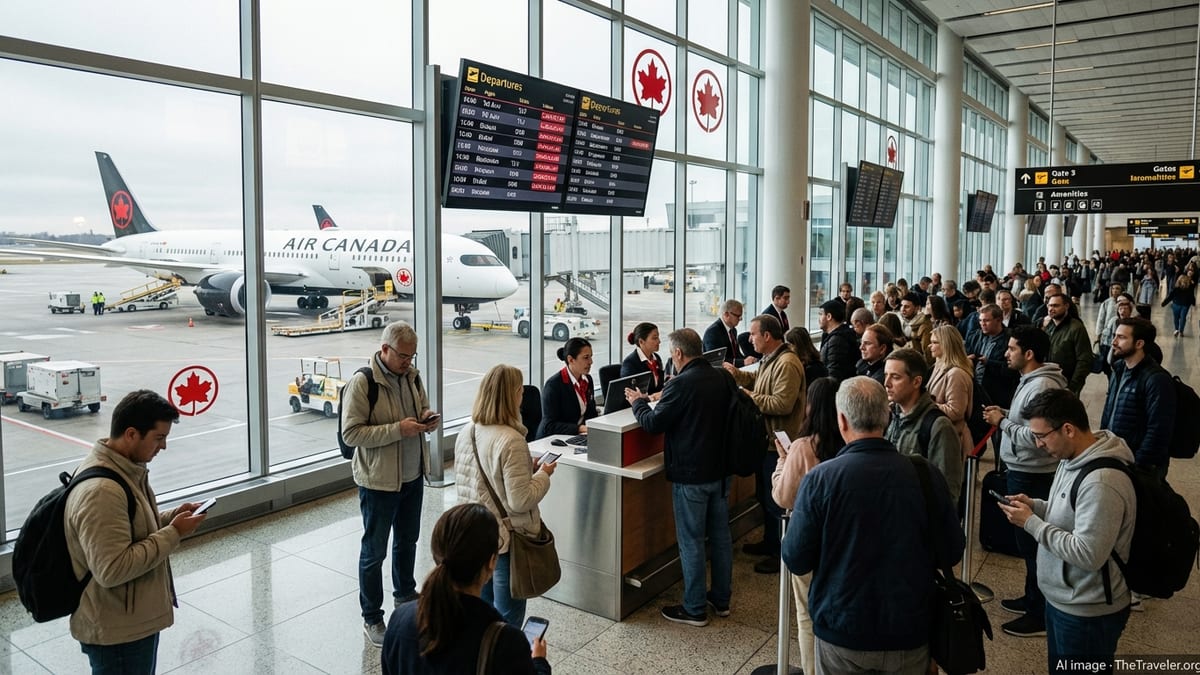
Concerns mount over parking crunch at Ben Gurion
Recent coverage from Israeli outlets indicates that the arrival and planned deployment of dozens of additional US Air Force aerial refueling tankers in Israel have sharply intensified pressure on ground capacity at Ben Gurion. The airport has been hosting part of a large American tanker presence linked to ongoing military coordination between Washington and Jerusalem during the conflict with Iran.
Airport stakeholders have warned for weeks that the combination of military aircraft and a heavy summer travel schedule is pushing Ben Gurion’s parking stands toward saturation. Reports from Israel Airports Authority officials describe a shortage of available stands for commercial jets, particularly during peak departure and arrival banks, raising the risk of cascading delays or cancellations if any further strain is added to the system.
The latest request from the United States to base additional refueling tankers in Israel has therefore become a flashpoint. While the aircraft are regarded as critical for regional operations, their size and ground-time requirements mean they occupy valuable apron space that would normally be used to turn around passenger flights.
Transportation Ministry to lead situational assessment
In response to these pressures, the Transportation Ministry is convening a situational assessment at Ben Gurion, according to multiple Israeli news reports. The session is expected to bring together senior figures from the ministry, the Israel Airports Authority and the Civil Aviation Authority, with a focus on quantifying how many additional tankers the airport can realistically support without disrupting the summer schedule.
Publicly available information suggests that officials are working from recent modeling that shows even a modest loss of civilian parking positions could translate into dozens of flights at risk each day during the busiest weeks of July and August. Earlier briefings from the Airports Authority pointed to tens of thousands of tickets potentially affected over the season if congestion is not eased, underscoring the high stakes for airlines and travelers.
The assessment is also expected to revisit earlier decisions that temporarily capped the number of US refueling aircraft permitted to park at Ben Gurion. Those limits were introduced following warnings from airport management and Israeli carriers that the original volume of military traffic was not compatible with peak civil demand. The new round of discussions comes as Washington seeks expanded tanker capacity in the region.
Balancing security cooperation with civilian connectivity
The core challenge for Israeli transport planners lies in balancing two competing imperatives: sustaining expanded military coordination with the United States during a volatile security period, while keeping Ben Gurion functioning as a reliable global hub for passengers. Coverage from Israeli media indicates that authorities are seeking compromise formulas that would shift part of the tanker fleet to alternative sites, including Israeli Air Force bases and Ramon Airport in the south.
A partial redeployment of US aircraft away from Ben Gurion has already been outlined in recent statements from the Transportation Ministry, which described plans to reduce the number of refueling planes parked at the country’s main airport. Those steps were presented as a way to preserve what officials termed aviation continuity during the high season, limiting disruptions for both outbound leisure travelers and inbound visitors.
Industry commentary in Israeli press reports suggests that this approach enjoys broad backing from airlines, which have warned that even minor disruptions in aircraft parking can quickly ripple through densely packed summer timetables. Carriers operating from Ben Gurion have already been navigating route adjustments and security-driven constraints in regional airspace, and many are wary of any further operational uncertainty.
Travelers watch for signs of disruption
For passengers, the evolving situation has translated into a period of heightened anxiety about potential last-minute schedule changes. In recent days, local media outlets have highlighted concern among Israeli travelers that a stand-off over aircraft parking could translate into canceled or rescheduled flights, particularly on heavily booked European and North American routes.
At the same time, ministry communications cited in domestic coverage have emphasized that Israel’s skies remain open and that planners are working to avoid cancellations wherever possible. Previous briefings stressed that the goal of ongoing situation assessments is to maintain passenger safety and operational resilience without imposing broad restrictions on arriving or departing flights.
Travel agents and airline representatives quoted in local reports have been advising customers to monitor notifications closely and to allow extra time at the airport during the busiest periods. While widespread cancellations have not materialized so far, the possibility of targeted schedule changes cannot be ruled out if parking constraints tighten before additional tankers are relocated.
Next steps and regional implications
The upcoming situational assessment is expected to feed into cabinet-level discussions on how Israel manages the interface between its civil aviation system and the expanded US military footprint. Analysts writing in Israeli newspapers note that the outcome could shape not only the summer travel experience, but also longer-term policies on the use of Ben Gurion for foreign military deployments.
More broadly, the episode highlights how fast-changing security dynamics in the Middle East can affect everyday travel plans. Similar tensions between operational military needs and civilian air connectivity have surfaced in other regional hubs when conflicts have escalated, prompting governments to refine contingency planning and capacity management.
For now, the Transportation Ministry’s focus appears to be on using the situational assessment to lock in practical measures that keep commercial flights running as smoothly as possible while accommodating essential defense cooperation. The coming days will show whether that balance can be maintained without forcing airlines to trim schedules at Israel’s primary international gateway.