


More news on this day
Thunderstorms building over the Denver area have triggered a ground delay program at Denver International Airport, leaving hundreds of flights running late and creating fresh disruption across the U.S. air network at the start of June.
Get the latest news straight to your inbox!
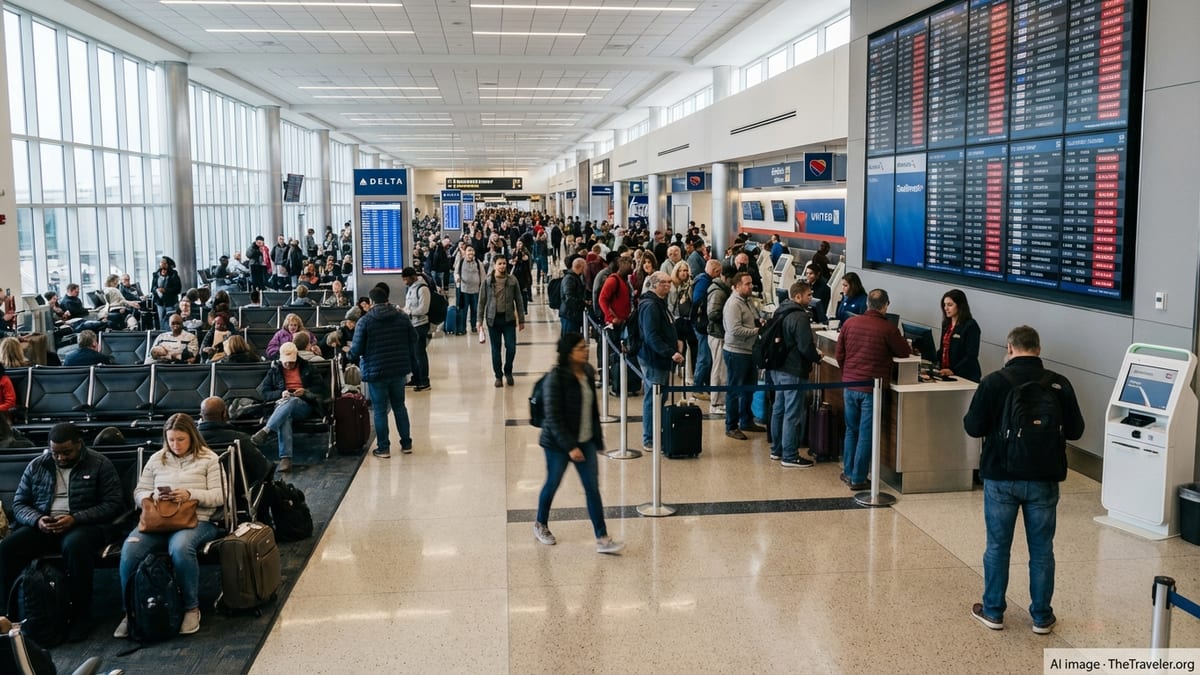
Thunderstorms Spark Ground Stop and Widespread Delays
According to published weather coverage, a severe thunderstorm formed over Denver just after early afternoon on Monday, June 1, producing hail and heavy rain around Denver International Airport. The storm activity prompted air traffic managers to institute a ground stop at the airport, temporarily pausing many departures and slowing the rate of arrivals into the busy Rocky Mountain hub.
Reports from national weather outlets indicate that the intense cell moved directly across airport flight paths, forcing controllers to sharply reduce traffic for safety. Flight tracking data showed hundreds of flights into and out of Denver experiencing delays as aircraft waited out the storm at gates or in holding patterns elsewhere in the region.
Publicly available information from flight status aggregators shows knock-on delays extending well beyond the peak of the thunderstorm itself, as crews and aircraft shifted out of place and the airport worked through a backlog of late departures and arrivals.
The disruption at Denver came against the backdrop of a broader early summer pattern of severe storms across the central United States, with similar weather-related ground delays reported at major hubs in Texas and along other key domestic corridors in recent days.
Ripple Effects for Passengers at a Major U.S. Hub
Denver International Airport is one of the nation’s busiest connecting hubs, serving as a key link between the coasts and smaller communities across the Rocky Mountain West and Great Plains. When thunderstorms trigger a ground stop or ground delay program there, industry analyses note that impacts can spread quickly through connecting banks of flights.
Travel forums and social media posts from recent Denver storms describe passengers facing waits of one to three hours as aircraft were held at gates or rerouted around the most intense weather. Some travelers reported missing onward connections and being rebooked on later flights once operations began to recover.
Analysts point out that even short-lived weather events can take hours to unwind at an airport of Denver’s size. Once the rate of arrivals and departures is reduced, aircraft and crews may be left out of position, and airlines must reshuffle schedules to restore normal patterns. The result is that delays can persist well after storm clouds move away from the field.
Recent data from federal performance reports also highlight ongoing construction and capacity constraints at Denver International Airport, which can magnify the effect of severe weather by limiting the number of runways and gates available during peak periods.
How Ground Delay Programs Work in Severe Weather
Published guidance on Federal Aviation Administration traffic management practices explains that ground stops and ground delay programs are designed to keep the overall system stable when sudden constraints emerge. When thunderstorms build over or near a major airport, controllers may reduce the arrival rate sharply and restrict departures until conditions improve.
In a ground delay program, flights destined for an affected airport may be assigned new, later departure times at their origin points so that they do not all converge into limited airspace at once. This can lead to gate holds of an hour or more, even if weather at the departure airport appears calm, because the bottleneck is at the destination or along the en route path.
Aviation case studies focusing on Denver note that afternoon thunderstorms are a recurring feature in late spring and summer. As storms develop rapidly along the Front Range, air traffic managers may temporarily halt arrivals, shift approach paths, or sequence departures more slowly until lightning and turbulence hazards subside.
Industry commentators emphasize that, while frustrating for travelers, these measures are intended to avoid more serious complications such as airborne holding, diversions to alternate airports, or fuel-related emergencies that can arise when too many aircraft attempt to operate near strong convective storms.
Denver’s Stormy Season Arrives Early in 2026
Climatological records for Denver show that the region often experiences a pronounced warm-season thunderstorm cycle, with frequent afternoon cells forming as moist air rises along the mountains and interacts with passing weather systems. Aviation-focused weather studies describe Denver as particularly prone to short but intense episodes of lightning, hail, and strong outflow winds.
In 2026, this pattern appears to have arrived early and forcefully. Historical weather compilations and recent news coverage detail a series of impactful events, including a March winter storm that snarled more than a thousand flights and a June hailstorm that swept directly over the metropolitan area and the airport complex.
Experts who track severe weather trends in the central United States link these Denver storms to a broader corridor of unsettled conditions stretching from the Rockies into the northern Plains and Midwest. Forecasts for the first half of June call for additional rounds of thunderstorms, raising the prospect of further travel disruptions if cells again pass close to major airports.
For Denver International Airport, the combination of seasonal thunderstorm risk and high summer travel demand means that even isolated cells can have outsize impacts, especially during busy midafternoon and evening departure banks when many long-haul and regional flights are scheduled to depart.
What Travelers Can Do When Ground Delays Hit
Consumer travel guidance published in early June suggests that passengers transiting storm-prone hubs such as Denver consider building extra time into itineraries during peak thunderstorm months. Longer connection windows can provide a buffer if outbound or inbound flights are caught in a ground delay program.
Travel advisors also recommend monitoring both airline notifications and federal delay maps on the day of travel. Because ground delays are often issued with little warning in response to fast-developing storms, flexible plans and prompt rebooking can help minimize missed connections and overnight disruptions.
Recent passenger experiences shared online indicate that, while airlines typically do not provide hotel vouchers for weather-related delays, carriers may offer meal vouchers, no-fee rebooking, or same-day standby options when schedules are heavily affected. Knowing each airline’s delay and cancellation policies in advance can help travelers make quicker decisions during a fast-moving disruption.
With severe thunderstorms expected to remain a feature of the forecast for the central United States, Denver International Airport is likely to continue experiencing intermittent weather-related ground delays in the coming weeks. Travelers heading through the Colorado hub are being urged by travel experts to stay informed, allow extra time, and prepare for rapidly changing conditions as the summer storm season settles in.