


More news on this day
A large fire at a major train station, now being examined as a suspected arson attack, has disrupted rail travel, forced evacuations and raised new concerns about security and resilience across busy commuter networks.
Get the latest news straight to your inbox!
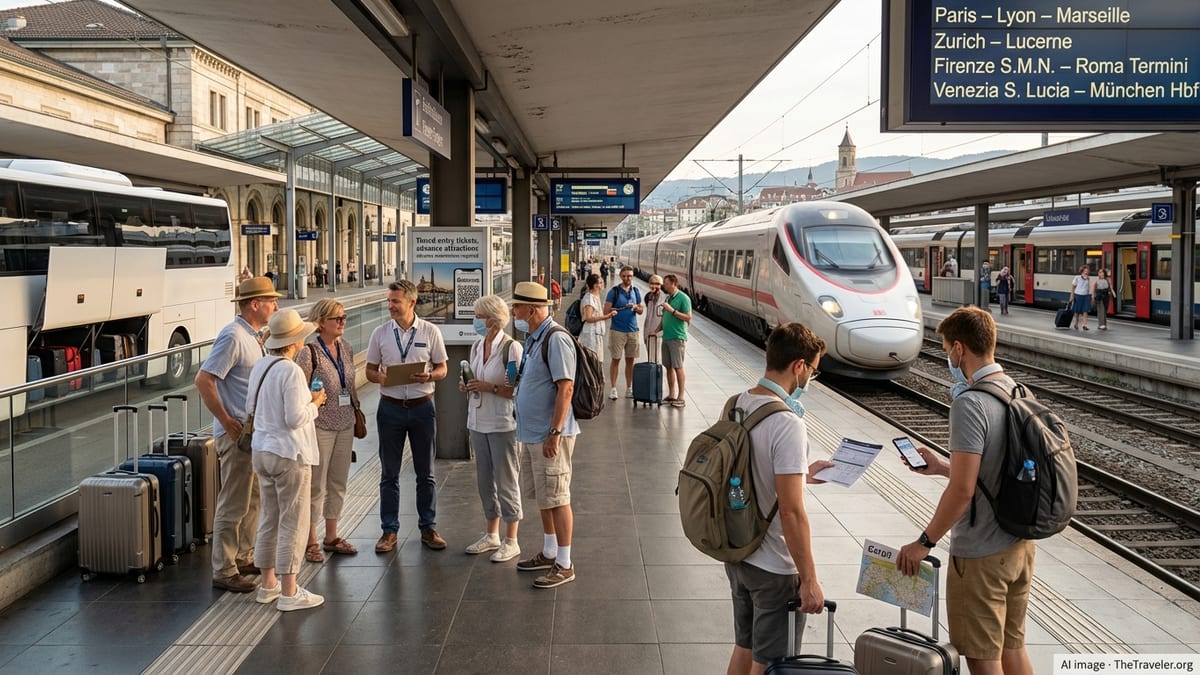
Investigators focus on deliberate ignition at station site
Early information from multiple news and agency reports indicates that specialist investigators are examining whether the station blaze was started deliberately, with fire patterns and on-site material remains being reviewed as part of an arson-focused inquiry. While the precise ignition point has not been fully detailed in public coverage, the scale and speed of the fire have prompted closer scrutiny of how it began and whether accelerants or improvised devices were involved.
Published coverage notes that forensic teams are documenting damage to platforms, concourses and adjacent structures, building a timeline from the arrival of the affected train to the full development of the fire. CCTV footage from within the station, nearby streets and on-board rail services is expected to play a central role in piecing together movements of individuals in the minutes before smoke was first reported. Analysts are also comparing this incident with earlier train-related arson cases to identify any common methods or behavioral patterns.
Police units specializing in arson investigations typically examine not only physical traces such as burn patterns and residue but also digital evidence, including mobile phone data and card transactions around the station. Publicly available information suggests that a similar approach is being followed here, with attention on any person seen lingering near restricted areas, service rooms or parked rolling stock shortly before the fire started.
Authorities in previous major station fires have often expanded their inquiries to surrounding rail infrastructure, checking for secondary devices or related vandalism along the line. Comparable steps are understood to be under consideration in this case as well, particularly given how vulnerable signaling equipment, overhead wiring and parked trains can be to follow-up attacks once an initial blaze diverts resources.
Travel disruption ripples across regional and long-distance services
The suspected arson attack has quickly turned into a significant travel story, with the affected station either fully closed or operating at sharply reduced capacity while inspections and repairs are carried out. Rail operators have been diverting intercity and regional services to alternative terminals, in some cases terminating trains many miles short of their usual city-center destination and asking passengers to continue journeys by local services or replacement buses.
For travelers, the immediate impact has been extended journey times, short-notice platform changes and, in some instances, outright cancellations where there is no spare capacity on nearby routes. Travel updates circulating through rail operators’ channels highlight the complex task of threading diverted trains through already-busy junctions and mainlines, particularly during peak commuter periods when every available path is normally in use.
Beyond the headline delays, the incident has raised questions about how resilient key stations and junctions are to sudden loss of capacity driven by fire. When a major hub is taken out of operation, knock-on effects can radiate across an entire national network, affecting travelers hundreds of miles away. The situation following this suspected arson event is echoing earlier disruptions seen after serious station fires in cities where long-distance, regional and suburban services all converge on a single complex.
Travel industry observers note that the most affected passengers are often those with time-sensitive connections, such as airport links or late-night last trains to regional towns. With diversions in place, some evening services are reaching temporary terminals later than scheduled, shortening connection windows and prompting rail operators to arrange additional road transfers or overnight accommodation in the most disrupted cases.
Safety, evacuation and emergency response under renewed scrutiny
The station fire is also being viewed through the lens of passenger safety, particularly how quickly platforms, concourses and trains were evacuated once smoke became visible. Fire incidents on rail networks are relatively rare, but when they occur in confined station spaces filled with smoke, heat and panicked crowds, safe evacuation becomes a critical test of staff readiness and infrastructure design.
Accounts shared through media coverage describe rapid deployment of local fire services and the closure of surrounding streets to create safe access routes. Attention now is turning to how well smoke control systems, alarms, signage and public-address messages performed, and whether passengers received clear guidance about exits, assembly points and alternative routes to continue their journeys.
Urban transport systems worldwide have been re-evaluating fire procedures in recent years, integrating lessons from earlier rail and subway fires that involved arson or suspected deliberate ignition. These lessons include the importance of regular staff drills, clear division of roles between transport operators and emergency services, and robust communication channels capable of reaching passengers both inside stations and on approaching trains.
In the wake of this latest incident, travel safety specialists are likely to examine whether congestion points, such as narrow stairways or ticket barriers, created bottlenecks during evacuation. Station-modernization projects have increasingly focused on widening these pinch points and improving wayfinding to ensure people can move away from danger even when visibility is low and normal circulation patterns are disrupted.
Security measures at rail hubs likely to tighten
Because the fire is being treated as potential arson, the incident is expected to intensify ongoing debates about how far security screening and surveillance should go at major rail hubs. Unlike airports, large train stations are typically designed for fast, open access, and attempts to introduce more stringent bag checks or entry controls have often run into practical and political challenges.
Analysts following transport-security trends point to a gradual shift toward smarter, less intrusive measures, such as expanded use of cameras, behavioral detection teams and advanced analytics rather than blanket screening. A high-profile arson investigation, however, frequently strengthens arguments for targeted checks on certain routes or at particular times of day, especially when trains are heavily loaded or serve high-profile events.
Rail operators and infrastructure managers will also be looking at how effectively existing security tools performed during the run-up to this fire. That review may include whether any prior suspicious activity had been logged, how quickly control centers recognized the seriousness of the smoke reports, and how rapidly staff on platforms and concourses were able to intervene or raise alerts.
For travelers, any tightening of security following the investigation is likely to appear first as more visible patrols, additional bag checks at random intervals and more frequent announcements encouraging passengers to report unattended belongings. These steps can add a few minutes to station dwell times, particularly during rush hours, and visitors unfamiliar with local languages or procedures may need extra time to navigate new checkpoints or temporary closures.
Implications for future travel planning and infrastructure investment
Beyond the immediate disruption, the suspected arson attack is already prompting discussion about longer-term investment in station fire protection and network redundancy. Transport planners argue that heavily used interchanges need both robust passive protections, such as fire-resistant materials and well-segmented zones, and active systems that can detect and contain blazes quickly when deliberate ignition occurs.
From a traveler’s perspective, such investments may not be obvious in day-to-day use, but they can significantly influence outcomes when incidents occur. Improved compartmentalization within station buildings, modernized cabling and equipment rooms, and better separation between commercial spaces and core rail functions can help limit the spread of fire and smoke, reducing the scale of evacuations and the duration of closures.
The current investigation is also likely to feed into broader conversations about network design, particularly whether key cities rely too heavily on single central terminals. Some countries have responded to earlier station fires by creating or upgrading secondary hubs, offering more flexibility for diversions when one node is taken offline. In the aftermath of this incident, pressure may increase for similar redundancy, especially on routes that serve major tourism, business and airport corridors.
For now, travelers planning journeys through the affected region are being advised in public information channels to allow extra time, check service updates regularly and be prepared for last-minute platform changes or diversions. As the investigation into the suspected arson progresses, its findings are likely to shape not only how this particular station is rebuilt and protected, but also how other busy rail hubs around the world prepare for the possibility of deliberate fire-setting in the future.