


More news on this day
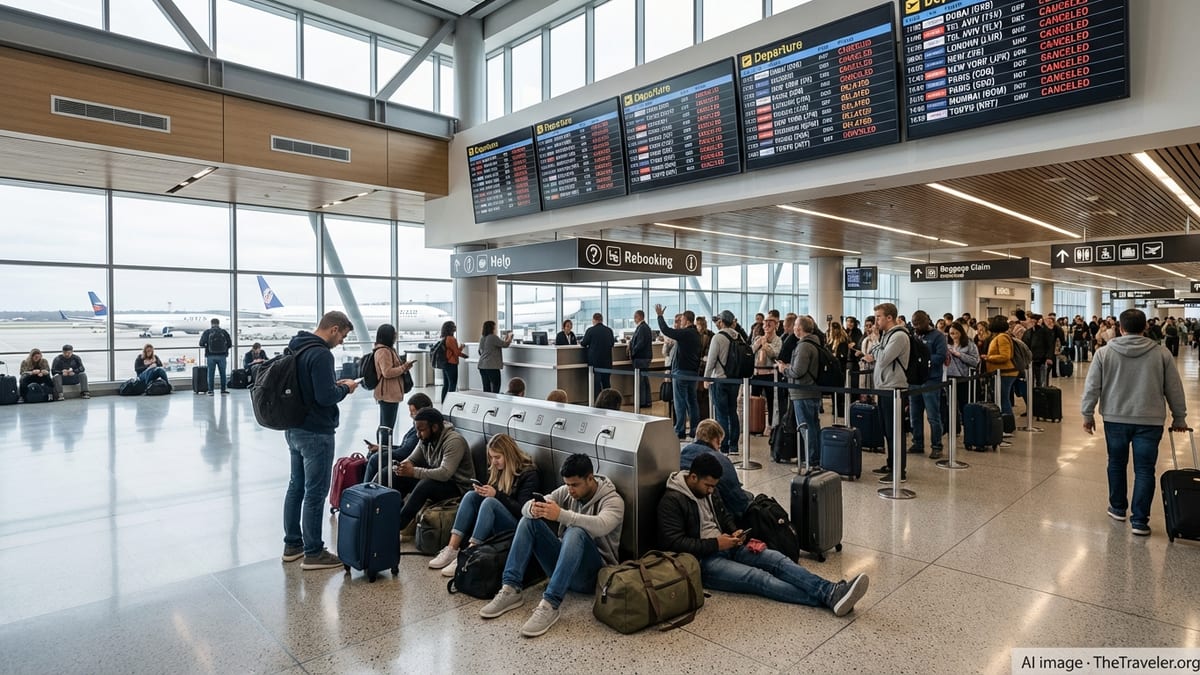
Travelers at Tel Aviv’s Ben Gurion International Airport faced significant disruption on June 3, as publicly available flight-tracking data showed 127 delayed departures and arrivals and at least five cancellations affecting services across Europe, North America, and the Middle East.
Get the latest news straight to your inbox!
Wide Impact Across Major International Carriers
The disruption affected a broad mix of international and regional airlines, with Israeli flag carrier EL AL among the most heavily impacted. Routes connecting Tel Aviv to key hubs such as Paris, London, New York, and various European capitals showed extended delays, some exceeding two hours. United Airlines flights on the Tel Aviv to New York corridor experienced knock-on delays, while transatlantic links operated by carriers such as Lufthansa and Air France faced schedule changes, aircraft swaps, and late departures.
Regional services within the Middle East were also disrupted, including flights linking Tel Aviv with Gulf hubs and nearby Mediterranean destinations. Flight-tracking platforms covering Ben Gurion operations indicated that delays were not confined to a single time band but were spread through the morning peak and into the afternoon, complicating onward connections for passengers heading to North America and Europe.
International aviation data for Ben Gurion in recent months shows a network still adjusting to security-related capacity constraints and shifting airline strategies. Carriers that restored services in early 2026 have often done so on reduced schedules, which leaves limited slack in the system when irregular operations occur and increases the risk that a cluster of delays can ripple throughout the day.
For passengers, the immediate impact was longer waits in the departure hall, missed connections, and rebookings onto already busy services. With several large aircraft serving North American and European markets each day, even a small number of cancellations translated into hundreds of travelers needing alternative arrangements.
Security Context and Capacity Pressures
The latest wave of disruption comes against a backdrop of heightened regional tensions that have repeatedly affected air traffic to and from Israel in 2026. Published coverage in recent months has detailed periods when missiles and drones targeted Israeli territory, prompting temporary closures of airspace and tighter risk assessments for airlines operating into Ben Gurion. Industry analyses indicate that some carriers have been cautious in rebuilding capacity, keeping frequencies below pre-crisis levels.
European aviation advisories regarding Middle East airspace have periodically led airlines to reroute or thin out operations to Tel Aviv, while some carriers have suspended service entirely for extended periods. Reports on airline scheduling decisions in May and June show that several European brands, including members of large airline groups, either delayed their return to Ben Gurion or maintained only a skeleton operation. These strategic choices reduce overall seat availability and can leave the airport more vulnerable to disruption when operational challenges arise.
At the same time, monthly statistics from Israel’s Airports Authority highlight that traffic at Ben Gurion, though below historic peaks, has been steadily rebuilding through early 2026. This combination of recovering demand, constrained capacity, and heightened operational risk has created a fragile equilibrium in which a single day of severe delays and scattered cancellations can quickly strain airport infrastructure and airline resources.
Observers note that when outbound and inbound flights are held on the ground for extended periods, aircraft and crew rotations are pushed out of sync. This can force airlines to consolidate flights, cap passenger loads, or cancel rotations entirely, which matches the pattern of several cancellations recorded alongside today’s 127 delays.
Passenger Experience and Airline Responses
For travelers caught in the disruption, today’s events meant crowded check in zones and tense waits at departure gates as estimated times were repeatedly revised. Publicly accessible flight-status pages for Ben Gurion showed mid haul and long haul flights departing significantly behind schedule, including services scheduled for early morning that finally pushed back closer to midday. These irregularities compounded pressure on security and boarding processes during already busy periods.
Airlines serving Ben Gurion typically respond to such disruption by prioritizing long haul departures and consolidating lightly booked short haul services. According to operational summaries from recent months, carriers have increasingly relied on flexible rebooking policies and digital notifications to keep passengers informed when schedules change at short notice. Some have also relaxed change fees on Tel Aviv routes during periods of instability, acknowledging the elevated risk of disruption.
Consumer guidance from aviation regulators and travel industry groups generally recommends that passengers monitor flight status directly via airline apps and arrive early when disruption is likely. In the context of Ben Gurion, travel advisories issued earlier this year highlighted the potential for sudden schedule changes and encouraged passengers to build longer connection times when transiting via European and North American hubs.
Travel insurance providers have also reported an uptick in claims linked to Israel routes since late 2025, reflecting a pattern of cancellations and extended delays during previous episodes of airspace restrictions. Today’s events are expected to add to that trend, particularly for passengers who missed onward connections or were forced to overnight in transit cities after late departures from Tel Aviv.
Knock On Effects on Global Networks
The disruption at Ben Gurion is likely to be felt well beyond Israel’s borders as delayed departures feed into evening and overnight banks at major hubs. Flights from Tel Aviv to Europe that left several hours late are expected to arrive into connecting hubs after many transatlantic and regional departures have already closed, forcing airlines to reroute customers via alternative cities or hold additional seats on later flights.
North American services are particularly sensitive to delays originating in Tel Aviv, given the long sector length and strict crew duty time rules. Publicly available operational data indicates that when early morning departures from Ben Gurion to New York, Toronto, or other North American cities are significantly delayed, carriers sometimes adjust schedules on the return legs or swap aircraft to minimize further disruption. Such adjustments can cascade into the following day’s operations on other routes.
In Europe, where airlines already face congested airspace and tight turnaround schedules ahead of the peak summer travel season, further irregularities linked to Tel Aviv flights add to an already complex operational environment. Aviation analysts tracking on time performance across the region note that repeated delays on a single spoke such as Ben Gurion can erode an airline’s wider network reliability metrics, especially when spare aircraft and crews are in short supply.
Within the Middle East, today’s disruption at Ben Gurion interacts with broader traffic flows between the Gulf, Levant, and Europe. Delayed departures from Tel Aviv may miss banked connections at regional hubs, affecting passengers traveling onward to Asia or Africa and placing additional strain on rebooking teams handling multi segment itineraries.
Outlook for Travelers in the Coming Days
While today’s disruptions have been concentrated in a single calendar day, travel planners emphasize that the effects at Ben Gurion often linger. Aircraft and crew displaced by extended delays can remain out of position for several rotations, and airlines may need multiple days to fully restore normal patterns. Passengers booked to depart Tel Aviv later this week are being advised by travel agents and online booking platforms to check their flight status frequently and allow extra time at the airport.
Recent experience at Ben Gurion suggests that periods of improvement can alternate quickly with renewed disruption when regional security developments or regulatory advisories shift. Aviation data from the spring of 2026 shows that even as overall traffic has recovered, individual days have been marked by sharp spikes in delays and cancellations, particularly when carriers adjust schedules in response to changing risk assessments.
Travel industry commentary also points to the possibility of further adjustments by foreign carriers over the coming months. Some airlines have extended suspensions of Tel Aviv service deep into 2026, and others are operating at reduced frequency compared with pre tension levels. If these patterns continue, passengers may face fewer non stop options to and from Israel and greater reliance on connections through regional hubs.
For now, Ben Gurion remains Israel’s primary international gateway despite the operational challenges. Today’s tally of 127 delayed flights and five cancellations underscores how sensitive the airport’s complex network has become to any shock, and how quickly disruption in Tel Aviv can reverberate across air corridors linking Europe, North America, and the wider Middle East.