


More news on this day
Hundreds of travelers across Australia and New Zealand are facing long waits, missed connections, and unexpected overnight stays after a fresh wave of disruption led to more than 80 delays and 37 cancellations affecting Virgin Australia, Qantas, Jetstar, and Air New Zealand services across key hubs in Sydney, Melbourne, Perth, Adelaide, Auckland, and Christchurch.
Get the latest news straight to your inbox!
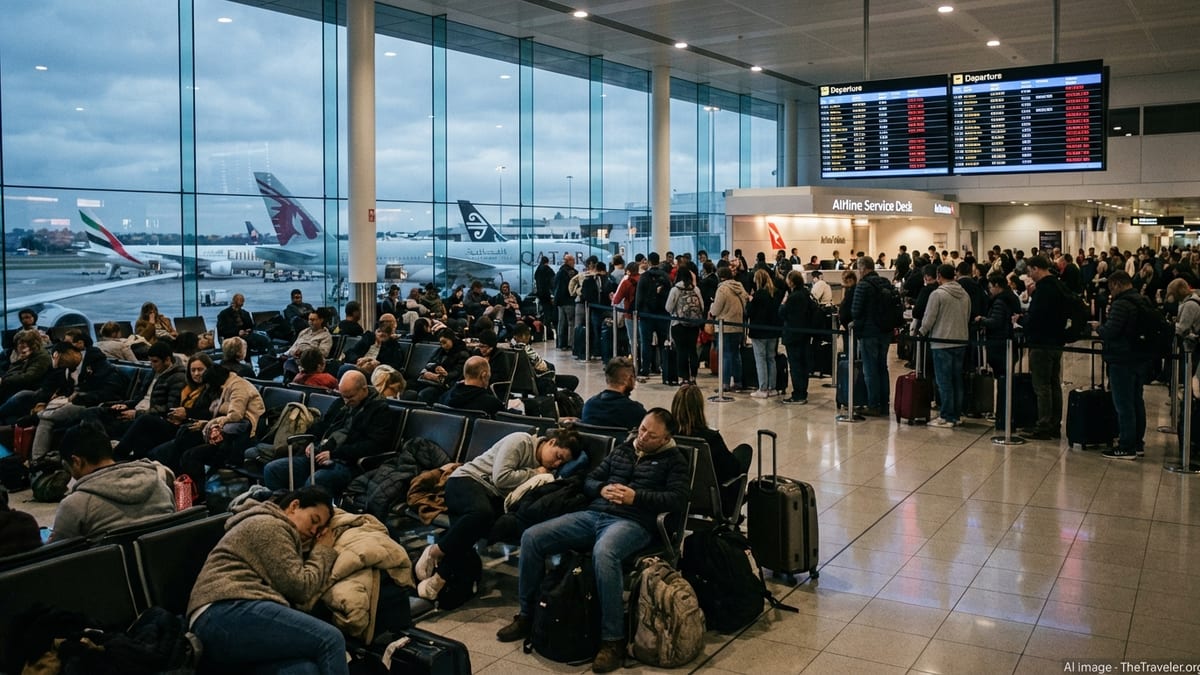
Network Strain Leaves Passengers Isolated at Key Hubs
Operational data from airport boards and independent tracking services indicates that the latest disruption has hit some of the busiest city pairs in the trans-Tasman and domestic markets, with knock-on effects rippling through the evening and early-morning schedules. Flights linking Sydney, Melbourne, and Perth with Auckland and Christchurch have experienced some of the heaviest congestion, leaving passengers stranded mid-journey or separated from checked baggage.
While the overall number of outright cancellations is lower than during some of the most severe meltdowns seen earlier in 2026, the concentration of more than 80 delays has significantly reduced available connection windows. Travelers transferring in Sydney and Melbourne onto overnight long haul departures have been particularly exposed, with some forced to abandon itineraries or accept rebooking several days later.
At the same time, disruption on domestic sectors feeding into major gateways has compounded the problem. Delayed or cancelled links into Sydney from Adelaide and Perth, and into Auckland from Christchurch, have meant that passengers who might otherwise have re-routed via alternative hubs have found options limited, intensifying the sense of isolation for those already in transit.
Publicly available airport information boards show rolling gate changes, late aircraft arrivals, and extended turnaround times across multiple terminals, suggesting that even services that ultimately depart are often missing their scheduled departure slots by a wide margin.
Virgin, Qantas, Jetstar, and Air New Zealand Under Pressure
The disruption has once again placed the region’s four dominant carriers under scrutiny. Virgin Australia, Qantas, Jetstar, and Air New Zealand collectively operate the bulk of services between the affected cities, and even relatively modest schedule changes can cascade rapidly across their shared networks.
On the Australian side, the latest pattern of delays and cancellations builds on a year in which domestic reliability has been a repeated point of concern for travelers. Public performance reports have highlighted differing cancellation rates between Qantas, Virgin Australia, and Jetstar, but passengers on the ground typically experience the result in the same way: queues at service desks, limited seats on recovery flights, and uncertainty about when they will reach their final destination.
In New Zealand, Air New Zealand and Jetstar continue to dominate domestic and much of the short haul international capacity. When services from Christchurch and Auckland are disrupted, the effect is felt not only by point to point travelers but also by those using these airports as transfer points to reach Australia and beyond. A mix of regional turboprop and single aisle jet operations can make recovery complex when aircraft and crews are out of position.
For all four airlines, the current episode underlines how thinly spread capacity remains during peak travel periods. Even when formal cancellation rates stay relatively low, small shocks to the system can translate into extended delays and missed connections when there are few spare aircraft or open seats available to absorb the disruption.
Recent History of Repeated Disruptions Across the Tasman
The latest wave of problems arrives against the backdrop of a turbulent year for aviation in the Australia and New Zealand corridor. Earlier in 2026, monitoring services and industry reports pointed to days in which the combined total of flight delays and cancellations across the two countries ran into the hundreds, with Melbourne, Sydney, and Auckland bearing the brunt of the pressure.
In several previous events, Jetstar’s trans-Tasman and domestic services were heavily affected by aircraft availability and maintenance scheduling, while Qantas and Virgin Australia grappled with their own operational challenges. Air New Zealand has also seen periods of disruption that affected regional and trunk routes alike, including services linking Auckland and Christchurch with Australian gateways.
Regulatory reporting and independent analysis over recent months have highlighted a broader pattern in which overall on time performance for key domestic and trans-Tasman routes has lagged behind pre-pandemic benchmarks. While some carriers have kept headline cancellation rates within single digits, the proportion of flights arriving significantly late has remained elevated, eroding traveler confidence.
For frequent flyers and occasional holidaymakers alike, the perception is of a corridor where repeated flare ups of disruption have become a recurring feature of travel planning, rather than an isolated setback. The current cluster of 80 delays and 37 cancellations reinforces that impression for many passengers caught in the latest wave.
Passengers Face Long Queues, Missed Events, and Extra Costs
For those on the ground, the data translates into very personal consequences. Delayed or cancelled departures from Sydney, Melbourne, and Perth have left families and solo travelers alike facing long overnight stays in terminals or nearby hotels, often with limited clarity about entitlement to meal or accommodation support.
In Adelaide, Auckland, and Christchurch, where frequencies on some routes are thinner than in larger hubs, the loss of a single flight can mean a wait of many hours or even until the following day for the next available service. Travelers heading to time sensitive events, including business meetings, family occasions, or connecting cruises, report abandoning plans as the practical impact of knock-on delays becomes clear.
Social media posts and public complaint channels suggest that communication practices remain a sore point. Passengers continue to report last minute gate changes, short notice text messages announcing cancellations, and difficulty reaching human support via call centers or service desks during peak disruption periods, especially when multiple airlines are affected simultaneously.
Refunds, travel credits, and compensation remain a complex area for many customers, particularly where the underlying cause of a disruption is not immediately clear from public information. Travelers attempting to claim reimbursement for extra accommodation, meals, or alternative transport options often face a lengthy process, adding to frustration long after flights have finally arrived.
What Travelers Can Do as Disruptions Continue
With the aviation system in Australia and New Zealand still vulnerable to periodic spikes in delays and cancellations, travel experts and consumer advocates continue to emphasize preparation. Publicly available guidance from aviation regulators and consumer agencies stresses the importance of checking live flight status repeatedly in the hours before departure, rather than relying solely on initial booking confirmations or static itineraries.
Travel planners also recommend allowing greater buffer time for connections, particularly on itineraries that require a change between domestic and international terminals in Sydney and Melbourne, or between regional and mainline flights in Auckland and Christchurch. Avoiding last flight of the day options, where possible, can provide additional resilience if earlier segments are delayed.
Passengers are also encouraged to familiarize themselves with each airline’s specific policies on delays and cancellations, including what support is typically provided in cases classified as within the carrier’s control as opposed to weather or air traffic related events. Understanding these distinctions before travel can help set realistic expectations and speed up the claims process if disruption occurs.
For now, the latest round of 80 delays and 37 cancellations serves as a reminder that, despite improving traffic volumes and expanding route maps, the recovery of reliable, pre-pandemic style operations across the Australia and New Zealand aviation network remains incomplete. Travelers heading through Sydney, Melbourne, Perth, Adelaide, Auckland, and Christchurch in the coming days are being urged by public advisories and travel bulletins to monitor conditions closely and build flexibility into their plans.