


More news on this day
Air travelers across the United States faced another day of disrupted plans on June 5, as publicly available tracking data showed 64 flights cancelled and 1,954 delayed nationwide, snarling operations from California to Puerto Rico and affecting major carriers including United Airlines, SkyWest, Southwest, JetBlue, Frontier and others.
Get the latest news straight to your inbox!
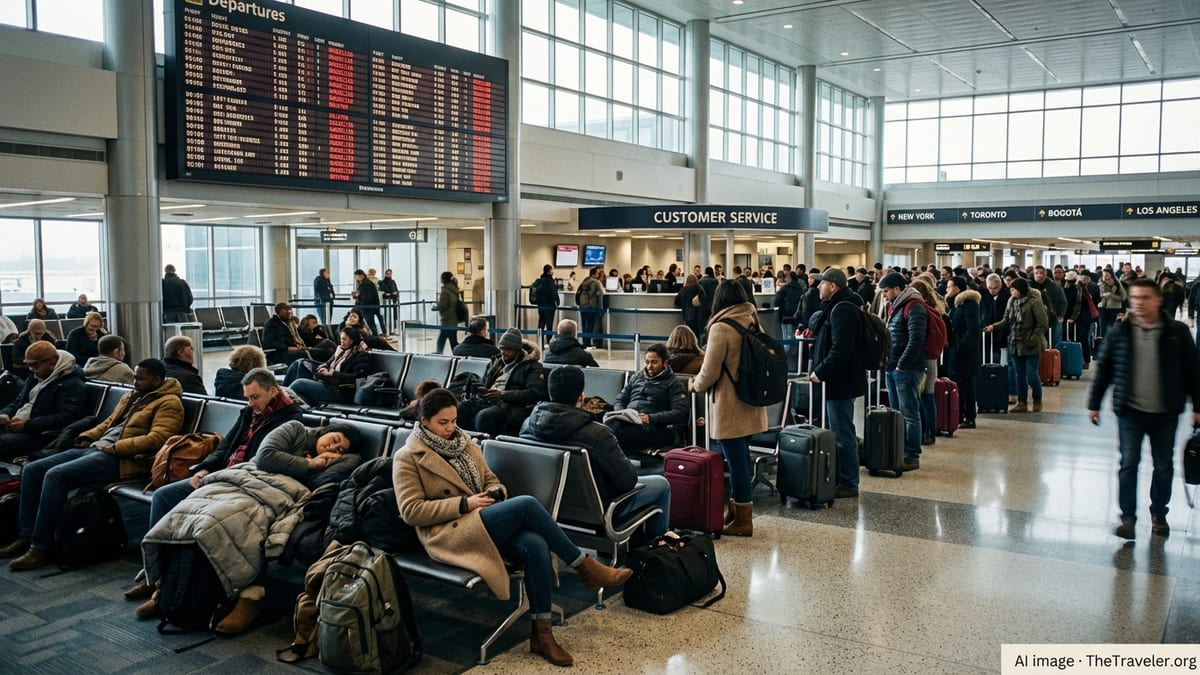
Nationwide Disruptions Hit Key Hubs and Regions
The day’s figures, drawn from live tracking dashboards that aggregate airline and airport operations, indicate that cancellations and delays were spread across the country rather than isolated to a single hub. Flights within, into or out of the United States were affected in multiple time zones, with ripple effects visible on both domestic and Caribbean routes.
California, New York and Illinois saw particular pressure at their largest airports, where already busy schedules left little slack to absorb disruptions. Major coastal gateways such as Los Angeles, San Francisco, New York City’s airports and Chicago O’Hare experienced clusters of delayed departures and arrivals, compounding congestion during peak travel periods.
In the Southeast, data from operations trackers showed impacts in Georgia and Virginia, where Atlanta and Washington area airports play central roles in the national network. Even modest schedule disruptions at those hubs can quickly cascade throughout regional routes, leading to missed connections and rolling delays for passengers traveling onward across the country.
Further west, Utah’s main hub in Salt Lake City also recorded a share of the delays, underscoring how interconnected the system has become as carriers route traffic through a handful of busy nodes. By late afternoon, the pattern resembled a patchwork of disruption rather than a single, clearly defined hotspot.
Puerto Rico Feels the Impact as Caribbean Routes Back Up
The disruption extended beyond the U.S. mainland, with Puerto Rico emerging as a notable trouble spot. Publicly available information compiled from airport data in San Juan showed multiple cancellations and delays, particularly on services operated by JetBlue, Frontier, Southwest and United.
Reports indicate that Luis Muñoz Marín International Airport saw a combination of delayed and cancelled services as the day progressed, affecting both inbound flights from the continental United States and regional links across the Caribbean. With many travelers relying on tight connections and limited daily frequencies, even a small number of cancellations can significantly alter itinerary options.
The situation in Puerto Rico highlighted how vulnerable island and leisure markets can be to wider U.S. network disruptions. When mainland hubs experience operational challenges, carriers often adjust or trim lower-frequency routes first, which can leave travelers in destinations such as San Juan with fewer immediate alternatives and longer rebooking windows.
Tourism and business travel to and from the island remain heavily dependent on a handful of large carriers, so any concentrated disruption to those airlines’ schedules is quickly felt in crowded departure halls and extended wait times at check-in and customer service desks.
Major Carriers Shoulder the Brunt of Delays
United Airlines, SkyWest, Southwest, JetBlue and Frontier were among the carriers most visible in delay and cancellation tallies on June 5, reflecting their large domestic networks and heavy presence at key hubs. Public dashboards that track airline performance showed these operators juggling a mix of late departures, arrival holds and aircraft swaps as they attempted to stabilize schedules.
United and SkyWest, which operate many connecting flights and regional services under major-brand codes, appeared particularly exposed where delays in one segment quickly translated into downstream knock-on effects. Late inbound aircraft reduced turnaround times, creating tight margins for crews and ground operations trying to get planes back out on time.
Southwest, with its point to point model and high aircraft utilization, also featured prominently in delay data. When weather or congestion interrupts one portion of its network, the impact can spread rapidly across multiple cities as aircraft cycle through several legs in a single day.
JetBlue and Frontier, both significant players on East Coast and leisure routes, showed notable disruption on services into and out of busy coastal airports and Caribbean gateways. For travelers, that translated into packed gate areas, rolling departure estimates and, in some cases, cancellations requiring full itinerary changes.
Weather and Capacity Constraints Add to Summer Strain
While no single cause explained every disruption, publicly available federal aviation guidance continues to identify weather as a leading factor in U.S. delays and cancellations. Early summer often brings a volatile mix of thunderstorms, low clouds and shifting winds that can force temporary ground stops or reduce the number of aircraft that can land and depart per hour at major airports.
In recent days, regional outlets have documented significant weather related delays at large Sun Belt hubs, contributing to backlogs that spilled into subsequent travel days. Even when skies clear, the recovery process can take hours as airlines reposition aircraft and crews, working through a queue of passengers needing new connections or accommodations.
Operational capacity constraints, including busy runways, airspace congestion and workforce limitations, further complicate recovery. Large airports in California, New York and Illinois often run near capacity during peak periods, leaving little room to absorb unexpected disruptions without affecting on time performance.
Consumer data published by transportation regulators for earlier months in 2026 already show how quickly performance can shift when weather and operational complications combine. Those reports detail modest overall cancellation rates across the industry, but also highlight periods when certain carriers and hubs experience sharp, short term spikes.
What Travelers Can Expect in the Coming Days
As of the evening of June 5, live tracking tools suggested that the number of cancellations remained relatively contained compared with some past holiday periods, but the volume of delays indicated lingering strain across the system. Travelers with upcoming flights in affected states and through major hubs were advised by airlines and airports to check status frequently and allow extra time at the airport.
Publicly available guidance from aviation regulators emphasizes that passengers on cancelled flights are generally entitled to a refund if they choose not to travel, while compensation for delays depends on specific airline policies. The U.S. Department of Transportation maintains a consumer dashboard comparing what major carriers offer in rebooking assistance, hotel stays and meal vouchers when flights are significantly disrupted.
Industry observers note that as the busy summer travel season ramps up, days like June 5 may become more common, even if overall cancellation rates remain lower than in some recent years. High demand, full flights and tightly scheduled fleets all reduce the system’s ability to bounce back quickly from disruptions triggered by weather or local operational issues.
For now, the experience of travelers moving through California, Georgia, Virginia, New York, Illinois, Utah, Puerto Rico and other affected areas serves as a reminder that even on days when outright cancellations number in the dozens, widespread delays can still reshape itineraries and extend journeys across the U.S. air network.