


More news on this day
Dubai-based carrier flydubai is maintaining a reduced and frequently adjusted schedule of flights to Saudi Arabia, keeping services to Riyadh and Abha suspended through at least late November while operating limited services to other Saudi cities amid an evolving regional security situation.
Get the latest news straight to your inbox!
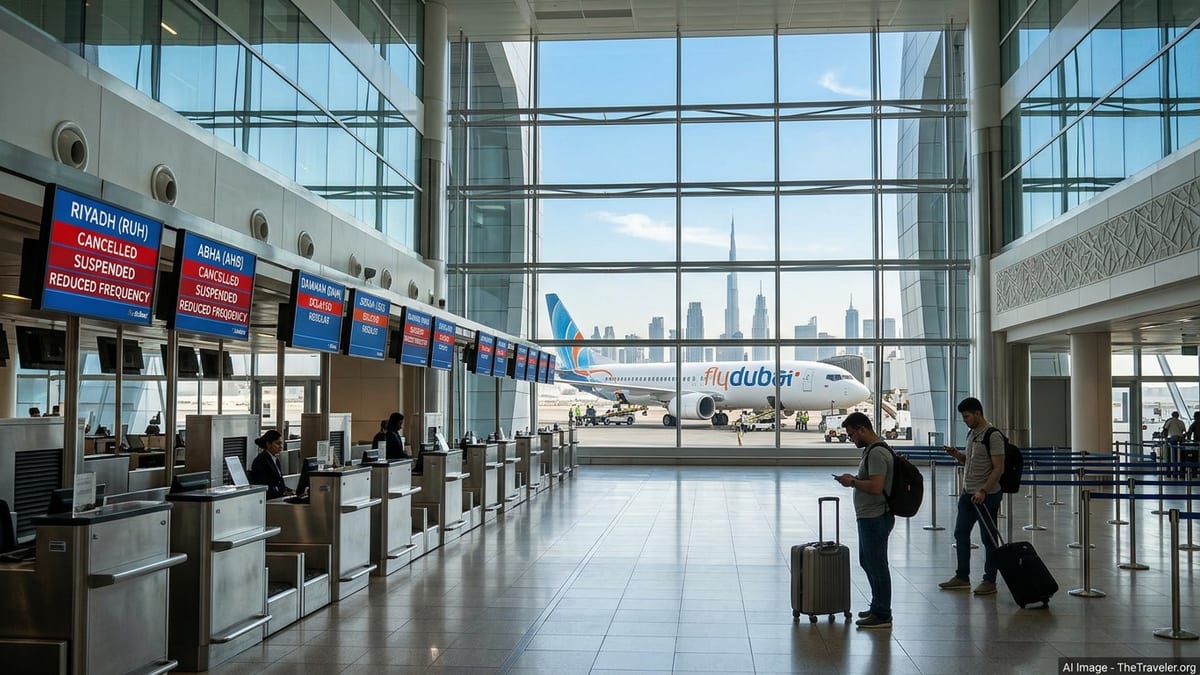
Which flydubai routes to Saudi Arabia are currently affected
flydubai has not issued a single, consolidated public advisory covering all of its Saudi routes, but a series of statements and booking checks through November 27 2026 show a pattern of suspensions and reduced frequencies across the Kingdom. The clearest information relates to Riyadh and Abha, where the airline has repeatedly extended temporary cancellations over the past six weeks in response to missile and drone attacks targeting Saudi airports. A recent update carried by Gulf News states that flydubai has extended the cancellation of its flights to Riyadh and Abha until November 27, following earlier suspension windows that initially ran to mid and late October and were then rolled forward as the security picture failed to stabilise.
The same coverage and previous airline statements indicate that services to Dammam have resumed on a reduced schedule after earlier cancellations, while some other Saudi destinations have seen flying programmes trimmed rather than halted. As of early November, flydubai was reported to be operating to Jeddah, Madinah, Qassim, Ha’il and Tabuk, with online schedules and booking engines reflecting limited seat availability and fewer weekly frequencies than before the current disruption began. At the same time, no flights were on sale for Abha and a string of secondary Saudi airports including AlUla, Hofuf, Taif, Gizan, Jouf, Najran, Neom, Qaisumah, The Red Sea and Yanbu, highlighting the depth of the cuts away from the country’s main hubs.
Passengers should be aware that these patterns are based on a combination of airline comments published through the media and snapshots of the booking system on specific dates in November. flydubai stresses that its Saudi schedules remain subject to change at short notice. The precise mix of operating, reduced and suspended routes can shift as security assessments, airspace restrictions and operational considerations evolve, so what is available on one day may not be visible the next.
Security backdrop: why schedules remain fluid
The immediate trigger for flydubai’s rolling adjustments to Saudi flights has been a series of attacks on airports and aviation infrastructure inside the Kingdom during the second half of 2026. Reports in regional media describe missile and drone strikes on King Khalid International Airport in Riyadh and Abha International Airport that caused fatalities and injuries and damaged facilities, prompting temporary closures and heightened security postures. These incidents form part of a wider pattern of military activity in and around Saudi Arabia that has led local authorities and international aviation bodies to repeatedly reassess the risks to civil aviation.
Technical guidance from European regulators underscores those concerns. Recent safety bulletins and conflict zone assessments for Saudi airspace warn of recurrent missile and drone activity, activation of air defence systems and the potential for misidentification of civil aircraft in crowded skies. The documents highlight not only the direct risk of weapons fire but also the secondary hazards posed by interception activity and falling debris. Against that backdrop, airlines operating into affected airports must factor in both the physical safety of flights and the possibility of sudden changes to routings or airport availability ordered by air navigation authorities.
The resulting operational environment is complex. Even when a specific threat has passed and an airport technically reopens, carriers need to review route structures, crew plans and diversion options before restoring full services. Some flights may be rerouted around sensitive areas, which can lengthen flight times and create knock-on schedule impacts across an airline’s network. Others may operate with reduced frequencies while demand, security and coordination with local authorities are reassessed. For passengers, this means that a route that appears to be operating normally one week can be thinned out, rerouted or temporarily halted the next if risk assessments change.
How flydubai is communicating with travelers
Throughout October and November, flydubai has used short statements relayed through regional news outlets and its customer channels to flag expected changes to its Saudi schedules. The wording has been consistent: the airline cites “the current situation” and warns that “some changes to our scheduled flights to the Kingdom of Saudi Arabia are expected” or that further disruptions are possible. In each case, the carrier notes that it is closely monitoring developments and coordinating with the relevant authorities before adjusting its operations.
In practical terms, flydubai is relying on its booking systems, flight-status tools and direct notifications to convey specific changes to individual passengers. Travel advisories published in the UAE press during November emphasise that any schedule adjustments are communicated by text message and email using the contact details stored in each booking. Customers whose flights are cancelled or significantly modified are normally offered rebooking options on alternative dates or, where appropriate, refunds, in line with the airline’s standard conditions of carriage. However, the precise remedies can vary depending on fare type, route and the nature of the disruption, so travellers should check the options presented in their own reservation.
Because the situation is so fluid, official guidance aimed at passengers travelling between Dubai and Saudi Arabia puts a strong emphasis on real-time checking. Travellers are advised to verify their flight status shortly before leaving for the airport and, where possible, even after check-in, as last-minute airspace restrictions or airport-specific measures can still lead to delays, rerouting or outright cancellations. For bookings made through travel agencies or corporate travel departments, it is important that agencies pass on any airline alerts promptly and keep passenger contact details up to date so those alerts are actually received.
Implications for itineraries involving Saudi Arabia
For travellers using flydubai to reach Saudi Arabia, the current pattern of suspensions and reduced frequencies has several concrete implications. The most obvious is the lack of direct options on affected city pairs such as Dubai to Riyadh and Dubai to Abha while those suspensions remain in place. Passengers who previously relied on those nonstop services may need to connect via other regional hubs served by different carriers, such as Abu Dhabi, Doha, Manama or Kuwait City, or consider alternative routings that include domestic legs within Saudi Arabia operated by local airlines where those are available and safe to operate.
Even on routes that continue to operate, fewer weekly flights and potential rerouting around conflict-affected areas can make connections tighter or less predictable. A reduced schedule between Dubai and Dammam or Jeddah, for example, can leave travellers with less flexibility to recover from missed onward flights or to adjust departure dates at short notice. Longer flight times caused by detours can also complicate same-day connections onto long-haul services, particularly during peak periods when spare seats are limited. Travellers planning complex itineraries that rely on specific flydubai departures to and from Saudi Arabia should therefore build in additional slack and consider overnight connections where timing is critical.
Another factor is the interaction between airline operational decisions and travel insurance or corporate travel policies. Government advisories for the region, including those focusing on missile and drone activity, sometimes trigger restrictions on official travel or conditions in insurance contracts. Business travellers routed via Dubai to Saudi Arabia may find that their organisations require additional approvals, mandate certain carriers or hubs, or insist on flexible tickets that can be changed if security assessments shift. Leisure travellers should review their insurance policies to see whether disruptions caused by conflict-related events or airspace closures are treated differently from those arising from weather or technical problems, and adjust their risk tolerance and booking strategies accordingly.
What travelers should do next
With the latest verified information indicating that flydubai’s suspensions on Riyadh and Abha flights run through at least November 27 2026, and that schedules to other Saudi cities remain reduced and subject to change, passengers with upcoming trips should approach planning conservatively. Anyone holding a booking to or from Saudi Arabia on flydubai in the coming weeks should first check whether their flight is currently listed as operating in the airline’s booking and flight-status tools, then recheck closer to departure in case of late adjustments. Where a flight shows as cancelled, travellers should follow the rebooking or refund links provided in their reservation or contact their travel agent for alternatives.
Prospective bookers weighing whether to purchase new tickets on disrupted routes should pay close attention to fare conditions and flexibility. Choosing options that allow date changes with minimal penalties can provide some protection if the security environment deteriorates again and leads to fresh rounds of cancellations. Building extra time into itineraries, especially when connecting from flydubai’s Saudi services onto other airlines in Dubai, can help mitigate the impact of delays or rerouted flights. Keeping airline apps installed, enabling notifications and ensuring that mobile numbers and email addresses in each booking are accurate will improve the odds of receiving timely alerts.
Looking ahead, flydubai has not provided a firm timeline for restoring its full pre-disruption schedule to Saudi Arabia. Any further extensions of suspensions or, conversely, gradual resumptions on currently inactive routes are likely to be announced incrementally rather than through a single comprehensive statement, reflecting the security-led, step-by-step approach airlines are taking across the region. Until there is a sustained reduction in attacks on Saudi aviation infrastructure and a corresponding easing of regulatory advisories, travellers can expect flydubai’s Saudi operations to remain in flux, making close monitoring and flexible planning essential for anyone flying between Dubai and the Kingdom.