


Frankfurt Airport is one of Europe’s busiest hubs and a major gateway between North America, Europe, Asia, and the Middle East. If you are planning to connect here in 2026, the experience can be either smooth and efficient or confusing and stressful, depending on how well you prepare. This guide walks you through what to expect, with practical, real-world examples so you can plan confidently.
Get the latest updates straight to your inbox!
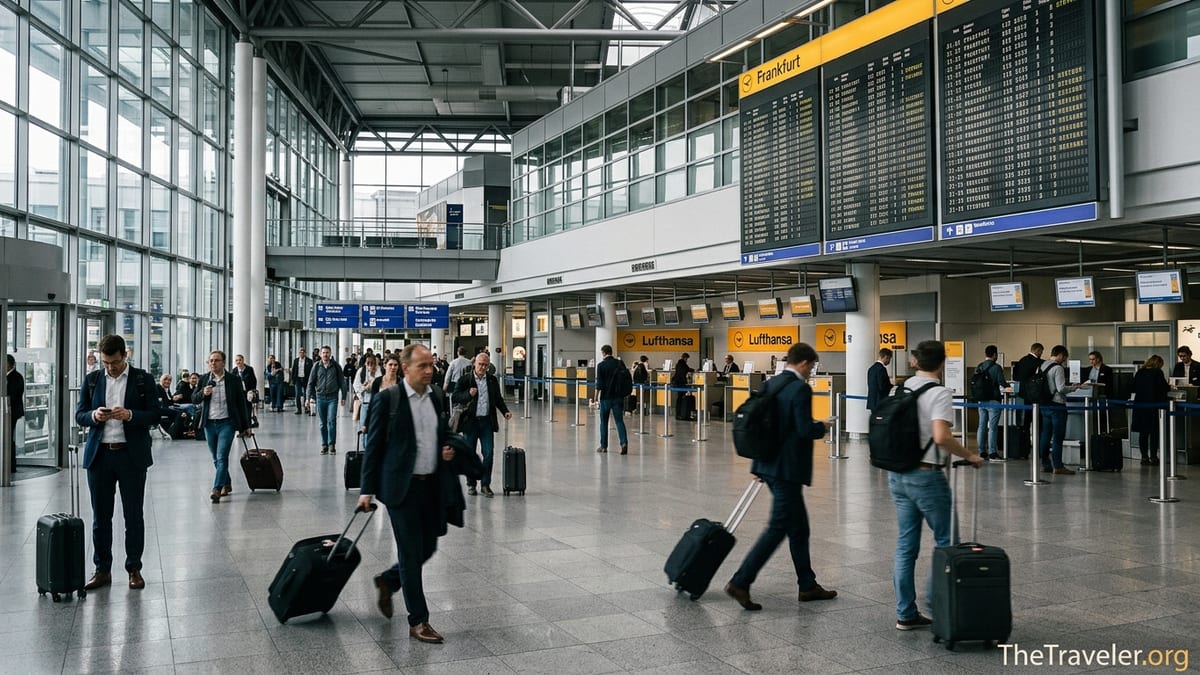
Understanding Frankfurt’s Terminals in 2026
As of mid 2026, Frankfurt Airport operates three passenger terminals: Terminal 1, Terminal 2, and the newly opened Terminal 3, plus a separate Lufthansa First Class Terminal for top-tier passengers. Terminal 1 remains the main hub for Lufthansa and most Star Alliance airlines, handling the majority of long-haul traffic. It is divided into concourses A, B, C and Z, which are spread out and connected by tunnels, escalators, and a people mover, so walking times can be significant.
Most North American and Asian long-haul Lufthansa flights use the Z concourse in Terminal 1, while many European Schengen flights depart from A. For example, a typical itinerary from New York to Rome on Lufthansa might arrive at Gate Z15 and depart onward from Gate A26, which involves going down an escalator, passing passport control, and walking 10 to 20 minutes through the terminal, depending on crowds and your walking speed.
Terminal 2 currently hosts a mix of non Star Alliance carriers, though traffic has been reduced compared with pre-pandemic years. Some Gulf carriers and leisure airlines still use it, and passengers transferring between Terminal 1 and Terminal 2 rely on the free SkyLine people mover or shuttle buses. The journey itself is short, generally around 10 minutes platform to platform, but can feel longer during peak periods or if you have to wait for the next train.
Terminal 3, opened for operations in April 2026, currently serves selected airlines and is still ramping up. If your boarding pass shows gates in the G, H, or J areas, you are likely departing from Terminal 3. Transfer passengers between Terminal 1 and Terminal 3 typically follow well marked transfer routes and may use shuttle buses; walking is not practical because the buildings are separated by airfield and motorway infrastructure. Allow extra time on your first trip through Terminal 3 while you learn the layout.
How Much Connection Time You Really Need
The official minimum connection times at Frankfurt, used by airlines and booking systems, are relatively tight. Industry data for 2026 lists around 30 minutes for Schengen to Schengen connections, 60 minutes for Schengen to non Schengen, and approximately 90 minutes for non Schengen to Schengen or non Schengen to non Schengen. These numbers describe the theoretical minimums under normal conditions and with protected tickets, not necessarily what feels comfortable for you as a traveler.
In practice, many travelers prefer at least 60 to 75 minutes for straightforward Schengen to Schengen transfers and 90 to 120 minutes when a passport check is involved. For instance, if you are flying from Madrid to Frankfurt and on to Warsaw on Lufthansa, a 55 minute connection might be accepted by the system and is usually workable as long as your first flight is on time and both flights use Terminal 1 Schengen gates. On the other hand, connecting from Chicago to Athens with a 65 minute layover may feel rushed, because you must clear German passport control, possibly change levels, and navigate crowded corridors.
Real world reports in 2026 suggest that non Schengen to non Schengen connections are often smoother than expected when both flights use Z gates in Terminal 1. A traveler arriving from Dubai and continuing to Toronto, for example, may be able to stay airside in the non Schengen zone, avoid passport control, and simply pass through a transit security point or even walk directly from one gate to another, depending on how the arriving flight is processed. In these cases, 75 to 90 minutes often feels comfortable, though airlines may ticket shorter connections on a protected through ticket.
If you are on separate tickets, build in more margin. A family flying economy from Boston to Frankfurt on one ticket and then onward to a low cost carrier in Terminal 2 on a separate ticket would be wise to leave 3 to 4 hours between flights, because any delay on the first leg can force you to recheck bags, clear immigration, and possibly re clear security from landside. Separate tickets generally mean you shoulder the risk of misconnection, so extra buffer time can save the cost and stress of a last minute rebooking.
Security, Passport Control, and Wait Times
Security and border control are the two chokepoints that most influence how your transit feels. Frankfurt’s official real time wait time displays show that routine security queues at Terminal 1 frequently fluctuate between about 5 and 20 minutes, with occasional peaks above that during the morning rush and holiday periods. Passport control can sometimes be the bottleneck, especially when multiple long haul flights arrive at once and e gates are busy or offline.
To help smooth the process, Frankfurt has introduced a free time slot system in Terminal 1, often branded as a “smart lane” or “time slot” service. Eligible passengers can reserve a specific 15 minute window to enter a dedicated security lane, usually from 72 hours before departure. For example, if you are on a 10:30 a.m. flight to London out of Terminal 1A, you might book a 9:15 to 9:30 a.m. slot. As long as you arrive at the lane within that window, your waiting time is usually capped at a few minutes, which can be reassuring on busy days.
Passport control experiences vary. EU and EEA citizens with biometric passports can normally use automated e gates at many border points, which often take under 10 minutes even at busier times. Non EU passengers, including most travelers from the United States, Canada, and the United Kingdom, use staffed lanes and should be prepared for a wider range of wait times. In periods of high traffic such as Friday evenings in summer, it is not unusual for non EU passengers to queue 20 to 30 minutes or more when arriving to enter Germany or switching from non Schengen to Schengen flights.
Where possible, organize your belongings before you reach security. Put liquids in a clear bag, keep electronics easy to remove if asked, and avoid carrying prohibited items that can trigger bag searches. Parents traveling with children might test their stroller’s folding mechanism in advance and keep snacks and comfort items handy, as a crying toddler in a long security line can quickly raise stress levels for the whole family.
Lounges, Food, and Relaxing on a Layover
Frankfurt is heavily dominated by Lufthansa lounges, particularly in Terminal 1. There are multiple Business and Senator lounges spread across concourses A, B, Z, and others, plus the famous Lufthansa First Class Terminal and First Class Lounges for top tier passengers and first class ticket holders. Current examples include Senator lounges in Terminal 1’s B and Z areas, generally open daily from early morning to late evening, offering hot and cold buffets, bar service, workspaces, and showers for eligible passengers.
Eligibility is usually tied to your ticket and status: Lufthansa and Star Alliance business class passengers typically access Business lounges; Star Alliance Gold members, including Lufthansa Senator status, can use Senator lounges even when flying economy. In mid 2026, certain premium credit cards, like some versions of the American Express Platinum card, still provide access to selected Lufthansa lounges when flying Lufthansa or Swiss in any class, although published announcements indicate these arrangements will be curtailed from October 2026 onward. Travelers relying on a card benefit should check the latest terms before departure to avoid surprises at the door.
Non alliance lounge options are more limited. One example is a contract lounge in Terminal 1 used by some independent programs and pay per use visitors, often marketed to holders of DragonPass or Priority Pass. These lounges typically offer basic seating, snacks, and drinks, but frequent flyers often report that Lufthansa’s own lounges provide a better overall experience when you have access. In Terminal 3, more mixed operator lounges are gradually opening, so if your airline is not part of Star Alliance, it is worth checking which facility you can use.
Even without lounge access, food and drink options are reasonably broad. In Terminal 1, recognizable names such as international coffee chains, German bakery counters, and sit down restaurants serve everything from pretzels and schnitzel to vegetarian bowls and Asian noodles. A typical cappuccino airside in 2026 might cost around 4 to 5 euros, while a simple sit down meal with a main course and soft drink commonly falls in the 15 to 25 euro range. If you are connecting during off peak hours, some outlets may close earlier than you expect, so it is wise to grab what you need before heading to a quieter gate area.
Arriving in Frankfurt: Baggage, Customs, and onward Transport
For passengers ending their journey in Frankfurt, the arrival process is straightforward but layered. After deplaning, you follow signs either to “Transfer” for onward flights or to “Exit / Baggage claim.” If Germany is your first point of entry into the Schengen Area, you will usually pass passport control before reaching baggage claim. Checked luggage for international flights often appears within 20 to 40 minutes, though this varies by time of day and staffing.
Customs for most travelers is a simple walk through either the green channel (nothing to declare) or red channel (goods to declare). Spot checks are possible, so it is sensible to have receipts handy for higher value items, such as electronics purchased abroad. Travelers bringing food products, alcohol, or tobacco should familiarize themselves with German and EU limits before packing, as violations can result in fines or confiscation.
One of Frankfurt Airport’s strengths is ground connectivity. The long distance train station beneath the airport links directly to cities like Cologne, Stuttgart, and Munich with high speed ICE trains, often in under three hours. For instance, a traveler landing from Toronto at 8:00 a.m. might realistically be on a 9:15 a.m. ICE train to Cologne and checked into a city center hotel before lunch. Regional trains and S Bahn commuter lines connect the airport to Frankfurt Central Station in roughly 10 to 15 minutes, providing access to local and regional destinations throughout the Rhine Main area.
Taxis and ride hailing services queue outside the arrivals halls, with typical taxi fares from the airport to central Frankfurt in the range of 30 to 40 euros depending on traffic and surcharges. Pre booked car services and hotel shuttles are common, though some hotels have reduced their free shuttle offerings in recent years. Passengers arriving late at night should confirm that their chosen transport runs after midnight, especially for regional trains and buses whose schedules may thin out significantly.
Common Pain Points and How to Avoid Them
Despite its strengths, Frankfurt Airport can feel overwhelming. Long walks between gates, busy security checkpoints, and confusing signage for first time visitors are frequent complaints. One recurring issue involves passengers who underestimate how far apart concourses are. For example, a traveler landing at a Z gate with a 55 minute connection to a Schengen flight from an A gate may spend nearly half that time walking, especially if pushing a stroller or carrying heavy cabin baggage.
Another common pitfall is booking extremely tight connections on separate tickets. Online travel agencies sometimes piece together an attractive itinerary like Istanbul to Frankfurt on one airline and Frankfurt to Chicago on another, with just 90 minutes between flights and separate booking references. If your first flight is delayed even 30 minutes, you can easily be left stranded in Frankfurt, forced to buy a last minute long haul ticket at walk up prices. Booking through tickets on a single carrier or alliance is generally safer, because the airline takes responsibility for rebooking you in the event of a misconnection.
Passengers transiting through Frankfurt with mobility challenges should plan ahead. The airport offers assistance services that can be requested through your airline, including wheelchairs and escorted transfers between gates. However, availability depends on pre booking, and same day requests at the gate may involve wait times. If you know you will need extra time or assistance, notify your airline at least 48 hours in advance and allow more generous connection times.
Finally, travelers carrying items that trigger additional checks, such as larger electronics, camera gear, or specialty food products, should be prepared for extra screening. A photographer with a bag full of lenses, for example, might encounter secondary security inspection that adds 10 to 15 minutes. Packing gear neatly in padded, easily opened compartments and arriving earlier at security can prevent this from becoming a source of anxiety.
The Takeaway
Flying through Frankfurt Airport in 2026 is entirely manageable with a bit of planning. Understanding the terminal layout, especially the role of Terminal 1 and the new Terminal 3, helps you interpret your gate assignments and anticipate walking times. Giving yourself realistic connection buffers, rather than relying exclusively on the most optimistic minimums, can transform a stressful dash into a calm stroll between flights.
Pay attention to security and passport control, consider reserving a security time slot where available, and keep documents and liquids organized. If you have lounge access, use it strategically near your departure gate for a shower, meal, or quiet workspace, but even without a lounge there are enough food and seating options to make a layover reasonably comfortable.
For travelers ending their journey in Frankfurt, the airport’s strong rail and road connections make it an efficient gateway to the rest of Germany and neighboring countries. By anticipating common problem areas such as tight separate ticket connections and long walks between concourses, you can approach your trip through Frankfurt with confidence instead of concern.
FAQ
Q1. Is a 1 hour layover enough to connect at Frankfurt Airport?
A 1 hour layover can be enough for simple Schengen to Schengen or non Schengen to non Schengen connections on a single ticket, especially within Terminal 1, but it leaves little margin for delays. Many travelers feel more comfortable with 75 to 90 minutes, particularly if passport control or terminal changes are involved.
Q2. Do I have to go through security again when connecting at Frankfurt?
If you arrive from another EU or Schengen airport and stay in the same secure area, you may not need full rescreening, but many connections, especially between non Schengen and Schengen gates or between terminals, do involve security again. Expect at least one more check and follow the “Transfer” signs to see whether you are routed through a checkpoint.
Q3. Will I clear passport control on a connection, or only if I enter Germany?
You clear passport control at Frankfurt if it is your first entry point into the Schengen Area or if you are switching from a non Schengen flight to a Schengen one. If you remain in the non Schengen zone on a non Schengen to non Schengen connection and your airline processes you as a transit passenger, you may not go through passport control at all.
Q4. How long are security and immigration lines at Frankfurt in 2026?
Wait times vary by time and terminal, but many travelers see roughly 5 to 20 minutes at security in normal conditions, with some peaks higher during morning and holiday rushes. Passport control for non EU passengers can sometimes reach 20 to 30 minutes when several long haul flights arrive together.
Q5. Can I leave the airport during a long layover?
Yes, if you have the right visa or visa free entry rights for Germany, you can exit the airport during a long layover. For example, with a 7 hour daytime layover and no checked bags to recheck, many travelers take the S Bahn into central Frankfurt for a quick walk along the river before returning, but you should be back at the airport at least 2 hours before your next departure.
Q6. What lounge options do I have if I am flying economy?
If you are flying economy, you may still access Lufthansa Business or Senator lounges through elite status, certain premium credit cards, or paid access where available. Additionally, there are independent contract lounges in some areas of the airport that accept pay per use guests or members of lounge programs like DragonPass; quality varies, so frequent flyers often prefer airline operated lounges when they have access.
Q7. How do I get from Frankfurt Airport to the city center?
The fastest option is usually the S Bahn commuter trains, which run between the airport and Frankfurt Central Station in roughly 10 to 15 minutes. High speed ICE trains, regional trains, taxis, and ride hailing services are also available, with taxis to downtown typically costing around 30 to 40 euros depending on traffic and time of day.
Q8. Is Frankfurt Airport easy to manage for families with children?
Frankfurt can feel busy and spread out, but many families manage it successfully by using strollers, pre booking assistance if needed, and allowing extra time between flights. Family friendly facilities such as baby changing rooms, play corners, and accessible restrooms are available in most major concourses, and many restaurants offer child friendly menus and high chairs.
Q9. Are there showers available at Frankfurt Airport?
Yes, showers are available in several Lufthansa lounges for eligible passengers, and in some cases in public or pay per use facilities that can be accessed for a fee. These are especially popular with travelers arriving on overnight long haul flights who want to freshen up before a full day of meetings or onward travel.
Q10. What should I do if my flight is delayed and I miss my connection?
If your flights are on a single ticket and operated by the same airline group or alliance, go directly to that carrier’s transfer desk or customer service counter in the terminal. They are generally responsible for rebooking you on the next available flight and may offer meal vouchers or hotel accommodation depending on the circumstances and local regulations. If you booked separate tickets, you will likely need to contact the onward airline yourself and may have to buy a new ticket.