


More news on this day
The UK Foreign, Commonwealth and Development Office has updated its travel advice for France, highlighting that French authorities can introduce localised curfews and movement restrictions at short notice in response to security concerns, public disorder or major events.
Get the latest news straight to your inbox!
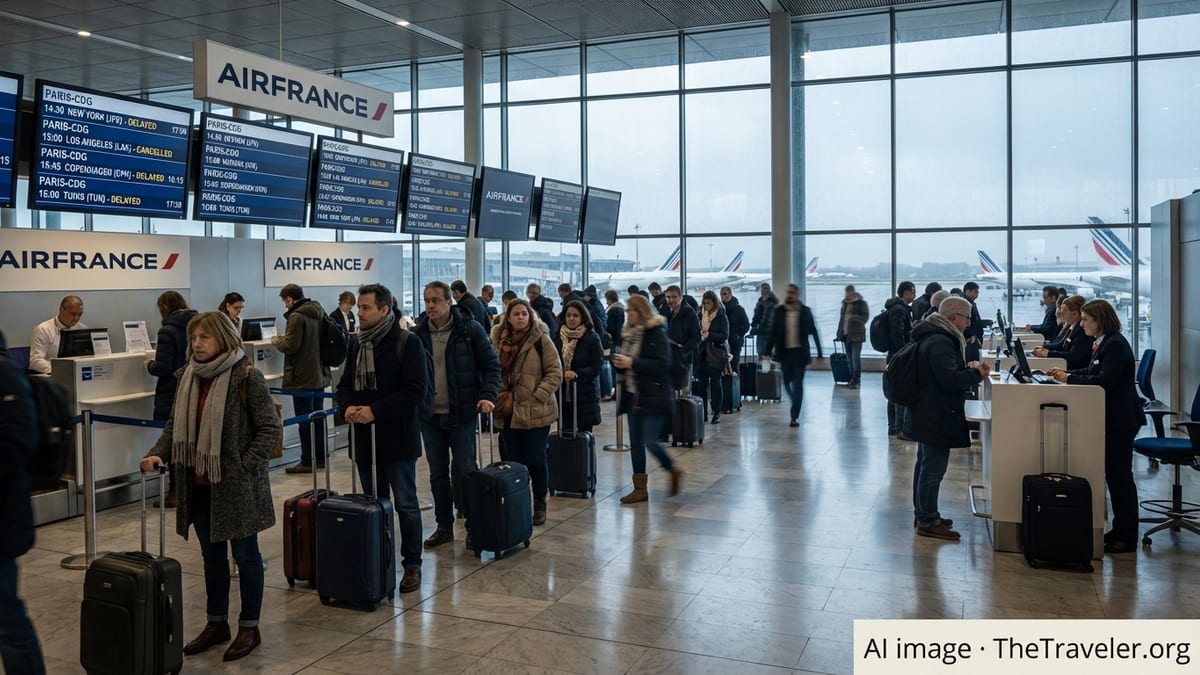
Updated guidance reflects evolving security landscape
The latest version of the UK government’s France travel advice, current as of mid-October 2026, continues to class the country as open to visitors but flags a heightened and fluid security environment. The advisory notes that large public events, protests and isolated extremist incidents in recent years have led to tighter crowd management and temporary restrictions in affected areas.
Alongside warnings about terrorism and civil unrest, the guidance underlines that French prefectures and municipal authorities are able to limit movement in specific districts for defined periods. These measures may be described locally as curfews or as restrictions on access to particular zones, and can apply to pedestrians, private vehicles and public transport.
Publicly available information from allied travel advisories also points to the possibility of partial or localised curfews in parts of France when security levels are raised or when there is persistent disorder. These steps are usually time limited and geographically narrow, but they can affect popular urban neighbourhoods and transport hubs with little advance notice.
The Foreign Office advice encourages travellers to stay alert to local announcements, particularly in major cities and during high-profile events such as international summits, major sports fixtures or political demonstrations, when the likelihood of temporary controls on movement increases.
Where and how local curfews may be applied
Recent security practice in France shows that restrictions are often focused on specific areas rather than applied nationwide. For example, previous high-alert periods in Paris and other large cities have seen increased police presence around transport interchanges, shopping districts and tourist sites, along with fenced-off zones and controlled access points.
Local authorities can set time bands during which people are asked to remain indoors or avoid particular streets, typically overnight or in the late evening. In some cases, only certain categories of activity are limited, such as gatherings in public squares, the sale of takeaway alcohol, or large outdoor events. In more serious situations, wider curfews may apply to all non-essential movement within the designated perimeter.
These measures are usually communicated through prefecture notices, municipal websites, local media, and on-the-spot signage and loudspeaker announcements. However, the Foreign Office warning underscores that visitors who do not follow French news or who are not familiar with local language may only become aware of changes when they encounter roadblocks, diverted traffic or closed metro exits.
Travel advisories stress that curfew-style controls can also be used in border regions, especially when there is significant cross-border traffic or major international meetings. In past cases, some minor crossings have been closed and delays reported on main routes, affecting road trips between France and neighbouring countries.
Practical implications for UK travellers
For visitors from the UK and other countries, the evolving advice means building more flexibility into itineraries. The Foreign Office recommends checking the France travel advice page before departure and regularly during a trip, so that changes linked to specific dates or locations are not missed.
Travelers planning evening activities in major cities are encouraged to verify last train or metro times and to be prepared for temporary closures of certain stations, particularly after demonstrations or football matches. Booking accommodation in central areas or near alternative transport options can help if some streets are sealed off or if taxis are in short supply during a restricted period.
Public information from European governments highlights that short-notice restrictions can coincide with severe weather, wildfires, or other civil protection operations, not only with security incidents. In such situations, visitors may be asked to leave at-risk zones quickly or to remain indoors, depending on the nature of the risk.
The updated advice also reinforces the importance of comprehensive travel insurance that covers missed connections, additional accommodation and alternative transport, so that travellers are not left covering unexpected costs if plans have to be rearranged due to local controls on movement.
Staying informed on the ground
Travel guidance emphasises that anyone visiting France should monitor local media and official announcements, including during short city breaks. English-language news outlets operating in France, as well as the main French broadcast channels and radio networks, often carry summaries of new measures, especially in major metropolitan areas.
Visitors are advised to pay attention to information screens and audio messages in railway stations, airports and metro systems, which may announce earlier closing times or diverted services linked to security operations. Hotel reception desks and established tour operators can also relay relevant updates drawn from local briefings and transport notices.
Security-focused travel advice from partner countries suggests avoiding demonstrations and areas of heavy police deployment, both because of the risk of confrontation and because these are the locations where ad hoc restrictions, including curfews, are most likely to be introduced.
Travellers who find themselves in a district subject to time-limited controls are generally expected to comply with instructions given on the spot and to carry identification. The Foreign Office notes that France applies its own public order legislation and that non-compliance with local measures can result in on-the-spot fines or, in more serious cases, legal proceedings.
Balancing routine tourism with heightened vigilance
Despite the more prominent language around potential curfews and movement controls, the core message of the UK advisory remains that millions of visitors continue to travel to France each year without incident. Popular destinations such as Paris, the Riviera, wine regions and alpine resorts remain open, and transport links between the UK and France are operating.
The revised focus reflects a broader trend in European travel advisories, which now foreground the possibility of short, targeted restrictions designed to manage risk around sensitive periods. Rather than deterring travel outright, the guidance aims to encourage a higher level of situational awareness among visitors.
For many travellers, the main adjustments involve checking information more frequently, allowing extra time for journeys, and being ready to change evening plans if specific neighbourhoods are subject to temporary controls. Those steps, according to publicly available official advice, are viewed as sufficient for most visitors to manage the evolving situation.
As with any international trip, the Foreign Office encourages those heading to France to keep contact details for their transport providers, accommodation and their own consular services readily available, so they can respond quickly if local restrictions, including curfews, affect their movements.