


More news on this day
France is confronting its most serious civil unrest in years, with nationwide protests over fuel prices and education funding turning violent in several cities and raising fresh questions for visitors with imminent travel plans.
Get the latest news straight to your inbox!
What Is Happening In France Right Now?
Since mid-September 2026, France has seen a wave of demonstrations led largely by high school students and trade unions over classroom conditions, education funding and rising living costs. In recent days, the movement has escalated sharply, coinciding with broader anger over fuel prices and purchasing power. Large marches have taken place in Paris, Lyon, Bordeaux, Marseille, Lille and other regional centers, drawing tens of thousands of people.
While many rallies have remained peaceful, events on the weekend of October 17 saw some of the worst rioting in France in decades. Published coverage describes cars set on fire, shops and banks looted and public buildings attacked. A historic town hall in Limoges was gutted by flames and the tourism office in Lyon was seriously damaged. Central Paris saw vandalism around major boulevards and monuments, including damage to the Arc de Triomphe area.
Authorities responded by deploying large numbers of riot police, using tear gas and other crowd control tactics in several cities. On October 19, Paris police announced an overnight curfew in two districts of the capital following a weekend of widespread disorder. Local officials in parts of northern France, including Lille, also introduced temporary evening curfews for minors.
The unrest has not covered the entire country, and daily life continues in many neighborhoods with little direct disruption. However, the scale and intensity of the October 17 riots, and the fact that further protest dates have been announced for late October and early November, mean that visitors face a fluid situation, particularly in major urban centers.
Current Official Travel Advice For France
Despite the recent violence, France remains open to international visitors and its official borders and airspace continue to operate normally. As of October 2026, the United States Department of State maintains a Level 2 “Exercise Increased Caution” advisory for France, reflecting concerns over terrorism and the risk of civil unrest rather than a blanket warning against travel.
Other governments take a similar line. Canadian travel advice for France currently classifies the country under a “exercise a high degree of caution” level, explicitly noting the frequency of demonstrations and the potential for clashes with security forces in busy urban areas. Australia’s Smartraveller service states that large-scale protests and demonstrations took place across France on October 17 and may continue, advising travelers to avoid affected areas and follow local media.
In parallel with country-specific advisories, the United States has also issued a worldwide caution in 2026, encouraging travelers to exercise increased vigilance overseas. This broader alert does not target France alone but is relevant to anyone considering international travel in a period of heightened geopolitical tension.
The language of these advisories points to elevated risks in specific locations and situations rather than a systemic collapse of safety for travelers. No major government currently advises its citizens to cancel all non-essential travel to France, but all emphasize the need to monitor developments closely, particularly around announced protest days or politically sensitive anniversaries.
How Are Protests Affecting Tourists On The Ground?
The most visible impact for visitors so far has been disruption rather than targeted violence. In Paris, demonstrations and clashes have taken place near landmarks and central districts that are heavily frequented by tourists. Reports from October 17 and 18 describe groups moving through areas close to major shopping streets and some central metro stations closing temporarily for security reasons.
Cultural attractions have also been affected on specific days. On October 19, students blocked access to the Louvre Museum’s main entrance during a protest, leading to tense exchanges with some visitors and periods when entry and exits were heavily controlled. The museum adjusted operations in response to the blockade and security perimeter that had been installed over the protest weekend.
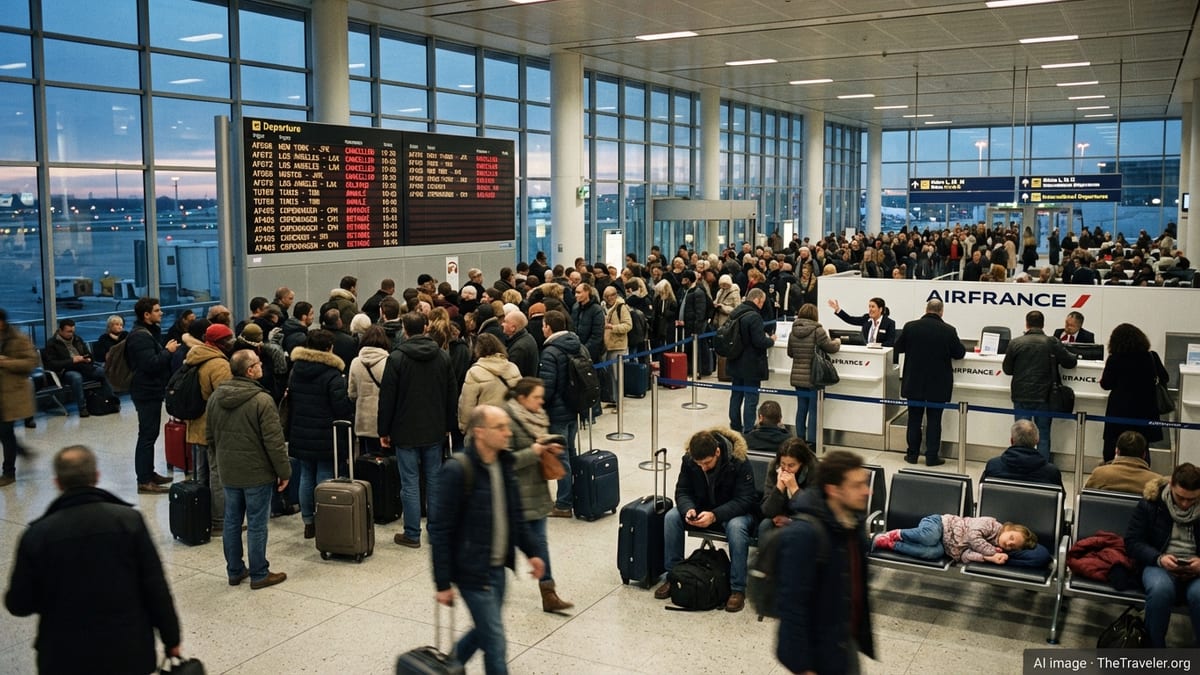
Industry reporting indicates that hotels and travel agencies are seeing an uptick in calls from concerned customers, along with some cancellations, especially for trips focused on Paris. Tourism representatives note that more than 3,000 businesses across France have been affected by damage or looting since the mid-October riots, including shops, cafes and small hotels in city centers. At the same time, forward booking data shared in the French press suggests that reservations for the coming weeks remain above the same period in 2025, signaling that many travelers are still proceeding with plans.
Public transport has remained largely functional, but visitors can expect intermittent closures of metro stations, tram lines or bus routes near protest sites. These interruptions are usually temporary and localized, but they can complicate same-day itineraries, particularly in Paris, Lyon and Marseille where marches often take place along main arteries.
Key Risks Travelers Should Weigh
The most significant risk for visitors is being caught unintentionally near a protest that turns violent. French demonstrations can form quickly via social media and, in the current climate, some have shifted from peaceful marches to rioting and confrontations with police after dark. The October 17 events showed how quickly an otherwise typical protest day can give way to fires, looting and property damage in central neighborhoods.
Crowd-control measures present additional hazards. Extensive use of tear gas, flash grenades and water cannons has been documented in Paris and several regional cities during this protest wave. Even if travelers do not participate in demonstrations, simply walking through an affected area can expose them to irritant gas or rapid changes in police posture, particularly around evening hours.
There is also the broader context of terrorism and petty crime. The United States and other governments continue to highlight the risk of terrorist attacks in France, especially at high-profile sites and during crowded events. Opportunistic theft, including pickpocketing in metro stations and tourist zones, remains a common issue, and disruption linked to protests can create additional openings for theft or scams.
On the other hand, there is no evidence at this stage that foreign tourists are being singled out as targets by protesters or rioters. The damage documented so far has centered on symbolic public buildings, banks, chain stores and vehicles parked on the street. For most travelers, the risk profile is tied to being in the wrong place at the wrong time rather than to their nationality or visitor status.
Practical Safety Steps For Those Still Traveling
For travelers who decide to proceed with trips to France, preparation and situational awareness are now more important than usual. Experts in travel risk management routinely advise checking official travel advisories and enrolling in consular notification programs before departure. For American visitors, that includes reviewing the France country page on Travel.State.gov and monitoring recent alerts in the days leading up to a flight.
Once in France, visitors can reduce exposure by staying well away from planned protest locations and large political gatherings. Demonstrations are often announced in advance for specific dates and routes in major cities, typically around central squares such as Place de la République in Paris or equivalent civic hubs in regional capitals. Local news outlets and municipal social media channels provide same-day updates on road closures and public transport changes.
Travelers are also encouraged to allow extra time for airport and train station transfers, particularly on announced protest days, in case of roadblocks or strikes affecting taxis, buses or regional trains. Booking accommodation in districts slightly removed from traditional protest routes may help limit late-night noise and the chance of being close to clashes.
Insurance and documentation are another key consideration. Publicly available guidance from governments and insurers recommends verifying that travel policies include coverage for civil unrest, trip interruption and emergency medical treatment. Travelers should carry identification, keep digital copies of passports and itineraries, and know how to contact their embassy or consulate in case conditions deteriorate suddenly in a specific city.