


Fort Lauderdale Beach Park sits at the southern end of Fort Lauderdale’s main beachfront strip, offering a family friendly stretch of sand with convenient facilities, courts, and picnic space just steps from the Atlantic. For first time visitors, this compact city park can be the easiest place to enjoy the famous beach while still having access to restrooms, showers, parking, and casual dining within a short walk.
Get the latest updates straight to your inbox!
Where Fort Lauderdale Beach Park Is and What to Expect
Fort Lauderdale Beach Park is located at 1100 Seabreeze Boulevard, at the south end of the main Fort Lauderdale Beach area, close to the Bahia Mar resort and roughly where Seabreeze Boulevard meets South Fort Lauderdale Beach Boulevard. The park occupies a small but well designed section of oceanfront that blends seamlessly into the wider public beach, so you can easily walk north toward the busier central strip or south toward quieter sand while still using the park’s facilities.
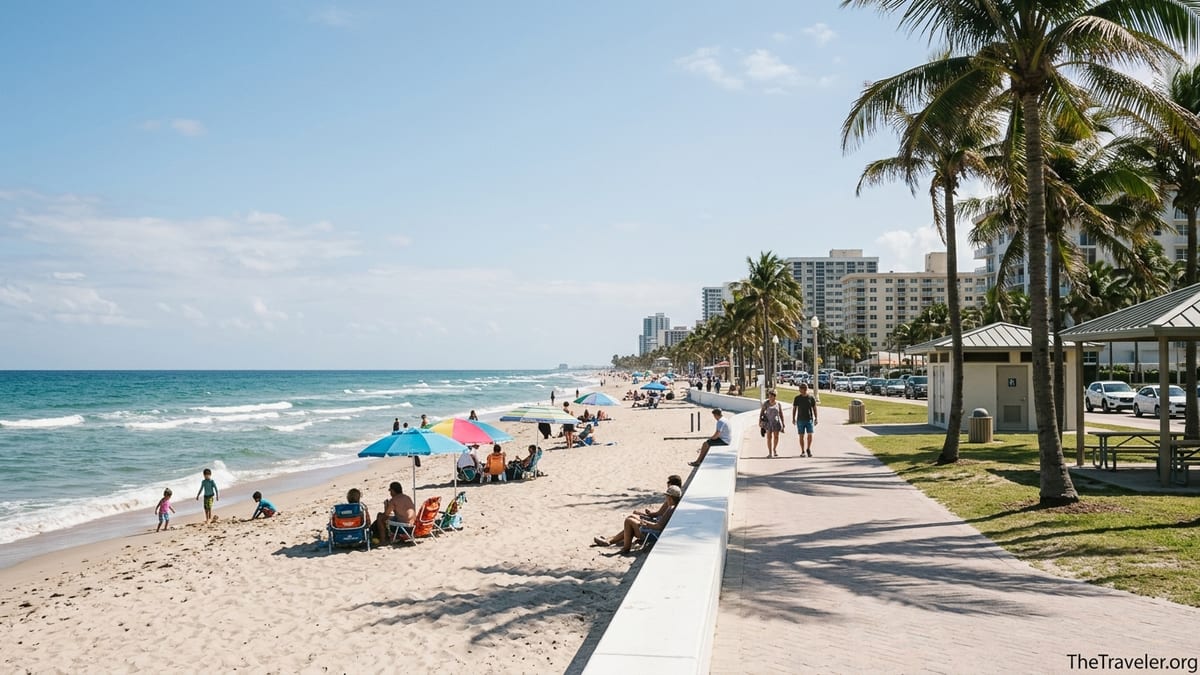
The setting is classic South Florida: a wide, pale sand beach, rows of palm trees, and a pedestrian friendly promenade separated from traffic by the city’s distinctive white wave wall. On a typical dry season day, you will see families with beach carts heading for the playground, locals starting or finishing a run along the sidewalk, and visitors spreading out rental chairs and umbrellas near the lifeguard stands.
The park feels less congested than the bustling blocks around Las Olas Boulevard, but it is far from isolated. Hotels and high rises line Seabreeze Boulevard just across the street, and you are a few minutes’ walk from marinas and water taxi stops along the Intracoastal side. This makes the park convenient if you are staying nearby or visiting for the day by car or rideshare.
City crews maintain the area to a generally good standard, and beach conditions are typical of Broward County: mostly gentle surf, especially in the morning, with stronger chop and currents possible on windier days. Lifeguards typically staff the beach during posted hours, and flags indicate daily conditions, so first time visitors should make a habit of checking the flag colors before swimming.
Parking, Hours, and How to Get There
For many first time visitors, parking is the most important practical question. Fort Lauderdale Beach Park has a city run surface lot adjacent to the sand, entered from Seabreeze Boulevard. The lot uses pay by plate meters or mobile payment, with rates that are in line with other city beach facilities and can vary on weekends or during special events. It is common for the city to set special event rates or flat fees on busy days, especially during festivals or holiday weekends, so it is smart to check posted signs at the entrance when you arrive.
The lot can fill quickly on sunny Saturdays and during peak winter tourist season, especially late morning to early afternoon. If you are driving, aim to arrive before 10 a.m. or later in the day after 4 p.m. to have a better chance at a close spot. If the park lot is full, nearby city garages and lots along the A1A corridor, including those associated with the wider beach district, often have additional paid parking, and rates may be similar or slightly higher than the park lot for all day stays.
Visitors staying in hotels within the central beach area can often skip parking entirely. Walking from larger hotels around Las Olas Boulevard to the park typically takes 15 to 25 minutes along the beachfront sidewalk, depending on your starting point. Rideshare services are also widely used; you can be dropped on Seabreeze Boulevard adjacent to the park entrance, which avoids the stress of searching for a space on busy weekends.
Public transit is another option if you are staying elsewhere in the city. Broward County Transit runs bus routes along the main east west and north south corridors that connect downtown Fort Lauderdale with the beachfront area, and from there it is a short walk south along the oceanfront sidewalk to the park. For visitors arriving by Brightline train into downtown Fort Lauderdale, a short rideshare or taxi ride east to the beach and then south to the park is typically the simplest connection.
Beach Access, Lifeguards, and Rentals
From the parking lot, access to the beach is straightforward. Paved walkways lead from the lot and park interior across the promenade to the sand, and there are designated accessible entrances that minimize steps and obstructions. Families hauling coolers, wagons, and strollers generally find the layout manageable, especially compared with some narrower or more built up sections of the strip.
Lifeguard towers are spaced along the shoreline near the park, and guards are typically on duty during standard city beach hours, which are usually daytime only. Colored flags at each stand indicate current surf and current conditions. For first time visitors, especially families with children or weaker swimmers, it is wise to set up within easy visual range of an active lifeguard tower rather than choosing an isolated spot further down the sand.
Commercial beach chair and umbrella rentals are usually available along Fort Lauderdale Beach, including near the park, operated by concessionaires who set up lounge chairs in neat rows each morning. Prices often vary by season and day of the week, but as a practical example, two loungers and an umbrella on this stretch of beach commonly cost a moderate fee for a day use package, with attendants accepting major credit cards or mobile payments. If you are planning multiple beach days or traveling in a group, bringing your own lightweight folding chairs and a compact sun shelter can quickly pay for itself.
The swimming area in front of Fort Lauderdale Beach Park typically has gentle waves, particularly during calmer winter mornings, but the ocean can still have rip currents and shifting sandbars. Posted signs warn of typical hazards such as sudden drop offs or marine life. Local practice is to swim parallel to shore if you feel pulled by a current and to signal a lifeguard rather than trying to fight directly against the pull back toward the beach.
Amenities, Restrooms, Showers, and Sports Courts
One of the main advantages of choosing Fort Lauderdale Beach Park over a random patch of open sand is the concentration of amenities. The park includes permanent restroom buildings, outdoor showers to rinse off sand and saltwater, and changing areas. Facilities are basic but functional, similar to other city run beach parks. They are busiest around midday, so early morning or late afternoon visits often mean less waiting.
Outdoor showers and foot wash stations are placed near the main walkways from the sand to the parking lot and street. These are open air poles or wall mounted heads you simply step under and activate with push buttons. Parents traveling with kids often plan a quick rinse at the end of their visit so everyone is more comfortable for the ride back to a hotel or rental.
The park has long featured sports facilities such as basketball and volleyball courts, which draw both locals and visitors. These courts are popular and can be lively in the late afternoon and early evening, especially on weekends. In recent years there has been local discussion about converting some of the longtime basketball courts to pickleball, reflecting broader trends along Florida’s coast. Prospective changes may vary by season and city policy, so first time visitors interested in a particular sport should be prepared for the possibility that specific court layouts can change over time.
Picnic tables and shaded areas are another useful amenity at Fort Lauderdale Beach Park. Concrete or wood tables appear under clusters of palms or simple shade structures, providing a place to eat takeaway food, host a small birthday gathering, or take a break from the midday sun. The city typically classifies these as first come, first served rather than reservable pavilions, so arriving earlier in the day increases your chances of securing a shaded table for lunch.
Playgrounds, Picnic Areas, and Who the Park Suits Best
Families with younger children appreciate the small playground and open grassy areas inside Fort Lauderdale Beach Park. The playground equipment is modest but functional, often featuring slides, climbing frames, and swings suitable for younger kids. Surfacing is usually sand or soft material, and nearby seating allows adults to supervise while enjoying ocean breezes.
The picnic tables and open space give the park a neighborhood feel despite its position on a busy tourist beach. On a typical Sunday, you might see a local birthday party with balloons and coolers, a group of friends grilling at lunchtime, and a couple enjoying a quiet takeaway coffee under the palms before the midday heat. While the park is not designed for large formal events, its layout works well for small informal gatherings.
Because the park offers a defined area with restrooms and showers, it is particularly convenient for multi generational groups. Grandparents who prefer to sit in the shade can stay at the picnic tables while kids shuttle back and forth to the sand and water. Visitors staying in nearby condominiums or smaller hotels without extensive on site facilities sometimes treat the park as their shared backyard during a weeklong stay.
For solo travelers or couples, Fort Lauderdale Beach Park can be a useful base if you like to alternate between active time in the water, pickup games on the courts, and people watching from a shaded bench. It is quieter and more relaxed than some nightlife focused sections of the strip further north but still close enough that you can walk to bars and restaurants when you are ready for dinner.
Nearby Restaurants and Places to Grab a Bite
One of the park’s advantages is proximity to a range of casual and sit down dining options without needing to move your car. Directly across Seabreeze Boulevard and along the adjacent beachfront blocks you will find hotel restaurants, beach bars, and independent spots that cater to both tourists and locals. Menus in this area typically lean toward seafood, burgers, salads, and American style bar fare, with pricing that reflects the waterfront location.
Just north of the park near Bahia Mar, several hotels maintain their own oceanfront restaurants and bars where non guests can usually walk in for a meal or drink. You can expect to find typical resort fare such as grilled fish sandwiches, shrimp tacos, flatbreads, and tropical cocktails, often served on outdoor patios with beach views. Prices are higher than inland strip malls, but the convenience of walking from your beach setup to lunch within ten minutes often justifies the premium for many visitors.
Within a longer but still manageable walk, the central Fort Lauderdale Beach strip offers more variety, including venues around the major beachfront intersections. Here you will see everything from casual pizza and ice cream shops to upscale hotel restaurants known for brunch, steak, or sushi. Many places advertise daily happy hour specials on appetizers and drinks in the late afternoon, which is useful if you want to transition from beach time to an early dinner without a long break.
For more budget conscious travelers, one practical strategy is to stop at a supermarket or deli inland before arriving at the park, pick up sandwiches, salads, and drinks, and use the park’s picnic tables and shade for a low key meal. This approach works especially well for families or groups planning a full beach day, as you can control costs while still enjoying the beachfront setting. Reusable insulated bags and ice packs keep food and drinks cool without relying on pricey waterfront convenience stores.
First Time Visitor Tips and Practical Advice
For a first visit, timing your day can make a big difference. Morning, particularly between 8 a.m. and 11 a.m., usually offers cooler temperatures, smaller crowds, and easier parking. This is an ideal window for families with young children, runners, and anyone who prefers calmer water and less intense sun. Afternoons bring stronger sun and more lively crowds, especially on weekends, while sunset often delivers gentler light and a more relaxed mood.
Sun protection is essential. Fort Lauderdale’s coastal sun can feel deceptively mild when there is a breeze, yet even short unprotected exposure can result in sunburn. Wide brimmed hats, reef friendly sunscreen, rash guard shirts for children, and a lightweight beach umbrella or sunshade make visits far more comfortable. Many visitors also bring inexpensive lightweight beach blankets or mats to place under towels, as the sand can become hot by midday.
First time visitors should also pay attention to local rules around alcohol, glass, and smoking on the beach and in the park. Fort Lauderdale typically restricts glass containers on the sand and often limits or prohibits open alcoholic beverages in public areas. Violations can result in fines, and enforcement is stricter during high season and large events. A simple habit is to keep all drinks in non glass reusable bottles or cans and to dispose of trash promptly in the many bins along the promenade.
Finally, remember that weather can change quickly in South Florida, especially in the wet season from roughly late spring through early fall. Short but intense afternoon thunderstorms are common, with lightning that may prompt lifeguards to clear the water and direct people off the sand. Checking a local weather app before heading out and being prepared to pack up quickly if dark clouds build inland are part of smart beach planning. Having a backup plan, such as a nearby café or indoor attraction, helps you make the most of your day even if you need to pause beach time for an hour.
The Takeaway
Fort Lauderdale Beach Park offers one of the most convenient entry points to the city’s famous oceanfront, combining lifeguarded swimming, essential amenities, and easy access to food and activities in a compact, manageable space. For first time visitors, its combination of restrooms, showers, playground, courts, and parking removes much of the uncertainty that can come with an unfamiliar beach.
By arriving early or later in the day, planning for paid parking, packing appropriate sun protection, and making use of the park’s shaded picnic areas and nearby restaurants, you can turn a simple beach stop into a relaxed, full day outing. Whether you are traveling with children, visiting as a couple, or enjoying a solo escape, Fort Lauderdale Beach Park is a practical and welcoming starting point for getting to know one of South Florida’s most popular stretches of sand.
FAQ
Q1. Is there parking at Fort Lauderdale Beach Park and how much does it cost?
Parking is available in a city operated surface lot next to the park, with pay by plate meters or mobile payment. Rates are comparable to other Fort Lauderdale beach lots and may increase during special events or busy holiday periods, so always check posted signs at the entrance for current prices.
Q2. What time should first time visitors arrive to find a parking spot?
On sunny weekends and during peak winter season, spaces can fill quickly from late morning onward. Aim to arrive before 10 a.m. for the best chance at a convenient spot, or consider coming after 4 p.m. when some early arrivals begin to leave and the sun is less intense.
Q3. Are there restrooms and showers at Fort Lauderdale Beach Park?
Yes. The park includes permanent restroom buildings plus outdoor showers and foot wash stations near the main paths between the sand and parking area. Facilities are basic but functional and are one of the main reasons many families and groups choose this park as their beachfront base.
Q4. Is the beach at Fort Lauderdale Beach Park suitable for children?
The beach generally has gentle surf, especially in the morning, and lifeguards are usually on duty during posted hours. Many families bring children to this park because it combines lifeguarded swimming, a small playground, picnic tables, and easy access to restrooms. Parents should still supervise closely and pay attention to the daily flag warnings for currents and surf conditions.
Q5. Can I rent beach chairs and umbrellas at the park?
Commercial vendors typically offer chair and umbrella rentals along Fort Lauderdale Beach, including near the park. Prices vary by season and day, but visitors can usually rent one or two loungers and an umbrella for day use, paying on site with card or mobile payment. Bringing your own lightweight gear is a cost saving alternative for frequent beachgoers.
Q6. Are there sports courts at Fort Lauderdale Beach Park?
Yes. The park has long featured courts for sports such as basketball and volleyball that attract both locals and visitors. In recent years, city planners have discussed adapting some space for pickleball, so the exact court mix may evolve over time. If a particular sport is important to your visit, it is wise to be flexible and prepared for potential changes.
Q7. Are there restaurants or places to eat within walking distance?
There are multiple dining options within a short walk, including hotel restaurants and beachfront bars north of the park and a broader mix of casual and upscale spots along the central Fort Lauderdale Beach strip. Visitors can choose between simple options like burgers and fish tacos at resort style beach bars and more upscale meals with ocean views at nearby hotels, or they can bring groceries and use the park’s picnic tables.
Q8. Is Fort Lauderdale Beach Park accessible without a car?
Yes. Many visitors reach the park on foot from nearby hotels or by rideshare. Broward County Transit buses connect downtown and other neighborhoods with the beachfront area, and from the nearest stops it is a short walk along the oceanfront sidewalk to the park. Travelers arriving by intercity rail into downtown often take a quick taxi or rideshare east to the beach and then walk south.
Q9. Are alcohol and glass containers allowed on the beach?
Local rules typically prohibit glass containers on the sand and place restrictions on open alcoholic beverages in public areas, including the beach and park. Enforcement can be strict during busy periods, so visitors should plan to keep drinks in non glass containers and avoid overt alcohol consumption on the sand to reduce the risk of fines.
Q10. When is the best season to visit Fort Lauderdale Beach Park?
The most popular season is the drier, cooler winter period, roughly from late fall through early spring, when humidity is lower and rainfall is less frequent. Summer and early fall bring warmer temperatures and a higher chance of brief afternoon thunderstorms, but also fewer crowds outside major holiday weekends. Many first time visitors find that arriving early in the day provides comfortable conditions in any season.