


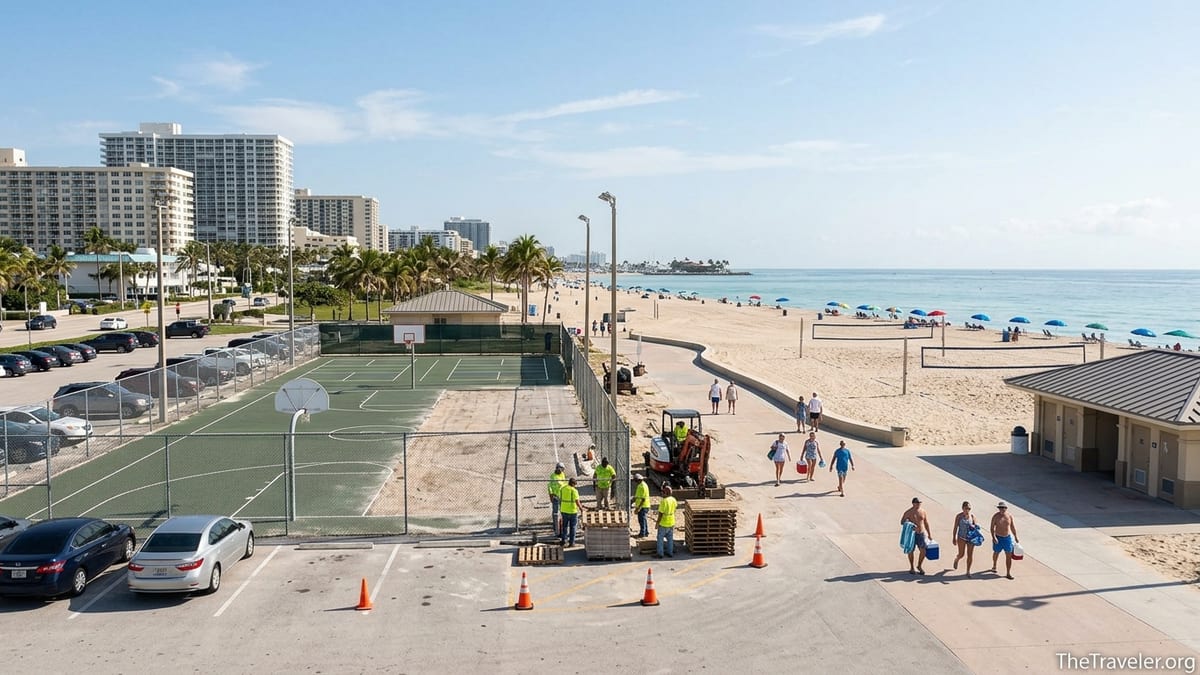
Fort Lauderdale Beach Park, at the southern end of the city’s central beachfront, is in the middle of a major rethink. Popular basketball courts, beachside volleyball, shaded picnic areas and children’s play spaces sit on land that is now tied to new pickleball facilities and broader beach improvement plans. For visitors, that means the park can feel different month to month, with some amenities upgraded, others temporarily closed, and occasional construction fencing cutting through familiar routes to the sand. Before you pack your cooler and sunscreen, it is worth understanding what is changing and what you should check in advance.
Get the latest updates straight to your inbox!
Why Fort Lauderdale Beach Park Is Changing
Fort Lauderdale Beach Park has long been one of the city’s most heavily used public beachfront spaces, thanks to its rare combination of direct beach access, on-site parking, sports courts and proximity to major hotels and the Bahia Mar marina. In recent years, the city has committed significant bond funding to upgrade parks and beach infrastructure, and the beachfront has become a central focus of those plans. Budget documents for fiscal years 2025 to 2029 list multimillion-dollar line items for “Fort Lauderdale Beach Improvement” and the DC Alexander Park Improvement Project, signaling how much attention this strip of shoreline is receiving.
Part of the momentum comes from the broader Central Beach Master Plan, which has guided public projects along State Road A1A for more than a decade. Under that framework, older beachfront parks are being redesigned to add flexible event lawns, updated restrooms, better accessibility, and a mix of active and passive recreation zones that can handle today’s crowds. Nearby DC Alexander Park, just north of Fort Lauderdale Beach Park, recently completed a high-profile renovation with raised lawn terraces, sustainable drainage and updated facilities, offering a preview of the more contemporary park language that is spreading along the beach.
Layered on top of the city’s own priorities are private redevelopment deals, including a major long-term lease and redevelopment plan for the Bahia Mar site directly across from the park. As that project moves forward, it brings both additional funding and new expectations for how the park’s courts and open spaces can serve residents, hotel guests and convention visitors. For travelers, the practical takeaway is that Fort Lauderdale Beach Park is no longer a static “set it and forget it” destination. It is an active construction and planning zone, where amenities may be reconfigured in service of larger waterfront goals.
Visitors who have known the park for years may notice shifts in layout, fencing and signage between trips. What was once a straightforward walk from the main parking lot to the basketball courts, for example, might involve skirting temporary work zones or rerouted paths if construction crews are upgrading utilities or surfacing. Understanding why the park is changing can help set realistic expectations and reduce surprises when you arrive.
Planned Court Changes: From Beach Basketball to Pickleball
The most attention-grabbing element of the current renovation plans is the future of the park’s well-known basketball courts. For years, these outdoor, oceanfront courts have attracted a cross-section of locals, cruise-ship crew on shore leave, and visiting players who heard about the rare combination of full-court play and sand-and-sea backdrop. In 2024 and 2025, however, the city approved plans to convert a significant portion of this hardcourt area into a cluster of dedicated pickleball courts, responding to the sport’s rapid growth and drawing on more than two million dollars in combined public bond funds and contributions linked to the Bahia Mar redevelopment.
Local news coverage and public meetings show that the pickleball plan has been controversial, with players and neighbors raising concerns about losing one of the region’s only oceanfront public basketball courts. A number of city statements and community discussions reference signage that has appeared around the park hinting at “basketball court conversion to pickleball,” even as final designs continue to evolve. For travelers, what matters is that the footprint and availability of both basketball and future pickleball facilities at Fort Lauderdale Beach Park are in flux and may change quickly as contracts are bid and work is scheduled.
The pickleball concept renderings that have circulated in recent months suggest multiple lighted courts, reconfigured fencing, and new seating or viewing areas wrapped around the playing zones. Those plans may also incorporate resurfacing and striping phases that temporarily close existing courts, even before any full conversion is complete. Basketball players flying in for a long weekend should not assume that they can simply show up at dusk and find the same open, unstructured games that characterized the park in previous years. Depending on the timing of construction, you might find partial closures, construction crews working on adjacent courts, or a hybrid layout where some hoops remain while new pickleball lines and nets are introduced.
If your trip revolves around court sports, build a backup plan into your itinerary. Holiday Park, inland from the beach, has already added a significant number of pickleball courts, making it a common recommendation for those who find the beach park unavailable or too crowded. Several private clubs and pay-to-play complexes across the Fort Lauderdale area are also expanding pickleball offerings. Basketball players, meanwhile, often pivot to urban parks such as Osswald Park or community-center gyms if the beachfront hoops are closed or reduced in number. Checking with the city’s Parks and Recreation department or its online facility status pages before traveling is essential if you want to avoid disappointment.
Other Amenities Being Upgraded or Affected
Court conversions are just one visible part of the changes at Fort Lauderdale Beach Park. As the city applies park bond funds and coordinates with adjacent projects, visitors can expect a rolling series of smaller upgrades that touch almost every part of the park experience. These may not grab headlines, but they can impact your day as much as a closed court. Restroom facilities, showers and changing areas are prime targets for renovation, often receiving new fixtures, refreshed partitions and improved lighting to match the standard set by the DC Alexander Park renovation just up the beach.
Play areas and outdoor fitness equipment are also on the list. Across the city, Fort Lauderdale has been working with playground and fitness manufacturers to replace aging structures and add accessible features like rubberized surfacing, inclusive swings and low-impact workout stations. At the beach, that could translate into temporary closures of play zones while new equipment is installed or surfacing cures. A family expecting to entertain toddlers at the playground before heading into the surf should confirm whether those facilities are open or fenced off during their visit window.
Picnic pavilions, grills and lawn areas may be subject to intermittent disruption as crews trench for new lighting, irrigation or drainage improvements. In other beachfront parks, similar work has meant portions of grass being roped off to allow new sod to establish, or certain shaded shelters remaining closed while concrete is repaired. For travelers planning a group gathering, graduation celebration or small beach wedding reception in the park, these seemingly minor details become crucial. Reserving a pavilion through the city and asking specifically whether any maintenance is scheduled on or around your booking date can help avoid last-minute scrambles.
Even small touches like bike racks, drinking fountains and waste stations are often upgraded as part of comprehensive renovation programs. You may find new bottle-filling stations installed near the main restrooms, for example, or updated pet waste stations at the park’s edges. While these changes generally improve the long-term visitor experience, they can mean patches of construction fencing or equipment storage areas lingering at the margins of the park, especially during shoulder seasons when temperatures are milder and construction windows are wider.
Access, Parking and Construction Disruption
Because Fort Lauderdale Beach Park sits at the southern end of the central beachfront strip, its access and parking are closely tied to the city’s broader road and mobility projects. Drivers typically reach the park along State Road A1A, sharing the corridor with hotel traffic, rideshares and delivery vehicles headed to the marina and convention venues. When construction ramps up either within the park or on nearby streets, it can quickly translate into lane closures, heavy equipment crossing points, or temporarily blocked pedestrian crosswalks. A morning arrival that normally takes 10 minutes from downtown can easily double when a crane is positioned at Bahia Mar or resurfacing work is underway on A1A.
Parking is another pinch point. The surface lot directly beside Fort Lauderdale Beach Park offers some of the most coveted paid spaces on this stretch of sand, and anecdotal reports in late 2024 emphasized that parking charges now typically extend into the evening hours instead of ending around dinnertime. Visitors who are used to free parking after 6 p.m. have found themselves surprised by active meters or payment kiosks when arriving for twilight basketball games or sunset walks. During construction phases, individual rows of the lot may be coned off to stage materials or equipment, reducing overall capacity just as demand remains steady.
Travelers relying on ride-hailing services should be prepared for slightly awkward pickup and drop-off spots if parts of the park perimeter are fenced off. Drivers may be routed to side streets or hotel entrances, adding a short walk to the park gate. Similarly, those arriving by bike or scooter should keep an eye out for detour signs directing them away from active work zones. In some cases, temporary metal plates or rough asphalt patches can appear where crews have opened and refilled trenches, which may be jarring for thin-tire bikes or mobility aids.
If your visit coincides with a special event, such as a beachfront festival or a major boat show using adjacent spaces, construction impacts can compound with event-related closures. It is not uncommon for portions of the park to serve as staging or overflow zones, which can change typical circulation patterns for a weekend at a time. For a smoother experience, budget extra travel time, and whenever possible, arrive earlier in the day when parking and traffic tend to be more manageable, particularly outside peak holiday periods.
How to Check the Latest Status Before You Go
Given the moving pieces at Fort Lauderdale Beach Park, a quick status check before you leave home is now a smart part of trip planning. The City of Fort Lauderdale maintains a parks and recreation portal where temporary closures, scheduled maintenance and major renovation notices are posted for popular facilities. While updates may not always be exhaustive, they often highlight longer-term projects that could affect court availability, restroom access or parking. Searching specifically for “Fort Lauderdale Beach Park” and scanning recent city commission agendas or parks bond updates can also surface relevant information on timelines and construction phases.
Local news outlets and community forums provide additional real-world snapshots. Coverage in regional newspapers and television stations has followed the pickleball debate and highlighted key milestones like budget approvals and design renderings. Community members frequently share photos and on-the-ground impressions of the park’s current state on social platforms, including whether hoops are still up, how many volleyball nets are playable, or which paths are fenced off. While these posts are informal, they can give you a sense of conditions during the weeks leading up to your trip.
For travelers who need more certainty, especially those organizing group activities, contacting the city directly can be worthwhile. Calling the Parks and Recreation main line or emailing the designated park supervisor can yield up-to-date details on scheduled court resurfacing, lighting repairs or pavilion closures. When you reach out, be as specific as possible about dates, times and the amenities you plan to use. For example, say that you are “hoping to play pickup basketball at Fort Lauderdale Beach Park between 4 and 8 p.m. on a Saturday in early March” rather than simply asking if the park is open.
Hotel concierges and local tour operators can also be quietly helpful. Properties along the beachfront, including those facing Bahia Mar and the central strip, routinely field guest questions about the park and often keep informal notes on recent disruptions. A front-desk team that has just spent a week redirecting guests to alternative courts or different beach access points will usually share that insight with you if asked. Combining official city updates with these on-the-ground perspectives offers the best picture of what to expect when you arrive.
Planning Your Visit Around the Renovation
Once you understand that Fort Lauderdale Beach Park is in transition, you can design a visit that works with, rather than against, the construction schedule. Start by defining your non-negotiables. If your main goal is simply to enjoy the wide sandy beach and warm Atlantic water, you have a lot of flexibility; even if part of the park is fenced off, the shoreline itself will remain accessible through various dune crossovers north and south of the main entrance. In that case, your planning focus should be on parking, restroom access and potential noise from nearby work, rather than on specific sports facilities.
Sports-focused visitors will want to build redundancy into their plans. A group flying in for a weekend of casual pickleball, for instance, might schedule their first day at Fort Lauderdale Beach Park with the understanding that courts could be limited or still under construction, then reserve a guaranteed block of time at an inland complex like Holiday Park or a private facility for their second day. Basketball travelers can treat the beachfront courts as a bonus rather than a guarantee, identifying backup parks in the city where full-court play is more predictable. This mindset reduces stress and turns whatever is available at the beach into a pleasant surprise.
Families should pay particular attention to the status of shade structures, playgrounds and restrooms. Renovation phases sometimes start with utility upgrades and building work, which can temporarily take restrooms offline or shift them to portable units. If you are spending a full day with young children, that can make a big difference in comfort. Likewise, if tree planting or pavilion renovations are underway, you may find fewer shaded picnic spots than expected, making items like pop-up sun shelters or extra umbrellas especially valuable during midday heat.
Finally, consider seasonality. Construction crews in South Florida often aim to push disruptive work into slightly cooler months outside the most intense summer humidity and thunderstorm patterns. That means travelers visiting in late fall, winter or early spring might encounter more active projects, even though those are also prime times for tourism. If you are committed to a quiet, renovation-free park experience, monitor updates and, if necessary, be open to alternative beaches in the region where major work is not currently underway.
The Takeaway
Fort Lauderdale Beach Park remains one of the city’s signature public spaces, but it is now tightly woven into a larger wave of investment that is reshaping the waterfront. Court conversions, amenity upgrades, and nearby redevelopment mean the park you encounter in the coming months may look and feel different from the one that appears in older travel photos or guidebooks. For visitors, the key is to approach the park as a dynamic work in progress rather than a fixed postcard scene.
By keeping up with city updates, scanning recent local coverage, and being realistic about the potential for temporary closures, you can still enjoy the park’s core strengths: direct access to the Atlantic, a sociable atmosphere, and a rare mix of urban energy and seaside relaxation. Build flexibility into your plans, especially if your trip depends on specific sports courts or facilities, and remember that nearby parks, courts and beach segments offer strong backups if a construction fence or work crew stands between you and your first choice.
In the long run, these renovations aim to deliver a beach park that is more resilient, more accessible and better equipped for today’s visitor demands. In the short term, a bit of extra homework before you go can transform potential frustration into a well-prepared, enjoyable day on one of South Florida’s most iconic stretches of sand.
FAQ
Q1. Are the basketball courts at Fort Lauderdale Beach Park still open?
The status of the basketball courts is changing as the city moves ahead with plans to add pickleball. Some or all hoops may be temporarily unavailable during construction or re-striping phases, so visitors should check the latest city updates or call Parks and Recreation close to their travel dates.
Q2. When will the new pickleball courts at Fort Lauderdale Beach Park be finished?
Exact completion dates can shift as contracts are awarded and work progresses. Current plans allocate funding and concept designs for a multi-court pickleball area, but timelines are subject to change. Travelers should treat any stated completion date as approximate and verify shortly before visiting.
Q3. Will there still be public access to the beach during renovations?
Yes. Even when parts of Fort Lauderdale Beach Park are under construction, the city maintains public access to the shoreline through designated paths and crossovers. You may need to follow detours or use nearby access points, but the beach itself remains open.
Q4. How is parking affected by the renovation work?
During active construction, sections of the park’s surface lot may be coned off to stage equipment, reducing capacity. Parking fees also generally apply into the evening, so visitors should be prepared to pay and consider arriving early, especially on weekends or during events.
Q5. Are the restrooms and showers always available?
Restrooms and outdoor showers can be temporarily closed for upgrades, deep cleaning or utility work. In some cases, portable units may be provided nearby. If you are planning a full day at the park, it is wise to confirm current restroom availability in advance.
Q6. Can I reserve picnic pavilions during the renovation period?
Yes, but availability may be limited if certain shelters are being repaired or if adjacent lawns are closed for landscaping or drainage work. When reserving through the city, ask specifically whether any construction is scheduled near your preferred pavilion on your event date.
Q7. Is it still a good spot for beach volleyball?
Fort Lauderdale Beach Park continues to offer sandy beachfront space where informal volleyball games take place, though the exact number and setup of nets can vary. Construction focused on hard courts should not eliminate beach volleyball outright, but visitors may find layouts shifting as nearby work zones move.
Q8. How can I get the most accurate, up-to-date information before visiting?
The best approach is to combine official and local sources: check the city’s parks information for closure notices, review recent local news about beach projects, and, if needed, call Parks and Recreation directly. Hotel concierges along the beach can also share what guests have been experiencing that week.
Q9. Are there nearby alternatives if the courts are closed?
Yes. For pickleball, inland parks such as Holiday Park and several private facilities offer multiple courts. Basketball players can look to city parks like Osswald Park or indoor community centers. Planning one or two backup options will keep your trip flexible.
Q10. Is visiting during renovation still worthwhile for general beachgoers?
For most beachgoers, the answer is yes. The sand, surf and ocean views remain the main attraction, and even with construction nearby, many visitors find the park a convenient gateway to the water. Being prepared for some noise, fencing and rerouted paths helps ensure the experience remains enjoyable.