


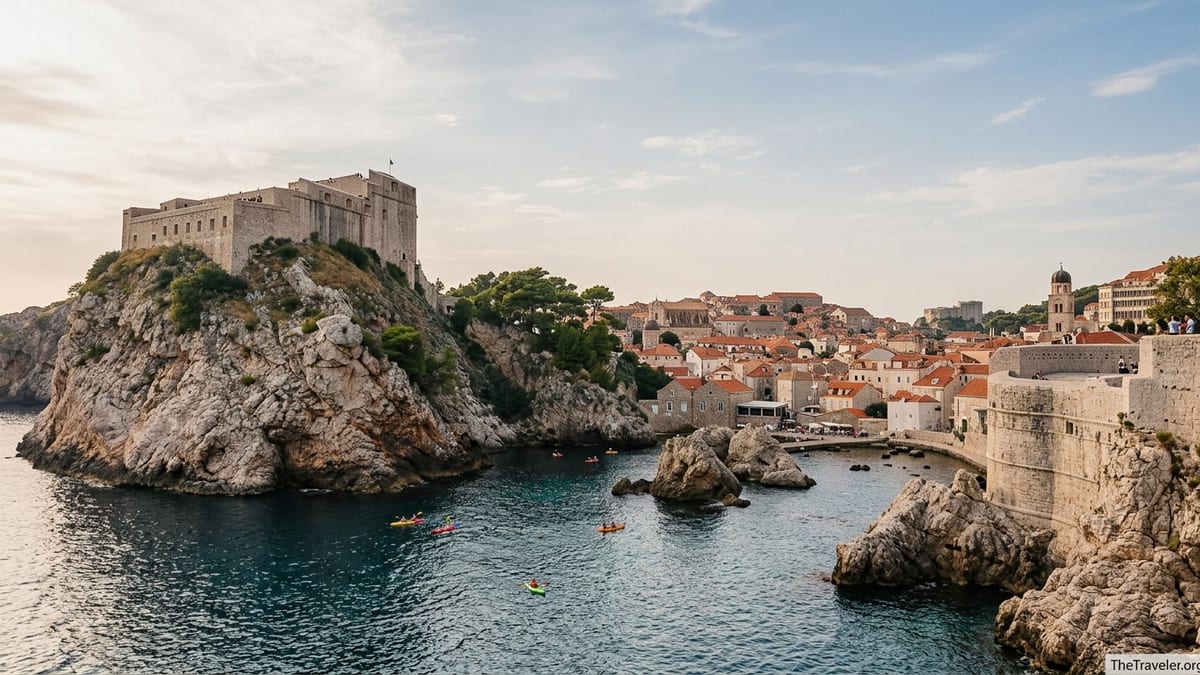
Few cities deliver a first impression as dramatic as Dubrovnik. Terracotta roofs spill toward the Adriatic, stone ramparts glow in late-afternoon light and, high on a rocky headland, Fort Lovrijenac seems to hover above the sea. For many visitors, though, there is a practical question behind the postcard views: if you have limited time, is it better to focus on the Dubrovnik City Walls or on Fort Lovrijenac? With ticket prices rising and summer crowds growing, choosing the right experience for your style, budget and schedule matters more than ever.
Get the latest updates straight to your inbox!
How Tickets Work in 2026: The Key Detail Most People Miss
Before weighing which experience is better, it helps to understand how tickets work in 2026. In practical terms, you are rarely choosing one or the other. A standard Dubrovnik City Walls ticket, currently around 35 euros for adults, typically includes a same-visit entrance to Fort Lovrijenac at no extra cost. Several up-to-date guides and ticket vendors confirm that a City Walls ticket allows a visit to the fortress within a limited window, often within 72 hours, which lets you split the two visits across different times of day or even different days if your schedule allows.
If you only buy a Fort Lovrijenac ticket at the gate, recent local ticket information indicates you pay a separate fee of roughly 15 euros, and you may be allowed to upgrade later by paying the difference at one of the City Walls entrances. In practice, most short-stay visitors who are physically able to complete the circuit find better value in starting with a full City Walls ticket or a Dubrovnik Pass rather than paying for the fort alone.
The Dubrovnik Pass has become an increasingly popular choice for 2026. The 1-day pass typically costs only slightly more than the standalone walls ticket, covers entry to the City Walls, Fort Lovrijenac and several museums such as the Rector’s Palace and the Maritime Museum, and includes local bus travel within the city while the pass is active. For a traveler planning one intensive sightseeing day, that can mean walking the walls in the morning, taking an afternoon swim at Banje or Šulić Beach, then climbing Fort Lovrijenac in the golden hour, all with one purchase instead of multiple separate tickets.
If budget is your main concern and you are not sure you want to commit to walking the entire 2 kilometer circuit of the walls, buying a Fort Lovrijenac-only ticket can still make sense. A couple on a quick Adriatic cruise stop, for example, might choose to pay only for the fort when they discover the queues at Pile Gate for the walls stretching 60 to 90 minutes at midday in July, yet still want an elevated coastal view without spending half their limited port call in line.
What the Dubrovnik City Walls Actually Feel Like
The Dubrovnik City Walls are the city’s signature experience for a reason. Enclosing the Old Town in a nearly 2 kilometer loop of stone ramparts and towers, they offer a constantly changing sequence of views: the bell towers rising over Stradun, the tight knots of alleys below, Lokrum Island out to sea and, far below, kayakers tracing the base of the cliffs. Recent guides consistently describe the walls as one of the most memorable urban walks in Europe, something that turns even a short stay in Dubrovnik into a standout travel memory.
Walking the full circuit usually takes between 1.5 and 2 hours if you stop for photos and a drink. You can start at several points, but most visitors enter near Pile Gate on the western side of the Old Town. Local advice for 2026 repeatedly emphasizes the importance of timing. In July and August, when Dubrovnik’s visitor numbers peak, mid-morning to mid-afternoon can feel like a slow, sun-baked shuffle, especially on days when several large cruise ships are in port. The stone reflects heat, shade is minimal and the path is mostly one-way, so it is difficult to step aside or turn back once you have committed.
For that reason, many seasoned travelers and local guides recommend starting the walk when the walls open, typically around 8:00, or in the last one to two hours before closing in shoulder season months such as May, June, September and October. For example, a traveler in early June might buy a ticket the previous afternoon, then begin the walk at 8:00 the next morning, finishing the circuit just as day-trippers arrive and the light is still gentle enough for photos that show both the orange rooftops and the blue of the Adriatic without harsh glare.
In practical terms, the City Walls make the most sense for visitors who are comfortable with stairs and prolonged exposure to the elements. There are plenty of steps and several steep sections, and in wet or windy weather some stretches can feel slippery or exposed. If you or someone in your group has mobility issues or is particularly sensitive to heat, a full circuit may be too challenging and you may be better off focusing your energy on Fort Lovrijenac.
What Visiting Fort Lovrijenac Feels Like
Fort Lovrijenac, sometimes known as St. Lawrence Fortress, stands about 37 to 40 meters above sea level on a rocky promontory just west of the Old Town. From a distance it looks almost sculpted out of the cliff face. Up close, visiting the fort is a shorter, more self-contained experience than the City Walls walk, but one that many travelers find just as memorable, especially if they are drawn to moody coastal viewpoints or Game of Thrones filming locations.
The climb from the base near Šulić Beach to the fort entrance involves a fairly steep staircase. Most reasonably fit travelers handle it without issue, but the steps can feel demanding in July or August afternoons. Once inside, the experience opens up. Three terraces, bastions and ramparts give you a broad panorama back to the western walls of Dubrovnik, out across the harbor and down to the small cove below. If you have seen photos of Dubrovnik where the Old Town seems to sit inside a stone horseshoe opening onto the sea, there is a good chance they were taken from here.
Compared with the City Walls, Fort Lovrijenac often feels calmer. Crowds can still be heavy in high season, especially when guided tours arrive, but it is rare to experience the same continuous dense foot traffic as on the ramparts. Early evening visits are particularly atmospheric. A solo traveler in late September, for instance, might wander up around 5:30, find that the main terraces are still lively with small groups and photographers, but then slip to a quieter corner of the battlements to watch the sun drop behind the Elaphiti Islands with the hum of the Old Town drifting across the water.
The fort also has a cultural side that casual visitors sometimes miss. Lovrijenac is regularly used as a theater stage, especially for Shakespeare’s Hamlet during the Dubrovnik Summer Festival. Attending a performance here is a very different experience from a daytime sightseeing visit: you arrive in the evening, climb in cooler air and watch actors perform against a backdrop of floodlit stone walls and dark sea. Tickets for festival events vary but can sell out quickly, so this is one case where planning ahead on official festival channels is essential.
Cost, Time and Crowd Levels: A Side-by-Side Comparison
For many travelers, the decision between prioritizing the City Walls or Fort Lovrijenac comes down to three practical variables: cost, time and tolerance for crowds. On cost, the equation is straightforward. The City Walls ticket is the more expensive purchase, but it typically includes Fort Lovrijenac, so doing both does not require two separate major expenses. A Fort-only ticket remains a lower-cost entry point if you are not sure you want to tackle the walls or simply do not have enough time in the city to justify the full price.
On time, walking the complete City Walls circuit is a commitment. Even visitors who move quickly usually spend at least an hour, and more often closer to two, once you add queuing time, photo stops and short breaks at one of the small cafes along the route. Fort Lovrijenac, by contrast, can be visited in 30 to 60 minutes. That makes it far easier to fit into an afternoon of swimming and wandering if you only have one full day in Dubrovnik. A family arriving on a late-morning flight in July, for example, might find the walls too hot and crowded by the time they reach the Old Town, but still enjoy a more flexible late-afternoon climb to the fort combined with a dip at Šulić Beach.
Crowd levels differ significantly. In peak summer, especially July and August, up-to-date crowd analyses regularly describe the City Walls as one of the most congested places in Dubrovnik. When multiple large cruise ships dock on the same day, the main Pile Gate entrance can see queues long enough that some visitors report waiting close to an hour in the sun. Inside, the walkway narrows at several points, and with limited passing space, you may find yourself moving in a slow line, particularly around popular viewpoints.
Fort Lovrijenac does see spikes of visitors, especially in the middle of the day when guided Game of Thrones tours arrive. However, it rarely feels like a continuous human chain. Once you have walked up the stairs, the interior terraces offer more room to spread out, choose a corner and pause for photos without feeling pushed along. For travelers who become anxious in very dense crowds or who are visiting with small children, that relative breathing space can tilt the balance decisively in favor of prioritizing the fort.
Who Should Prioritize the Dubrovnik City Walls
If you have to pick only one experience and you are reasonably fit, the Dubrovnik City Walls are still the stronger choice for most first-time visitors. They provide a complete sense of the Old Town’s shape and geography that is hard to match from any single viewpoint. As you walk, you see the progression from the sea-facing sections above the cliffs to the inland ramparts, from quiet back alleys with laundry strung between windows to the grand squares near the main gates. That continuous narrative is especially valuable if you enjoy urban history or photography.
The walls are also a better fit if this is your once-in-a-lifetime Croatia trip and you want the iconic images that friends recognize instantly. Standing on the ramparts above the harbor with the red roofs filling the frame has become a signature travel shot. A pair of friends on a weeklong Dalmatian coast itinerary, for example, might allocate one early-morning session just for the walls, then spend the rest of their Dubrovnik time on boat trips, beaches and evening strolls, secure in the knowledge that they have experienced the city’s defining viewpoint.
Travelers visiting outside the core summer months often get an especially good deal out of the City Walls. In April, May, September and October, recent reports note that temperatures are milder and crowding is significant but manageable, provided you still avoid the busiest midday window. An off-peak visitor might start their day with coffee in Gundulićeva Poljana, check the day’s cruise ship schedule with their hotel or guesthouse, then time a wall walk for a period when fewer ships are in port, turning an experience that can feel overwhelming in August into something almost serene.
History enthusiasts will also find the walls richer in on-site interpretation. As you progress, you encounter towers, bastions and panels that outline how the fortifications evolved in response to shifting threats from the sea and the land. You see where repairs followed earthquakes or sieges, and how the defensive system integrated with gates such as Pile and Ploče. In contrast, Fort Lovrijenac offers a more focused, episodic slice of history centered on its strategic role and later use as a theater stage.
Who Might Prefer Fort Lovrijenac
Fort Lovrijenac emerges as the better primary choice for travelers who are short on time, sensitive to crowds or primarily interested in atmospheric viewpoints rather than long walks. If you have only a few daylight hours in Dubrovnik, combining a stroll through the Old Town with a climb to the fort and a swim at a nearby cove gives you a surprisingly rich sense of place without the logistical commitment of the walls. For a couple on a self-drive trip along the Dalmatian coast who are overnighting just outside Dubrovnik, an early evening fort visit can slot neatly between a day trip to Cavtat and a dinner reservation inside the walls.
The fort is also an excellent option for travelers visiting in the height of summer who arrived unprepared for the intensity of midday heat on the walls. The climb is still steep and exposed, but it is shorter, and you can retreat into shade or down to sea level more quickly if conditions feel uncomfortable. Visitors with teenagers might find the fort more manageable: they can walk up, explore the battlements, recreate a few Game of Thrones angles and then decide on their own pace for returning to town or the beach, without committing to a long one-way circuit around the Old Town.
Photography-oriented travelers often find that Fort Lovrijenac provides a perspective of the Old Town that complements, or sometimes rivals, the walls themselves. From the ramparts you can frame the entire horseshoe-shaped line of defenses against the sea, with the turrets and towers of the walls visible in a single sweeping shot. At sunset, the side light on the stone brings out textures that are harder to see when you are standing on the walls looking outwards. For someone with a tripod and a mirrorless camera, an evening session on the fort’s terraces can easily fill an hour of careful composition.
Finally, travelers with a strong interest in performing arts or local culture may value Fort Lovrijenac for its role as a stage during the Dubrovnik Summer Festival. Watching Shakespeare performed in the original language inside a stone fortress above the Adriatic is a very specific kind of travel experience, one that goes far beyond sightseeing. If your visit coincides with the festival season, organizing your schedule around such a performance and a shorter daytime wall walk can be an ideal compromise.
Planning Your Day: How to Combine Both Without Burning Out
Because one ticket often covers both, the more constructive question is not which single experience is better, but how to sequence them so you get the most out of each. For most travelers visiting between late spring and early autumn, the most comfortable strategy is to walk the City Walls first thing in the morning, then visit Fort Lovrijenac later the same day or the next, aiming for late afternoon or early evening.
A realistic one-day itinerary could look like this. You enter the Old Town at Pile Gate shortly before the walls open around 8:00, buy or scan your ticket and begin the circuit clockwise, stopping briefly at the cafes along the route for water or a cold drink. You finish around 10:00, take a shaded break in a side street near Od Puča, then spend midday browsing museums or resting at your accommodation while the city is at its hottest. Around 4:30 or 5:00, you walk down past the small cove of Šulić Beach, perhaps taking a short swim, then climb the steps to Fort Lovrijenac to watch the late afternoon light slide across the Old Town.
If your pass or ticket validity allows a 72 hour window, you can spread the experiences across two or even three days. A weekend visitor might walk the walls on Friday evening after checking into a boutique guesthouse in the Old Town, then leave the fort for Sunday morning when crowds are slightly thinner and you have a calmer sense of the city. Families traveling with young children may especially appreciate breaking things up this way, turning each climb into a smaller, more rewarding achievement rather than one long, exhausting day.
In shoulder season, when temperatures are lower and days shorter, you might instead pair a mid-morning fort visit with a late afternoon wall walk that ends just before closing. A photographer in late October, for instance, might time their visit so they circle the walls during the soft, slanting light of the last two hours, then head straight to dinner in the Old Town afterward, using the quieter atmosphere to capture street scenes and alleyways once most day-trippers have returned to their ships or buses.
The Takeaway
If you are able and have enough time, the most honest answer to the question of whether Fort Lovrijenac or the Dubrovnik City Walls is better is that together they create a single, layered experience. The City Walls give you the continuous, story-rich perspective that defines Dubrovnik in the global imagination, while Fort Lovrijenac offers an external vantage point that lets you see that same skyline as a complete composition framed by sea and stone.
When you truly must choose one, prioritize the City Walls if you value the sense of walking on history, can tolerate crowds and heat with some planning, and want the classic, panoramic shots from above the rooftops. Opt for Fort Lovrijenac if you prefer a shorter, more flexible visit with powerful views, lighter crowds and the possibility of combining your climb with a dip at a rocky cove or an evening performance during the Summer Festival.
In a city grappling with the realities of overtourism, thoughtful timing and realistic expectations will do more to shape your experience than any ranking of attractions. Whether you are tracing the curve of the ramparts at dawn or watching the Old Town glow from the fortress terraces at sunset, the combination of sea, stone and skyline that defines Dubrovnik is best appreciated slowly, with space to pause, look and, for a moment, feel the city’s defenses belong entirely to you.
FAQ
Q1. Is the ticket for Dubrovnik City Walls valid for Fort Lovrijenac as well?
The standard Dubrovnik City Walls ticket in 2026 generally includes a single visit to Fort Lovrijenac within a limited window, often up to 72 hours. Always confirm the current rules at the ticket office or official information point on the day you visit, as conditions can change.
Q2. How long does it take to walk the Dubrovnik City Walls compared with visiting Fort Lovrijenac?
Most visitors spend 1.5 to 2 hours completing the full City Walls circuit with photo stops, while Fort Lovrijenac typically takes 30 to 60 minutes, including the climb and time on the terraces.
Q3. Which is less crowded, the City Walls or Fort Lovrijenac?
The City Walls are usually more crowded, especially from late morning to mid-afternoon in July and August and on big cruise ship days. Fort Lovrijenac can get busy when tour groups arrive but generally has more breathing room and quiet corners, particularly in early morning or late afternoon.
Q4. I am visiting Dubrovnik in July and hate walking in extreme heat. Which experience should I prioritize?
In July’s high temperatures, many travelers sensitive to heat find Fort Lovrijenac more manageable because the visit is shorter and they can descend quickly if it becomes uncomfortable. If you still want to walk the walls, aim for the earliest possible entry or the very end of the day and bring plenty of water, sun protection and comfortable footwear.
Q5. Are the Dubrovnik City Walls suitable for travelers with limited mobility?
The City Walls involve many steps, uneven surfaces and few opportunities to exit early, so they can be challenging for anyone with limited mobility, joint issues or balance concerns. Fort Lovrijenac also requires a steep climb, but the distance is shorter and some visitors with moderate limitations find the fort a more realistic goal. When in doubt, consult your doctor and consider photographing the walls from ground-level viewpoints and boat trips instead.
Q6. If I have only half a day in Dubrovnik, should I choose the City Walls or Fort Lovrijenac?
With only half a day, your choice depends on priorities. If you want the classic Dubrovnik experience and can handle a focused 1.5 to 2 hour walk, choose the City Walls and schedule them early or late to reduce heat and crowds. If you prefer a more relaxed visit that you can combine with a swim or a longer Old Town stroll, Fort Lovrijenac is the more flexible option.
Q7. Are there good photo opportunities at Fort Lovrijenac if I already plan to walk the City Walls?
Yes. Fort Lovrijenac offers some of the best external views of the Old Town and its defenses, allowing you to capture the full curve of the walls and rooftops in one frame. Many photographers walk the walls in the morning for rooftop perspectives, then shoot from the fort in the late afternoon or at sunset to complete their set of images.
Q8. Does the Dubrovnik Pass cover both the City Walls and Fort Lovrijenac?
The current Dubrovnik Pass options typically include entry to the City Walls and Fort Lovrijenac along with several museums and public bus transport for the duration of the pass. Exact inclusions and prices can change, so check official Dubrovnik Pass information before purchasing to make sure it fits your itinerary.
Q9. Are there guided tours that visit both the City Walls and Fort Lovrijenac?
Yes. Several local operators and international booking platforms offer combined walking tours that include both the City Walls and Fort Lovrijenac, sometimes with a focus on Game of Thrones filming locations. These tours usually last between 2.5 and 4 hours. If you prefer to move at your own pace, you can use a self-guided audio tour instead and still visit both on a single ticket.
Q10. For a budget traveler, is it ever worth skipping the City Walls and only paying for Fort Lovrijenac?
For very budget-conscious travelers or those unsure about walking a full 2 kilometer circuit in the sun, paying only for a Fort Lovrijenac ticket can still deliver excellent views and a strong sense of Dubrovnik’s setting at a lower price. However, if you are confident you will enjoy the walls, a City Walls ticket or Dubrovnik Pass that includes both attractions usually offers better overall value.