


More news on this day
Ultra‑wealthy travelers are accelerating a global shift away from crowded hotspots toward highly private, curated journeys, with France emerging alongside the UAE, Japan, Spain and Italy as a key destination for secluded, high‑end experiences.
Get the latest news straight to your inbox!
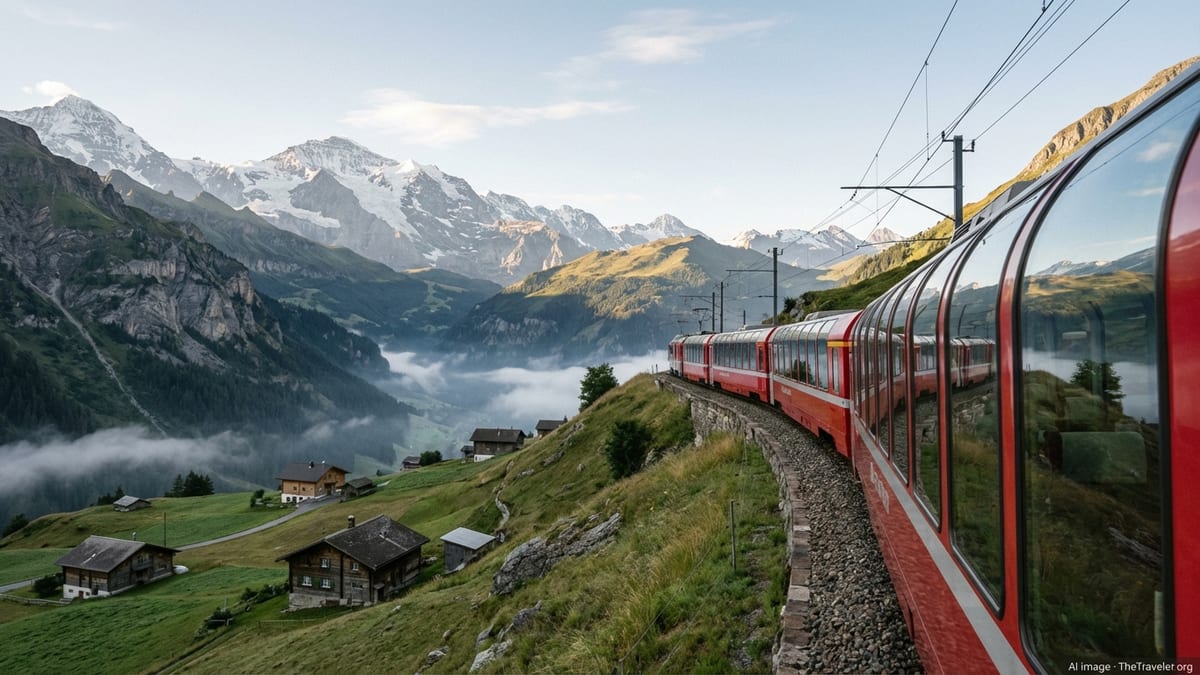
France Turns Record Tourism Into a More Private Luxury Play
Recent industry coverage shows that France is converting record visitor numbers into increasingly exclusive luxury products tailored to ultra‑high‑net‑worth individuals. Reports on the 2025 season indicate that France welcomed more than 100 million international visitors and generated all‑time‑high tourism receipts, yet the strongest growth is concentrated in top‑tier accommodation and services aimed at affluent guests seeking space and privacy.
Analysts tracking the country’s premium segment describe a market pivoting toward private villas, long‑stay residences and ultra‑personalized itineraries in regions such as Provence, the Loire Valley and the French Riviera. Forecasts cited in specialist trade publications suggest France’s luxury travel market could expand at an annual rate of more than 8 percent through the next decade, driven largely by high‑spending international clients and private family groups.
Along the Cote d’Azur, demand for secluded estates and serviced villas continues to outpace supply, especially during peak summer months. Commentary in business and lifestyle media points to a clientele that prioritizes sea views, gated access and discreet staff, as well as wellness, art and gastronomy experiences that can be brought directly into the property rather than accessed through public venues.
At the same time, hotel and resort groups are unveiling high‑end residences and buy‑out options in Paris, the Alps and wine regions, allowing private parties to reserve entire floors, chalets or historic chateaux. This model aligns closely with what wealth managers identify as a core preference among ultra‑rich travelers in 2026: maintaining full control over their environment while enjoying five‑star service levels.
UAE and Japan Showcase Hyper‑Curated, Crowd‑Free Experiences
In the Gulf, the United Arab Emirates remains a reference point for ultra‑luxury hospitality built around privacy. New and upgraded properties in Dubai, Abu Dhabi and Ras Al Khaimah emphasize private beaches, stand‑alone villas and integrated residential components designed for extended stays. Tourism investment reports released over the past year highlight a growing pipeline of eco‑retreats and desert lodges that offer low‑density layouts, private pools and dedicated butler teams.
Developments such as exclusive island resorts off Abu Dhabi and integrated projects on man‑made archipelagos in Ras Al Khaimah are promoted as self‑contained playgrounds for the global elite. These enclaves are typically reached by yacht, helicopter or private jet, reinforcing a travel pattern in which ultra‑wealthy guests bypass urban congestion entirely and move directly into secure, invitation‑style environments.
Japan, meanwhile, is positioning its traditional hospitality culture at the top end of the market. Policy documents and trade coverage show that national tourism planners have identified luxury travel as a strategic focus, with particular attention on lesser‑known rural regions. High‑end ryokans, many with only a handful of suites, now offer whole‑property buyouts, private onsen access and multi‑day kaiseki programs curated around guests’ dietary and cultural interests.
Specialist travel publications highlight a surge in demand for private rail charters, luxury sleeper trains and tailored itineraries linking Kyoto, Kyushu and remote islands. For ultra‑wealthy visitors, the appeal lies in deep cultural immersion with minimal exposure to crowds, often facilitated through discreet guides, after‑hours access to heritage sites and exclusive use of boats or mountain lodges.
Spain and Italy Double Down on Villas, Estates and Off‑Season Quiet
Spain and Italy, long mainstays of European tourism, are also reconfiguring their top tier to cater more explicitly to the ultra‑rich who wish to avoid traditional tourist flows. In Spain, industry reporting points to surging demand for luxury coastal villas and rural fincas in regions such as the Balearic Islands, Costa del Sol and the interior wine routes, with operators increasingly focused on full‑service estates that can host multi‑generational families.
Advisories from villa specialists note that top properties now come bundled with private chefs, wellness practitioners and security teams, enabling guests to stay on site for much of their stay. Shoulder‑season bookings in September, October and early spring have risen as affluent clients aim to enjoy favorable weather while steering clear of peak‑season crowds and cruise traffic.
Italy is experiencing a similar evolution across Tuscany, Lake Como, Puglia and the Amalfi Coast. Coverage in European travel media emphasizes the strength of the luxury rental market, with many historic palazzi and farm estates being converted into privately rentable compounds. These properties typically feature extensive grounds, vineyard or waterfront access and the ability to host events or family gatherings without interaction with other travelers.
High‑net‑worth travelers are also gravitating toward lesser‑known Italian regions where capacity is lower and cultural experiences feel more intimate. Private truffle hunts, closed‑door museum visits and tailored yacht itineraries in quieter stretches of coastline are increasingly marketed as alternatives to well‑trodden city breaks.
Why Ultra‑Wealthy Travelers Are Leaving Mass Tourism Behind
Behind the geographic shift is a deeper transformation in how the ultra‑rich approach travel. Research from luxury travel agencies and financial advisory firms describes a clientele that places a premium on control, health security and time efficiency, even several years after global mobility restrictions were lifted. For these travelers, minimizing contact with large crowds is no longer a temporary concern but an embedded preference.
Advisers note that multi‑generational trips and private celebrations are now among the most common triggers for high‑end travel bookings. This dynamic favors large villas, private islands and compound‑style resorts where extended families or close circles of friends can stay together without sharing facilities with strangers. Demand has also increased for flexible itineraries that can be adjusted at short notice, supported by dedicated concierges and on‑call pilots or yacht crews.
Another driver is the rise of what analysts describe as “quiet luxury” in travel. Instead of overt displays of wealth, many ultra‑high‑net‑worth individuals seek low‑profile destinations and properties where discretion is paramount. The emphasis is on craftsmanship, authenticity and one‑off experiences, whether that means a closed‑door tasting with a top winemaker in Bordeaux, a private tea ceremony in Kyoto or a desert astronomy session in the Emirates.
Environmental and social concerns are also subtly shaping preferences. While private jets and superyachts remain central to this segment, there is growing interest in lower‑impact stays, including nature reserves, conservation‑linked lodges and architecturally restrained villas that blend into their surroundings. France’s wine regions, Japan’s countryside ryokans, Spain’s rewilded estates and Italy’s agriturismo‑inspired properties are all benefiting from this trend.
Implications for Destinations Competing for the Global Elite
The push toward exclusive, private travel experiences is creating both opportunities and challenges for destinations that depend on high‑value visitors. France’s emergence alongside the UAE, Japan, Spain and Italy underscores how established tourism powers and newer luxury hubs are competing not on volume, but on depth of experience and perceived privacy.
For national and regional tourism bodies, this means investing in infrastructure that serves ultra‑wealthy travelers without amplifying congestion for the broader market. Examples include discreet heliports, small private terminals, yacht marinas and high‑speed rail links that connect major gateways to quieter regions. Destinations are also working with hospitality brands and local operators to ensure that staffing, security and wellness services meet the expectations of this demanding segment.
At the same time, the shift raises questions about access, equity and community impact. While private villas and exclusive islands can generate significant revenue with relatively few guests, local stakeholders must balance economic benefits with housing pressures, environmental strain and the risk of creating enclaves detached from surrounding communities. Regulatory debates in French coastal towns and Mediterranean islands illustrate how sensitive this balance can be.
What is clear from recent data and industry commentary is that ultra‑wealthy travelers are unlikely to return to crowded, standardized tourism patterns. Instead, they are rewarding destinations that can deliver seclusion, authenticity and seamless service at scale. For France, joining the UAE, Japan, Spain and Italy at the forefront of this shift signals not only a strong luxury tourism outlook, but a broader redefinition of what high‑end travel looks like in the years ahead.