


More news on this day
Germany is expanding emergency evacuation and repatriation efforts across the Middle East, aligning with the United Kingdom, France, the United States, India and others in using Oman, Jordan and Azerbaijan as critical transit hubs as a fragile Iran ceasefire and patchwork airspace restrictions continue to disrupt global travel.
Get the latest news straight to your inbox!
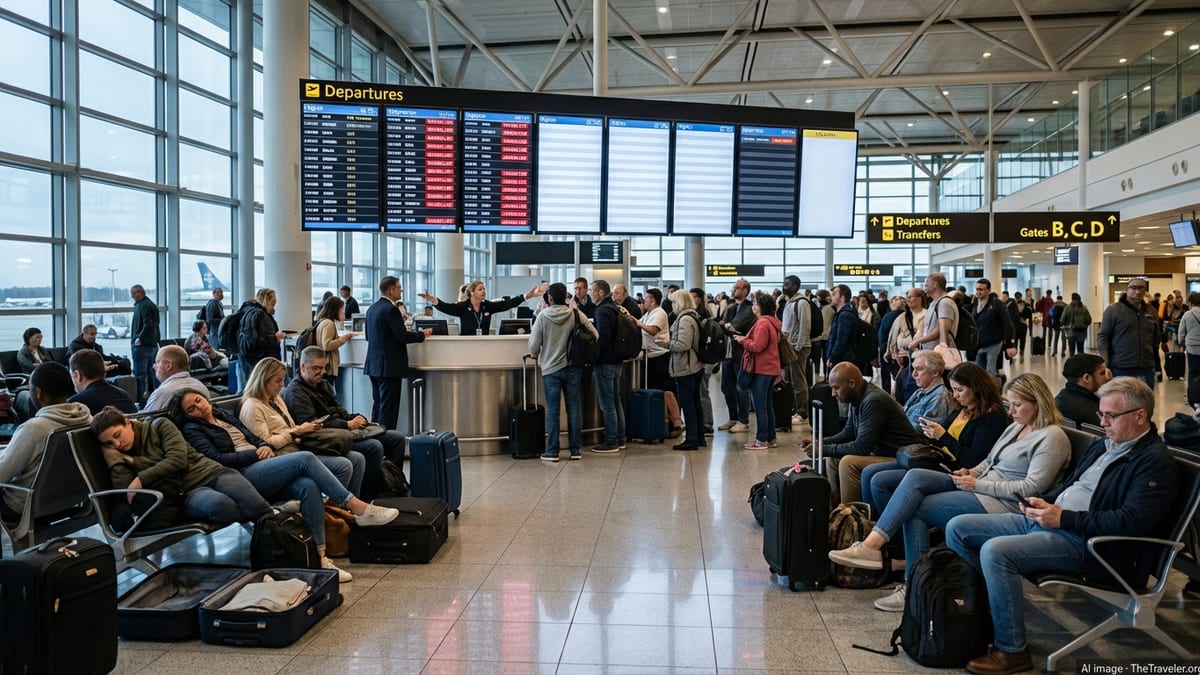
Germany Moves to Match Allied Evacuation Efforts
Publicly available aviation data and regional coverage indicate that German authorities have widened their evacuation posture in recent days, seeking additional lift for citizens and residents stranded across the Middle East. After initially relying on ad hoc charter flights and commercial seats where available, Germany is now coordinating more structured repatriation patterns similar to those already used by the UK, France, the US and India.
Reports focused on the broader evacuation picture describe Germany as one of several European states facing a sizeable pool of nationals caught in the region when hostilities escalated earlier this year. Estimates referenced in international analyses suggest tens of thousands of German citizens may have been travelling, working or transiting through Gulf and Levant states when the Iran conflict flared and subsequent airspace closures began to cascade.
Recent travel-industry updates show Germany leaning more heavily on partner carriers and secondary airports, particularly through Oman and Jordan, to move people out of higher-risk areas and into safer staging points before onward flights to Europe. This approach mirrors emerging practice among European and Asian governments that have shifted from direct point-to-point rescues to a network of regional waystations.
In this evolving framework, Germany is increasingly visible alongside the UK and France in shared use of repatriation corridors, while India and the US continue to operate large-scale movements for their own nationals and some third-country passengers, often funnelling them through the same hubs.
Oman: Open Skies and a Growing Rescue Role
Oman has become one of the most important lifelines for stranded travellers. Muscat’s airspace has remained open even during the worst phases of the regional crisis, and multiple industry briefings describe the capital’s airport as a preferred diversion point for relief and evacuation flights. This status has intensified since heavy restrictions were imposed on nearby hubs such as Doha, Dubai and Abu Dhabi.
European carriers, including those contracted by Germany, have increasingly routed special services through Muscat. Recent business travel reports reference repatriation flights from Muscat to key European gateways such as Frankfurt and London operating alongside a reduced schedule of commercial services. These flights are often tagged in schedules as rescue or relief operations, with priority given to passengers displaced from conflict-affected routes.
At the same time, regional airlines based in Oman are operating tailored connections from Muscat to cities in South Asia, North Africa and parts of Europe, enabling multi-leg evacuation journeys. Travel advisories describe itineraries that take advantage of Muscat’s relative stability, allowing passengers from states with heavier airspace restrictions to first reach Oman and then transfer onward on dedicated or semi-regular services.
Germany’s growing reliance on these options places it among a wider group of states treating Oman as a hinge between the disrupted Gulf corridor and more predictable European airspace. For travellers, this often means longer journeys and multiple stops, but it also offers one of the most reliable paths out of the region at present.
Jordan and Overland Corridors Complement Limited Flights
Jordan is playing a dual role in the repatriation map: as both an aviation gateway and an overland exit for people leaving neighbouring hotspots. Regional security assessments describe Jordanian airspace as open, with Amman’s main airport accommodating a mix of commercial flights, special charters and emergency movements even at the height of recent tensions.
For Germany and other European countries, this has made Amman an attractive staging point. Passengers able to reach Jordan by land from conflict-impacted neighbours are being added to repatriation manifests, then flown onward on contracted or regular flights to Europe. Coverage from travel and logistics firms highlights Jordan as a key alternative for those who cannot access Israeli airports or who face limited options in Lebanon and Iraq.
Overland corridors through Jordan are also being used as contingency routes when sudden airspace changes force last-minute diversions. Travel forums and flight-tracking snapshots referenced in recent reporting show examples of passengers being re-routed through Amman when their original departures from Gulf or Levant hubs were cancelled, after which European carriers assume the final leg.
In this patchwork system, Germany’s engagement essentially mirrors that of the UK, France and India, all of which are using Jordan as a pressure valve when direct flights from more volatile locations are no longer viable.
Azerbaijan Emerges as a Northern Evacuation Bridge
While Oman and Jordan anchor the southern evacuation arc, Azerbaijan is increasingly important on the northern side of the network. Baku’s location on the Caspian corridor and its more stable airspace have enabled a steady flow of flights carrying evacuees out of Iran and the wider region when southern routes are constrained.
Recent regional coverage points to several thousand foreign nationals, from Asia, Europe and North America, transiting via Azerbaijan as part of organized evacuation campaigns. Among them are German, UK, French, US and Indian nationals who were able to reach the country either on specially arranged flights or through limited commercial services that remained operational under tight controls.
For Germany, Baku offers a vital bridge that connects evacuees to European destinations via northern routings which avoid the most congested and restricted Middle Eastern skies. Aviation analyses focused on the current crisis describe a pattern of aircraft threading between the Black Sea and Caspian regions, then continuing to Central and Western Europe, often with technical stops to manage extended flight times.
This northern pathway complements the Oman and Jordan options and broadens the menu of routes available to consular planners trying to move people out of the conflict zone. It also reflects a wider trend in which Caucasus and Central Asian states have become key waypoints in global evacuation planning.
Fragile Ceasefire and Patchwork Airspace Keep Travel Uncertain
The two-week ceasefire between the US and Iran, which came into effect in early April, has cooled immediate fears of further missile exchanges but has not restored normality to the skies. Industry summaries and risk bulletins describe a highly uneven picture in which some states have partially reopened airspace, others remain under strict controls, and major carriers continue to cancel or reroute flights on short notice.
Gulf and Levant air corridors are still subject to rapidly changing security considerations. While Bahrain and Iraq have reported steps toward reopening, air navigation in Qatar and parts of the United Arab Emirates remains restricted, with emergency traffic and limited passenger services operating under special permissions. Airlines have publicly acknowledged that detours via Egypt, Saudi Arabia, Oman and Central Asia are adding significant time and cost to long-haul routes between Europe and Asia.
For travellers, these constraints translate into complex itineraries, last-minute aircraft changes and extended waiting periods at intermediate hubs. Many repatriation flights involving Germany, the UK, France, the US and India are being planned against a backdrop of rolling airspace notices and temporary waivers, which can alter routing hours before departure.
Observers of the travel industry suggest that even if the ceasefire holds, airlines and governments are likely to maintain contingency corridors through Oman, Jordan and Azerbaijan well into the coming months. The experience of this crisis has underscored the importance of diversified evacuation routes and the value of states willing to keep their airspace open under controlled conditions, shaping how countries like Germany design their next wave of cross-border repatriation plans.